> ## Documentation Index
> Fetch the complete documentation index at: https://docs.plannotator.ai/llms.txt
> Use this file to discover all available pages before exploring further.
# Artifact Server: A Local Workspace for AI Agent Artifacts
> Browse, edit, annotate, and organize files created by AI agents in one local workspace with MCP and OpenAPI access.
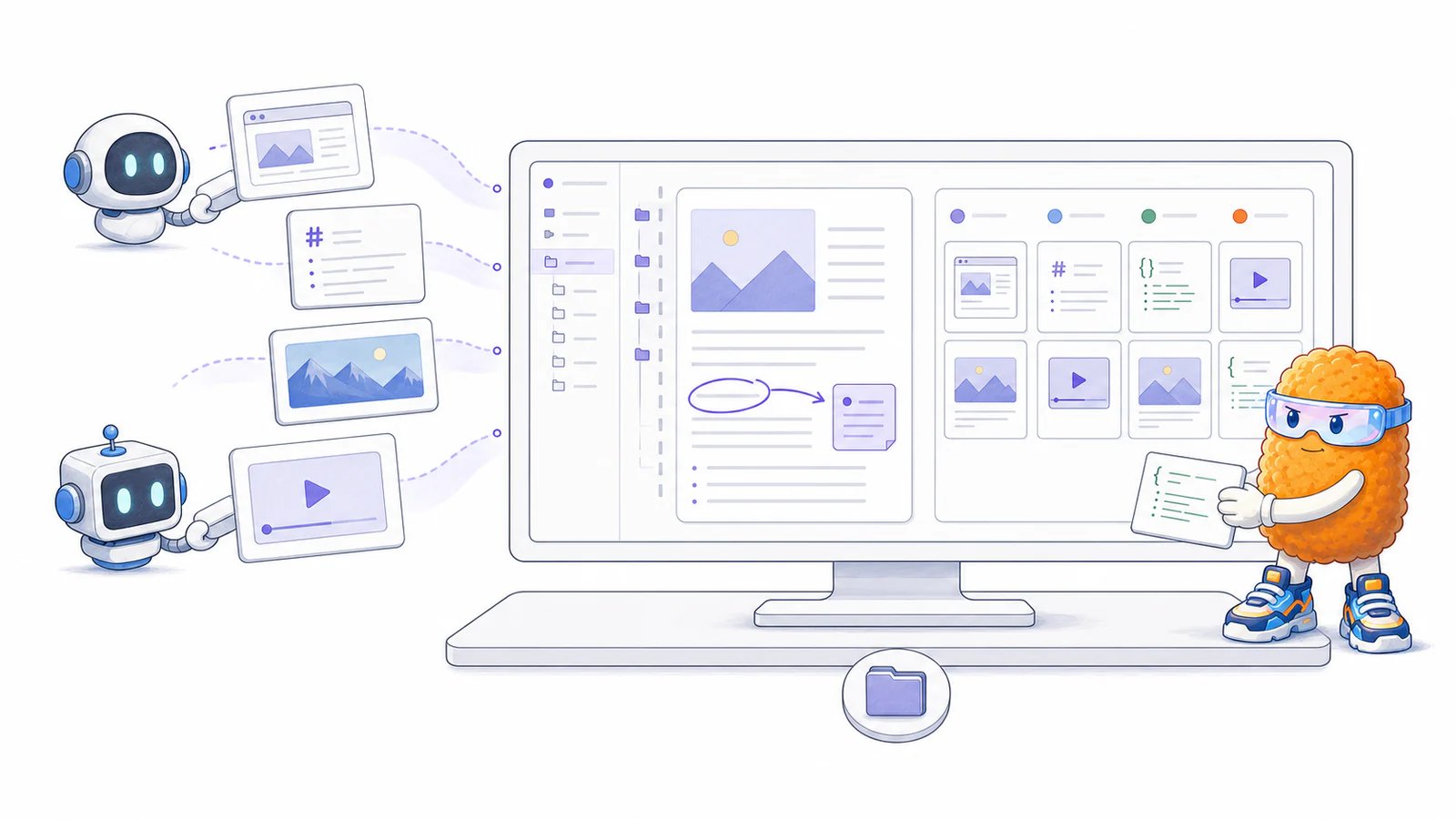
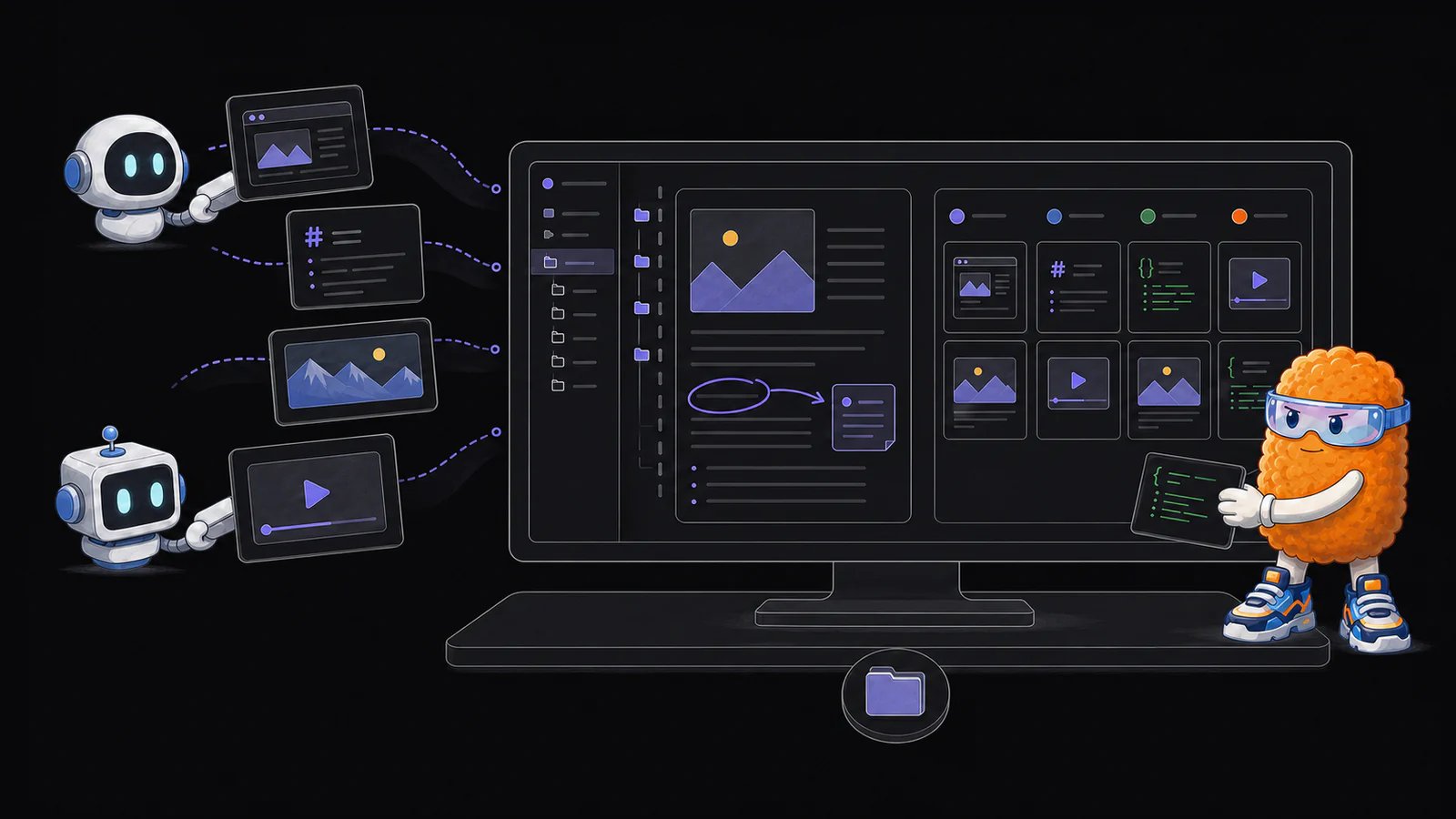
Artifact Server is a local, source-available workspace for files created or used by AI agents. It organizes HTML, Markdown, images, video, audio, PDFs, reports, and other files into projects where you can preview, edit, annotate, download, and connect them to Kanban work.
Agents connect through MCP or its checked OpenAPI contract. Artifact Server is experimental and built for one person using local files and local agents. It has no accounts or cloud service.
Inspect the source, setup instructions, MCP reference, and HTTP API contract.
 ## What Artifact Server does
* Organizes artifacts into projects.
* Links existing files without copying them.
* Stores new files when Artifact Server should own the bytes.
* Previews and edits HTML, Markdown, images, video, audio, PDFs, text, and other files.
* Keeps browser comments with each artifact.
* Tracks work on a four-column Kanban board.
* Exposes 11 MCP tools and an OpenAPI contract.
Use Artifact Server when agent output is spread across repositories, project folders, downloads, or temporary locations and you need one local place to find and inspect it.
## Link existing files or publish new ones
A **linked artifact** points to a file that already lives on your computer. The original file remains the source of truth. Editing it through Artifact Server writes to that file, and conflict checks prevent an older view from silently overwriting a newer external edit.
A **managed artifact** stores its bytes in Artifact Server. Use this when an agent creates a report, prototype, image, recording, or other output that does not have a permanent home yet.
Both kinds of artifacts use the same project tree, viewers, editor, annotations, downloads, and Kanban connections.
## Review agent output in the browser
Self-contained HTML opens in a sandboxed viewer. Relative CSS, JavaScript, images, fonts, and media work when the files are indexed at matching project paths. Markdown uses Plannotator's packaged viewer and editor. Images, video, audio, PDFs, text, and unknown binary files have built-in previews or raw downloads.
Comments stay in Artifact Server for human reference. Artifact Server does not send them back to an agent or turn them into a review submission.
## Connect agents through MCP
The local server exposes MCP over Streamable HTTP:
```text theme={null}
http://127.0.0.1:7337/mcp
```
Agents can discover projects, search and read artifacts, link local files, publish managed files, repair moved links, and manage Kanban cards. Start with `artifact_list_projects`. Prefer `artifact_link` when a useful file already exists on disk. Use `artifact_publish` when Artifact Server should own the file.
## Run Artifact Server
Artifact Server requires Node.js 22 or newer and pnpm.
```bash theme={null}
git clone https://github.com/plannotator/artifact-server.git
cd artifact-server
pnpm install
pnpm build
pnpm start
```
Open [http://127.0.0.1:7337](http://127.0.0.1:7337). Artifact Server stores its catalog and managed files under `~/.plannotator/artifact-server/` by default.
## Local and source-available
Artifact Server runs on your computer. Linked files remain in their current folders. Managed files, annotations, and Kanban state stay in its local data directory.
Artifact Server is source-available, not OSI open source. It is free for individuals, nonprofits, education, public research, work solely on public OSI-licensed projects, and 30-day company evaluations. Other for-profit organizational use requires a commercial license. Read the [complete license](https://github.com/plannotator/artifact-server/blob/main/LICENSE.md) before use.
## How it relates to Plannotator
[Plannotator OSS](/open-source/) reviews plans, documents, and code with coding agents. Artifact Server focuses on finding and working with the wider set of files agents produce. The projects share document-viewing and annotation foundations but remain separate products.
Learn more about the broader category in [What is an AI artifact?](/learn/ai-development/what-is-an-ai-artifact).
*Last verified against the Artifact Server repository on July 19, 2026. Maintained by the Plannotator project.*
## What Artifact Server does
* Organizes artifacts into projects.
* Links existing files without copying them.
* Stores new files when Artifact Server should own the bytes.
* Previews and edits HTML, Markdown, images, video, audio, PDFs, text, and other files.
* Keeps browser comments with each artifact.
* Tracks work on a four-column Kanban board.
* Exposes 11 MCP tools and an OpenAPI contract.
Use Artifact Server when agent output is spread across repositories, project folders, downloads, or temporary locations and you need one local place to find and inspect it.
## Link existing files or publish new ones
A **linked artifact** points to a file that already lives on your computer. The original file remains the source of truth. Editing it through Artifact Server writes to that file, and conflict checks prevent an older view from silently overwriting a newer external edit.
A **managed artifact** stores its bytes in Artifact Server. Use this when an agent creates a report, prototype, image, recording, or other output that does not have a permanent home yet.
Both kinds of artifacts use the same project tree, viewers, editor, annotations, downloads, and Kanban connections.
## Review agent output in the browser
Self-contained HTML opens in a sandboxed viewer. Relative CSS, JavaScript, images, fonts, and media work when the files are indexed at matching project paths. Markdown uses Plannotator's packaged viewer and editor. Images, video, audio, PDFs, text, and unknown binary files have built-in previews or raw downloads.
Comments stay in Artifact Server for human reference. Artifact Server does not send them back to an agent or turn them into a review submission.
## Connect agents through MCP
The local server exposes MCP over Streamable HTTP:
```text theme={null}
http://127.0.0.1:7337/mcp
```
Agents can discover projects, search and read artifacts, link local files, publish managed files, repair moved links, and manage Kanban cards. Start with `artifact_list_projects`. Prefer `artifact_link` when a useful file already exists on disk. Use `artifact_publish` when Artifact Server should own the file.
## Run Artifact Server
Artifact Server requires Node.js 22 or newer and pnpm.
```bash theme={null}
git clone https://github.com/plannotator/artifact-server.git
cd artifact-server
pnpm install
pnpm build
pnpm start
```
Open [http://127.0.0.1:7337](http://127.0.0.1:7337). Artifact Server stores its catalog and managed files under `~/.plannotator/artifact-server/` by default.
## Local and source-available
Artifact Server runs on your computer. Linked files remain in their current folders. Managed files, annotations, and Kanban state stay in its local data directory.
Artifact Server is source-available, not OSI open source. It is free for individuals, nonprofits, education, public research, work solely on public OSI-licensed projects, and 30-day company evaluations. Other for-profit organizational use requires a commercial license. Read the [complete license](https://github.com/plannotator/artifact-server/blob/main/LICENSE.md) before use.
## How it relates to Plannotator
[Plannotator OSS](/open-source/) reviews plans, documents, and code with coding agents. Artifact Server focuses on finding and working with the wider set of files agents produce. The projects share document-viewing and annotation foundations but remain separate products.
Learn more about the broader category in [What is an AI artifact?](/learn/ai-development/what-is-an-ai-artifact).
*Last verified against the Artifact Server repository on July 19, 2026. Maintained by the Plannotator project.*