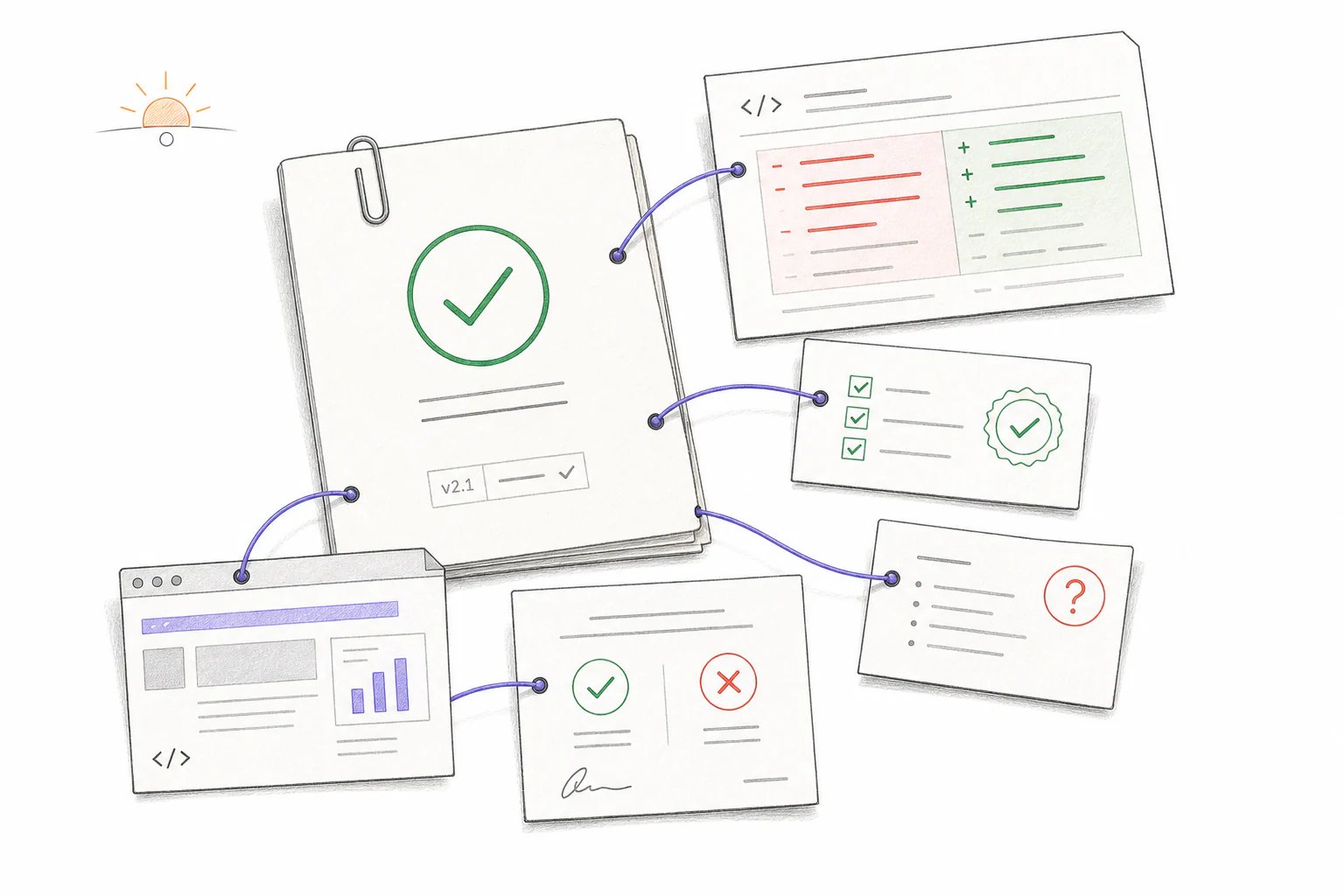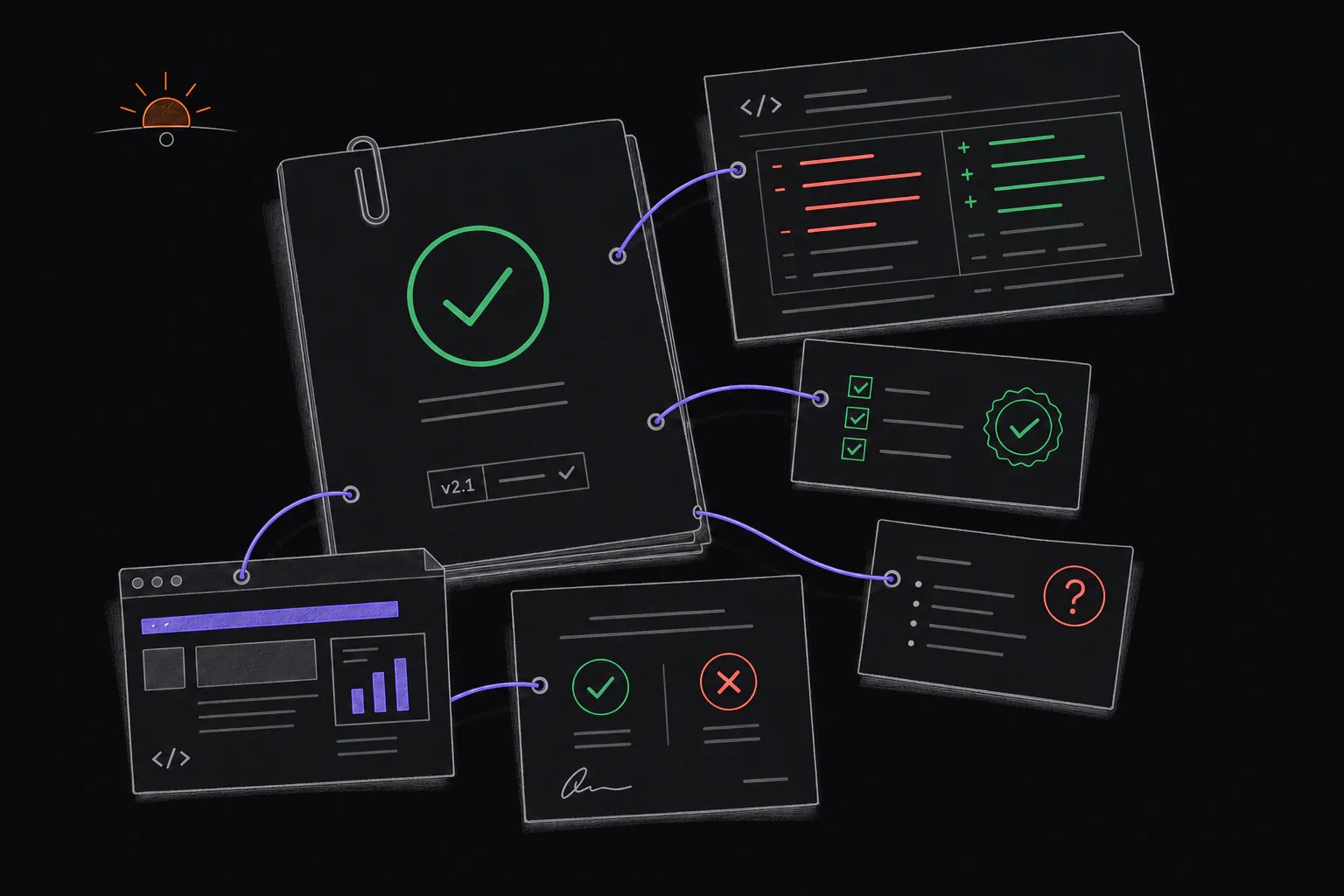
Human review checkpoints for coding agents
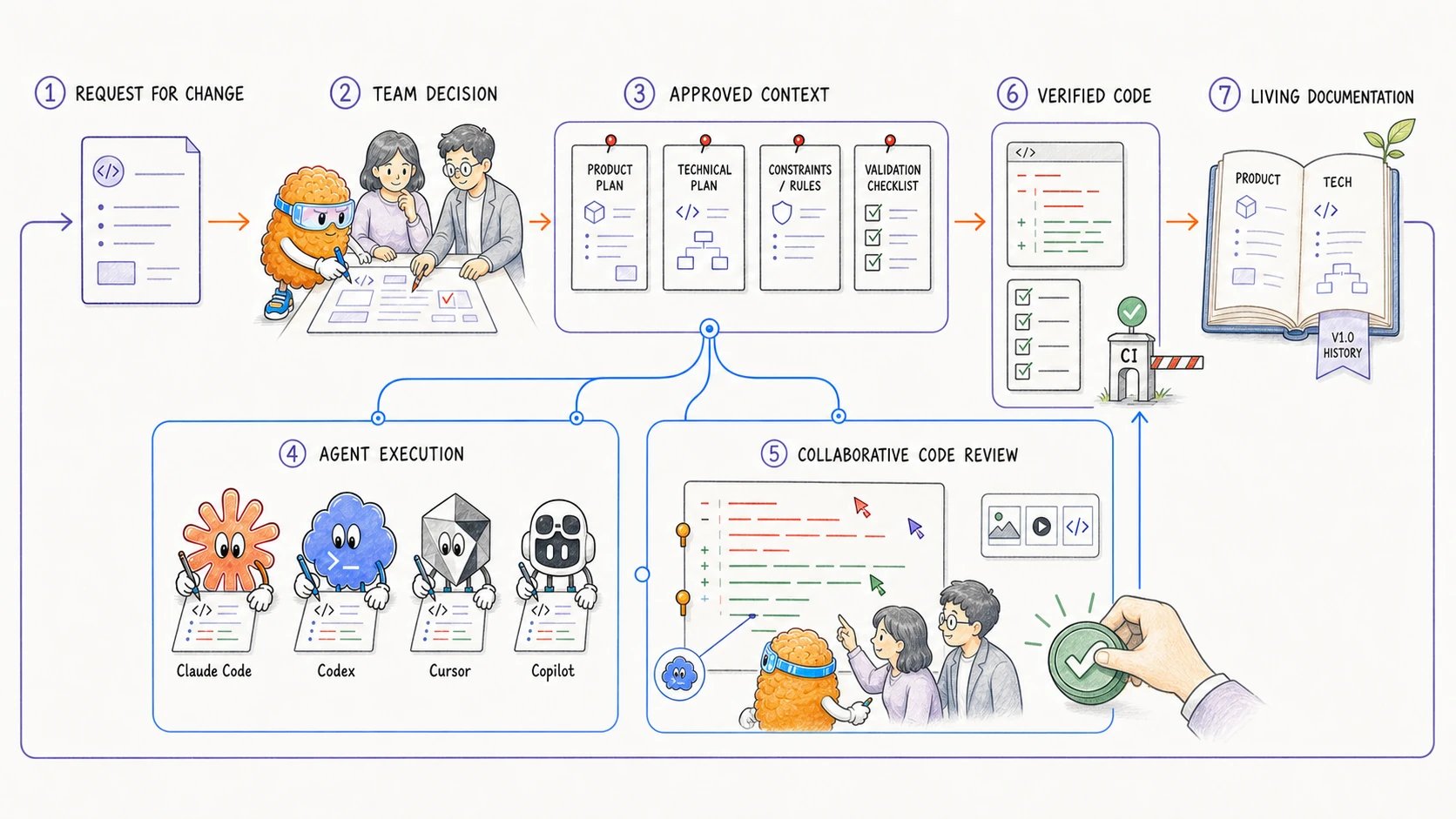
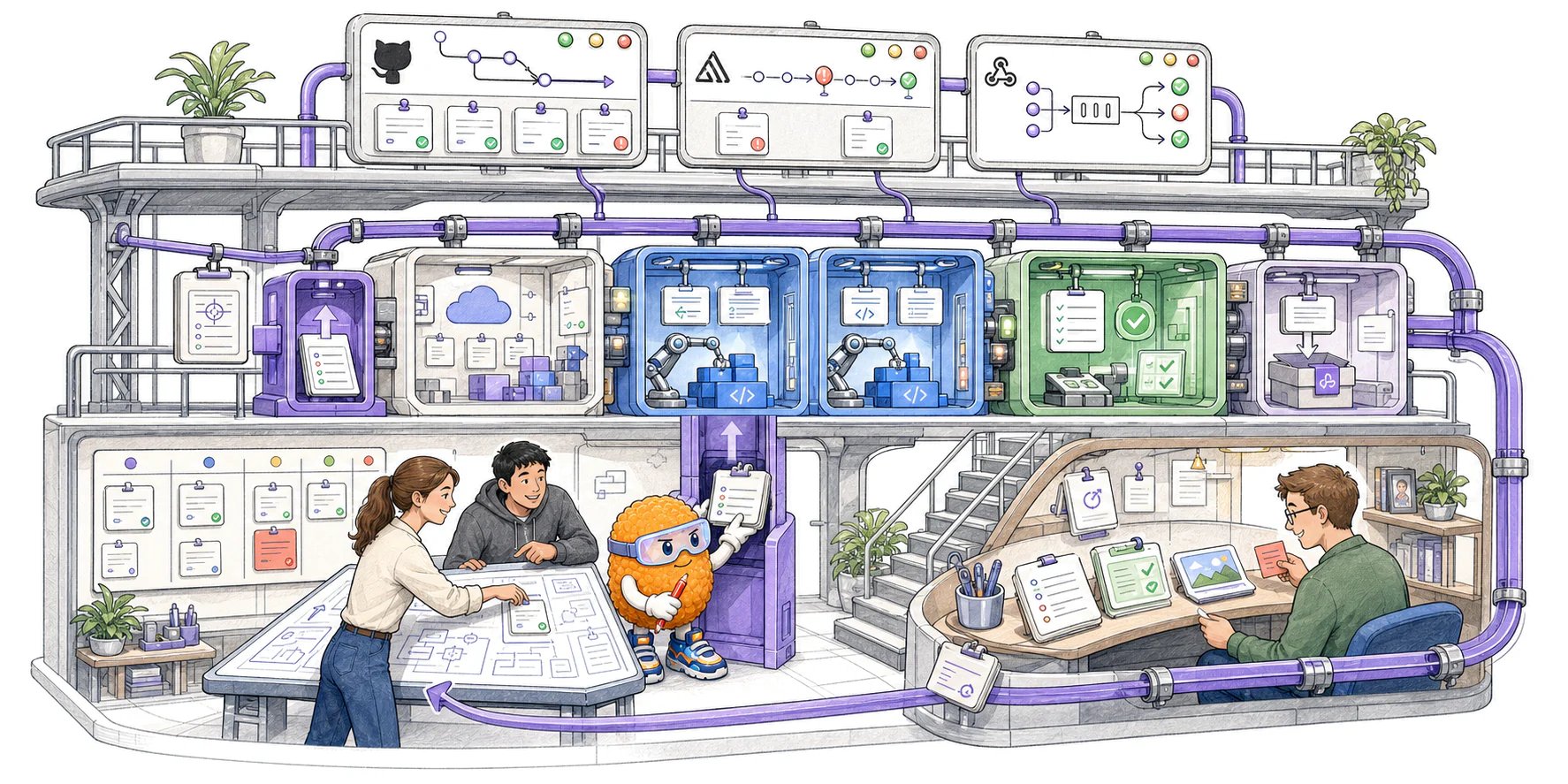
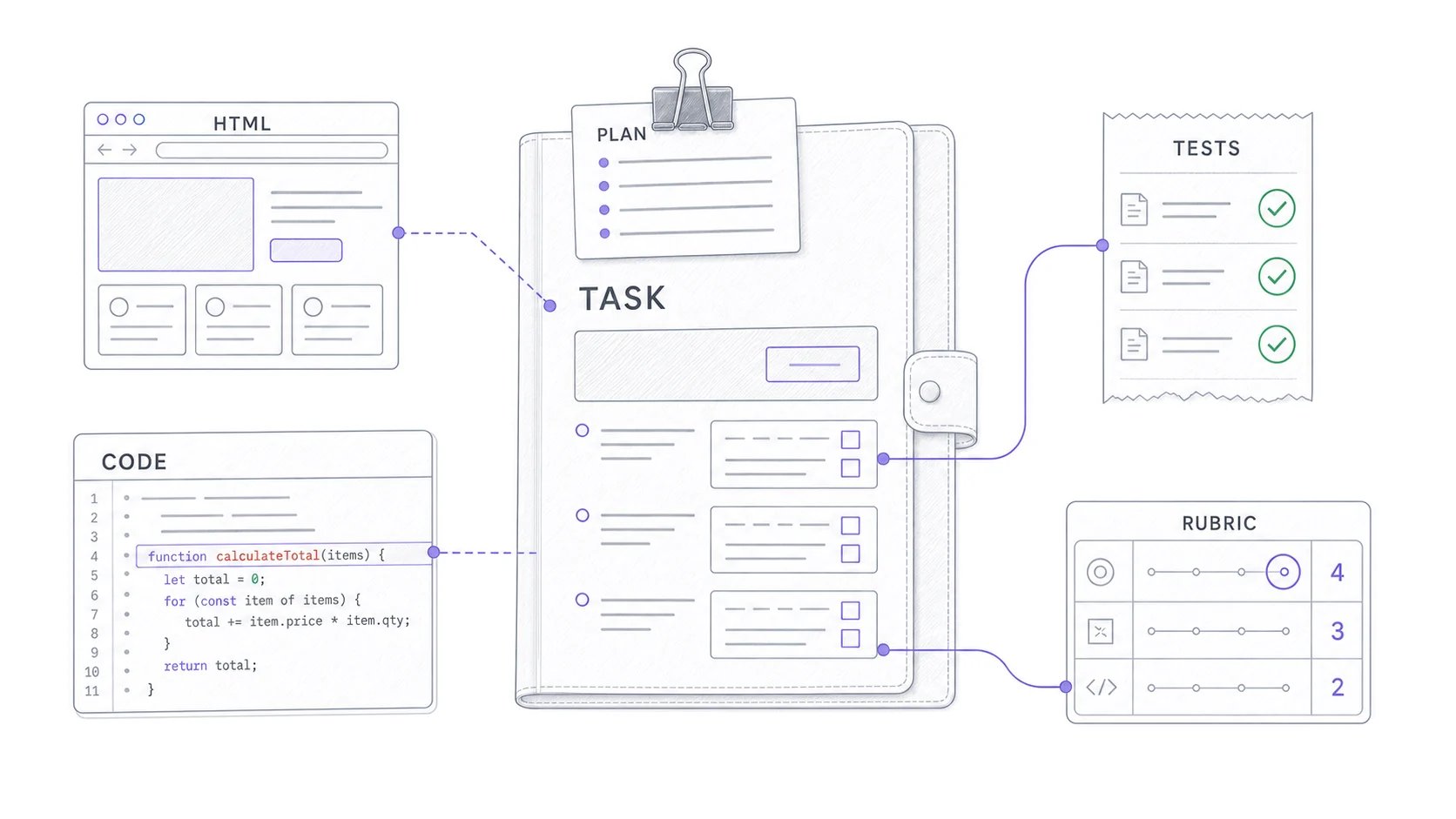
A team workflow connects a request, shared planning context, agent execution, collaborative code review, verified code, and maintained documentation.

Markdown or HTML for coding agents

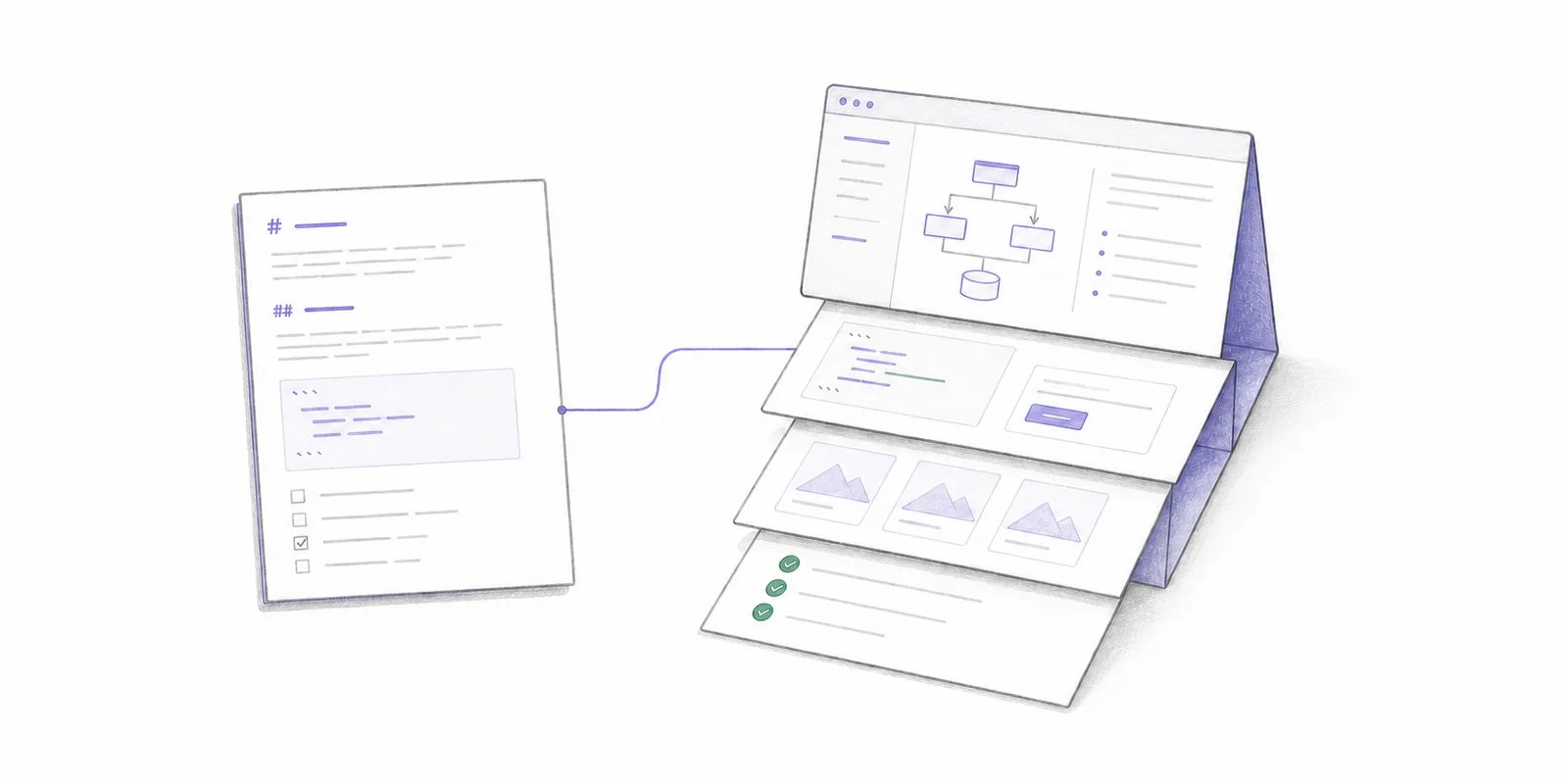
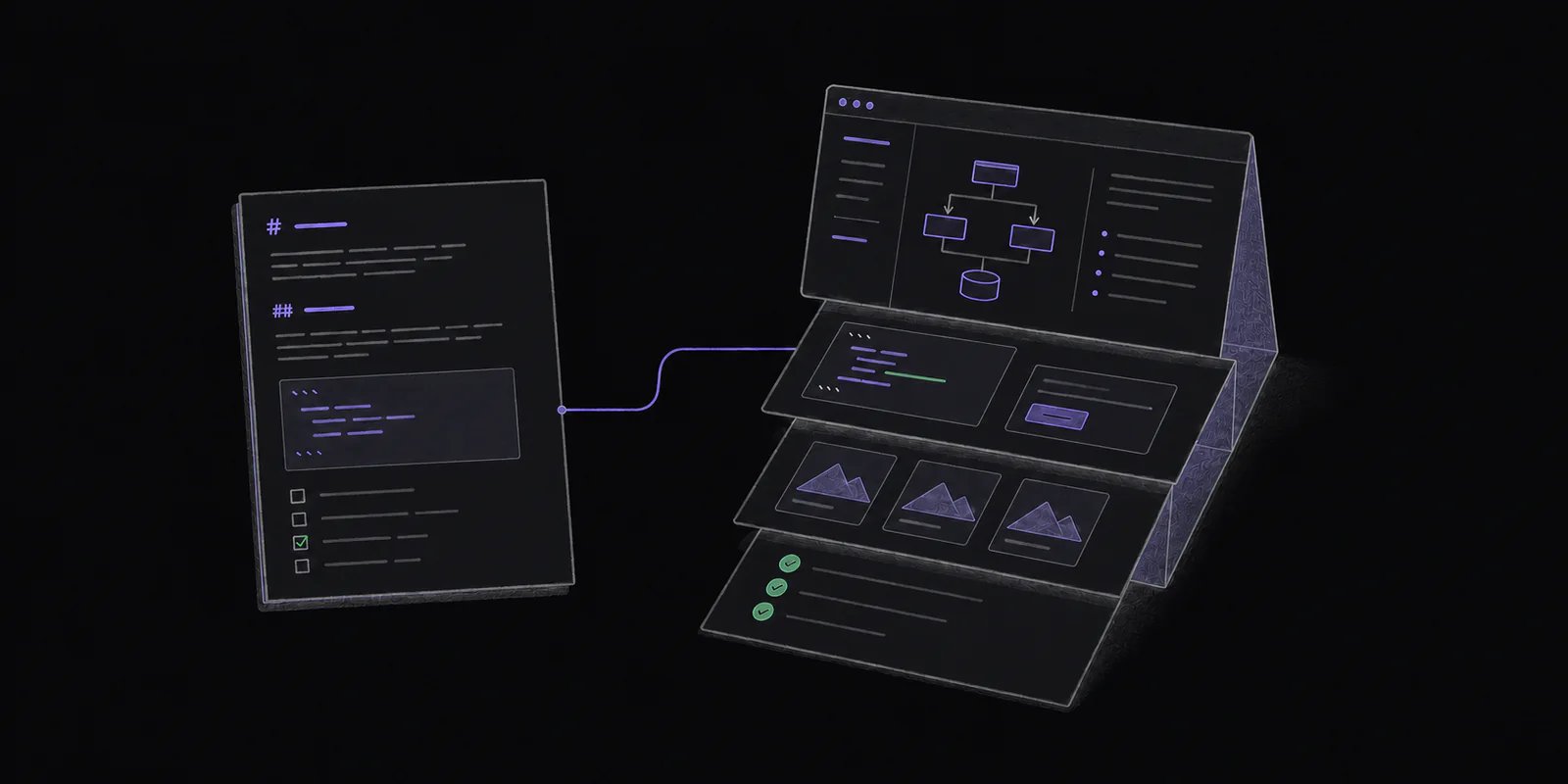
A linear Markdown manuscript and an unfolding HTML artifact show when an AI coding agent should choose editable prose or a spatial interactive review surface.

Claude Artifacts from chat to review
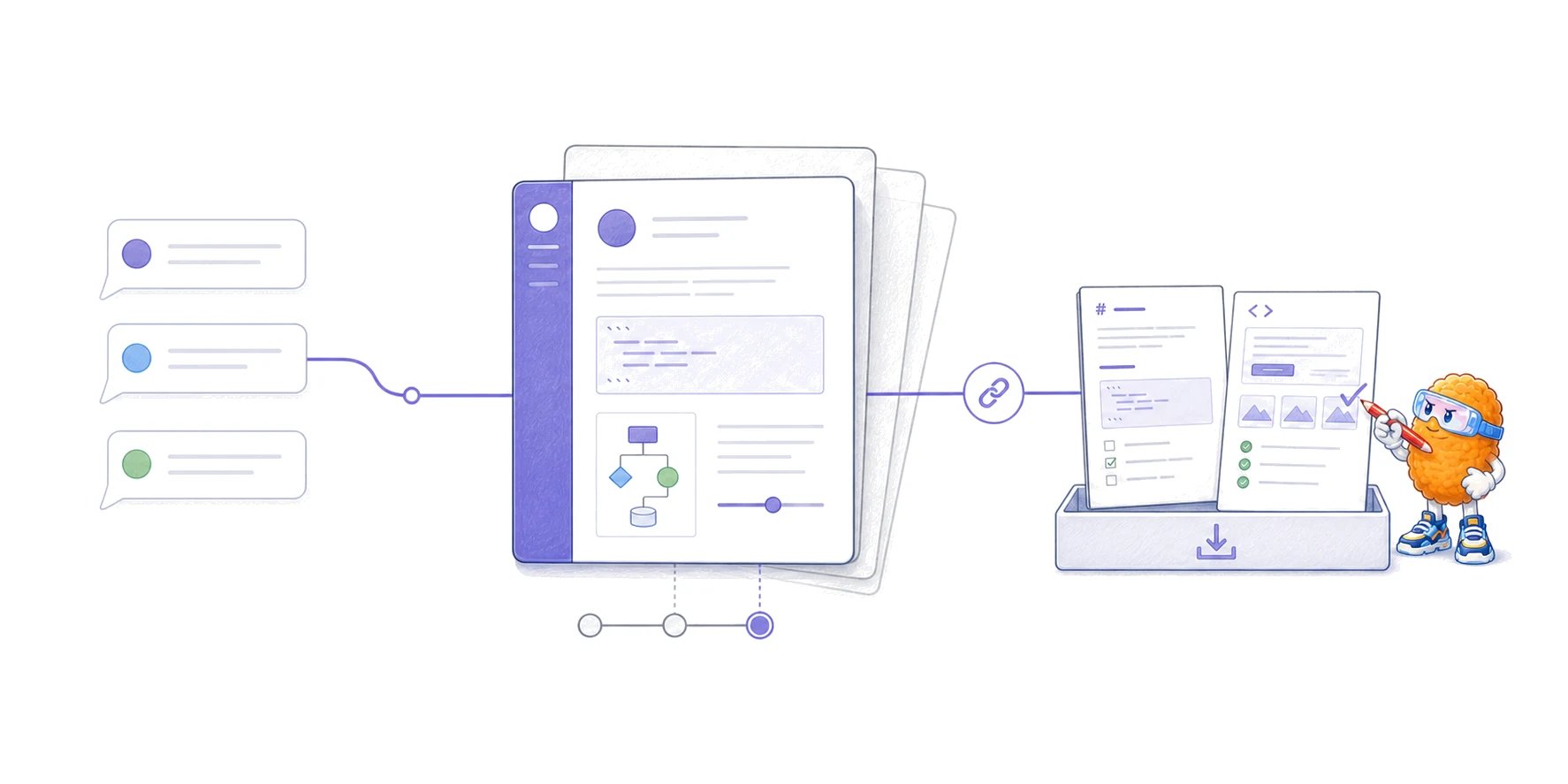
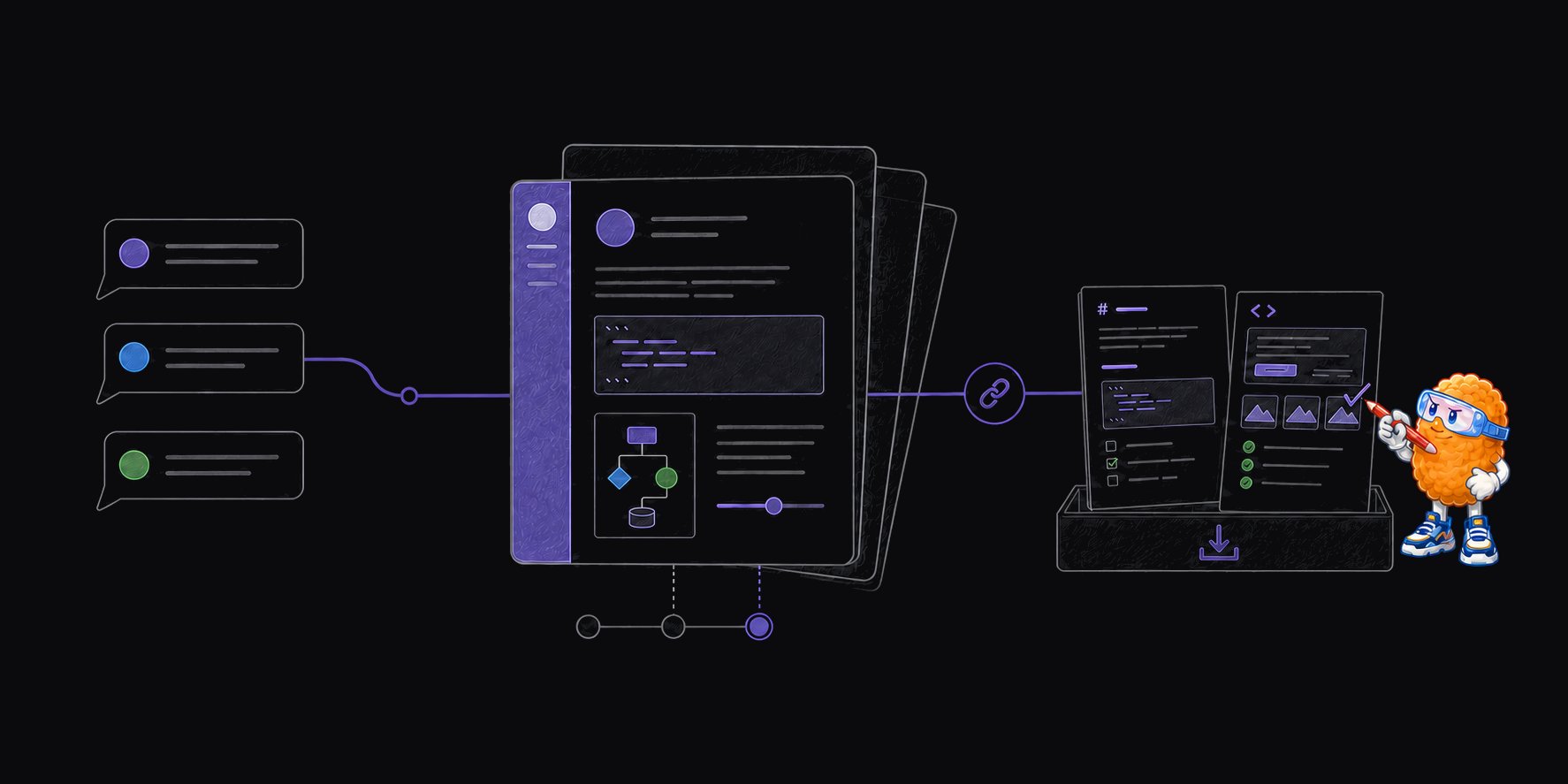
A chat becomes a standalone interactive artifact with three versions, then Totman separately annotates exported Markdown and HTML files.

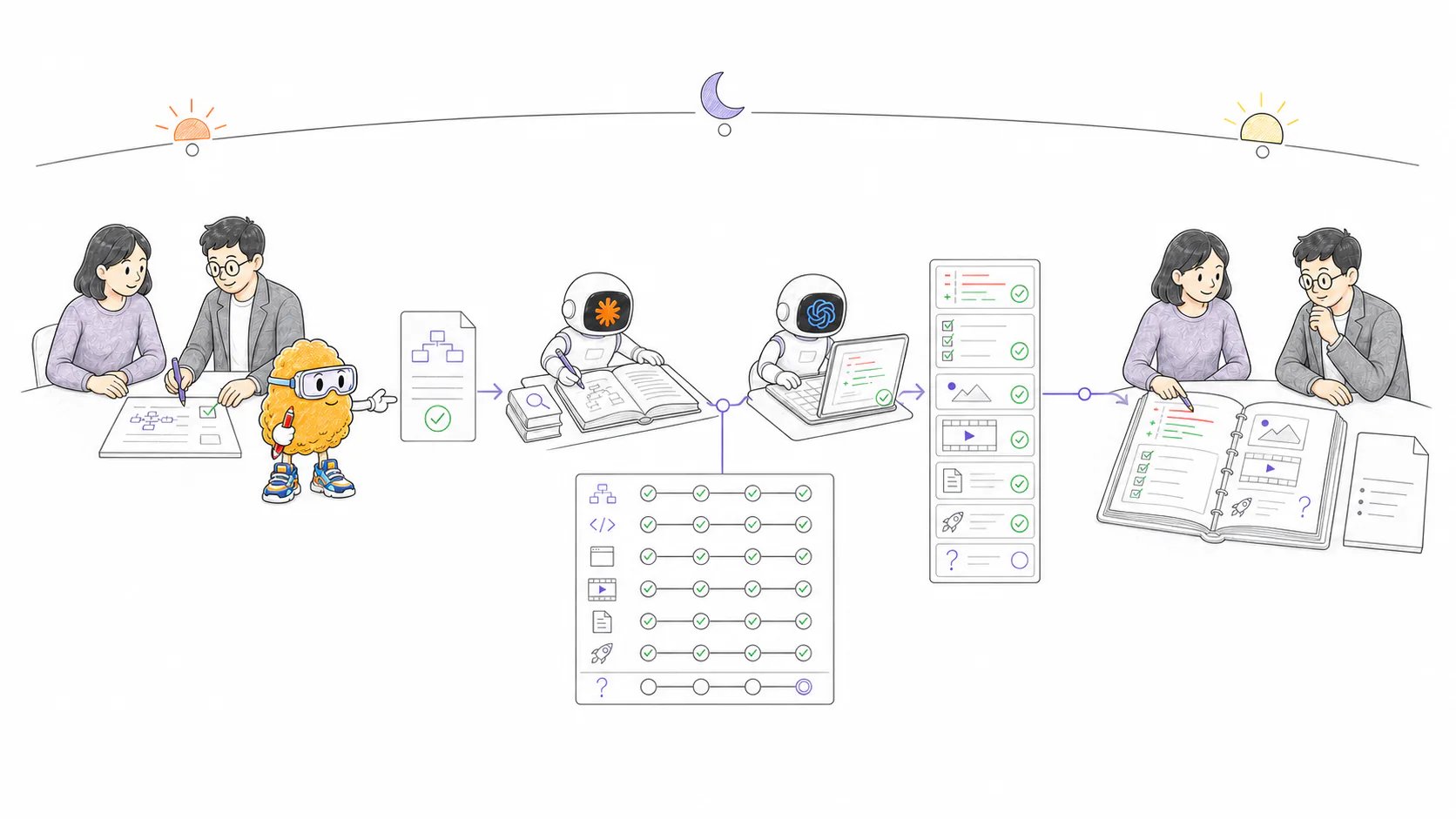
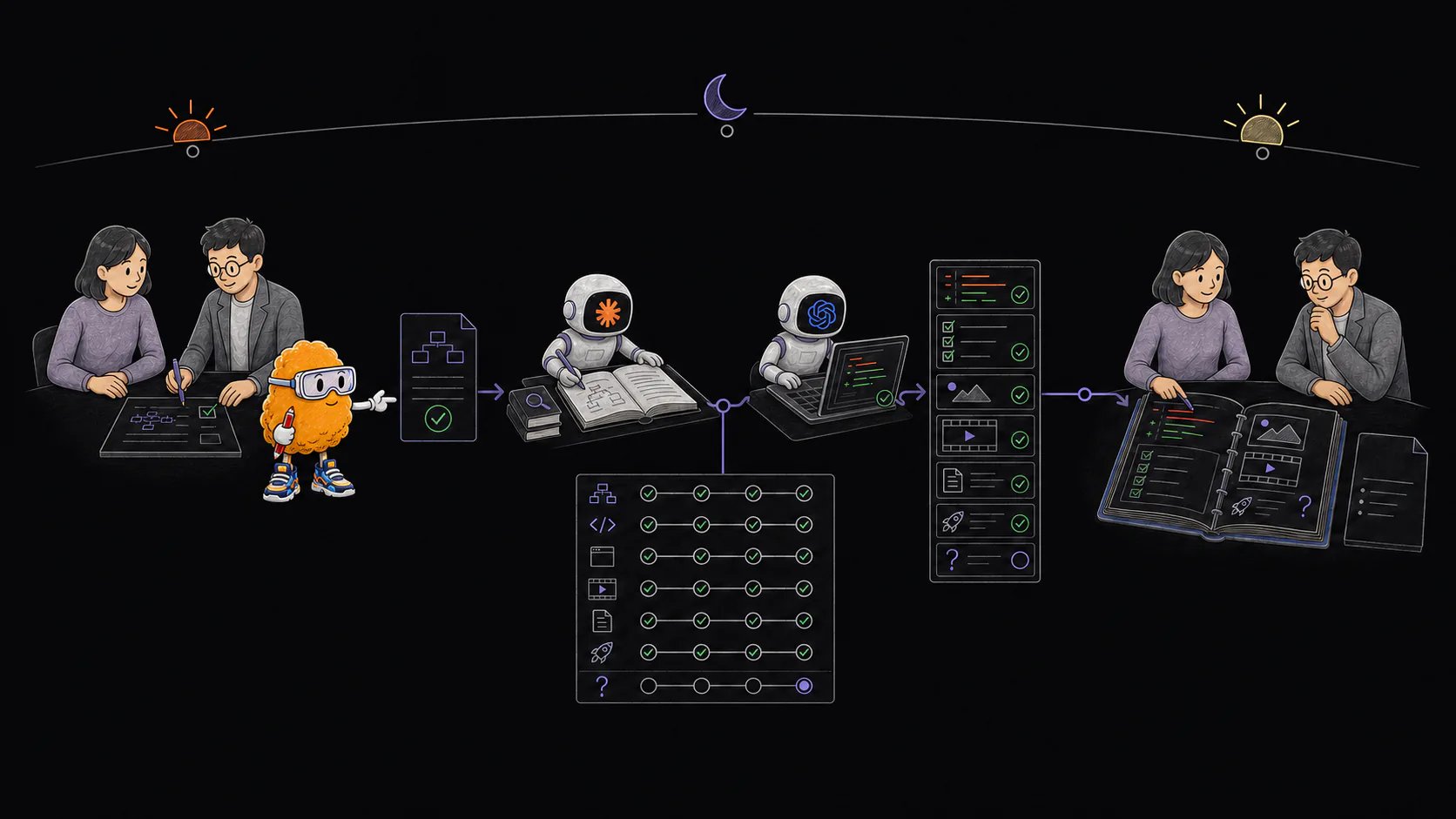
AI agent night shift

Two teammates and Totman approve an overnight goal at sunset; Claude and Codex agents work through research, code, validation, and artifacts before the team reviews the results at sunrise.

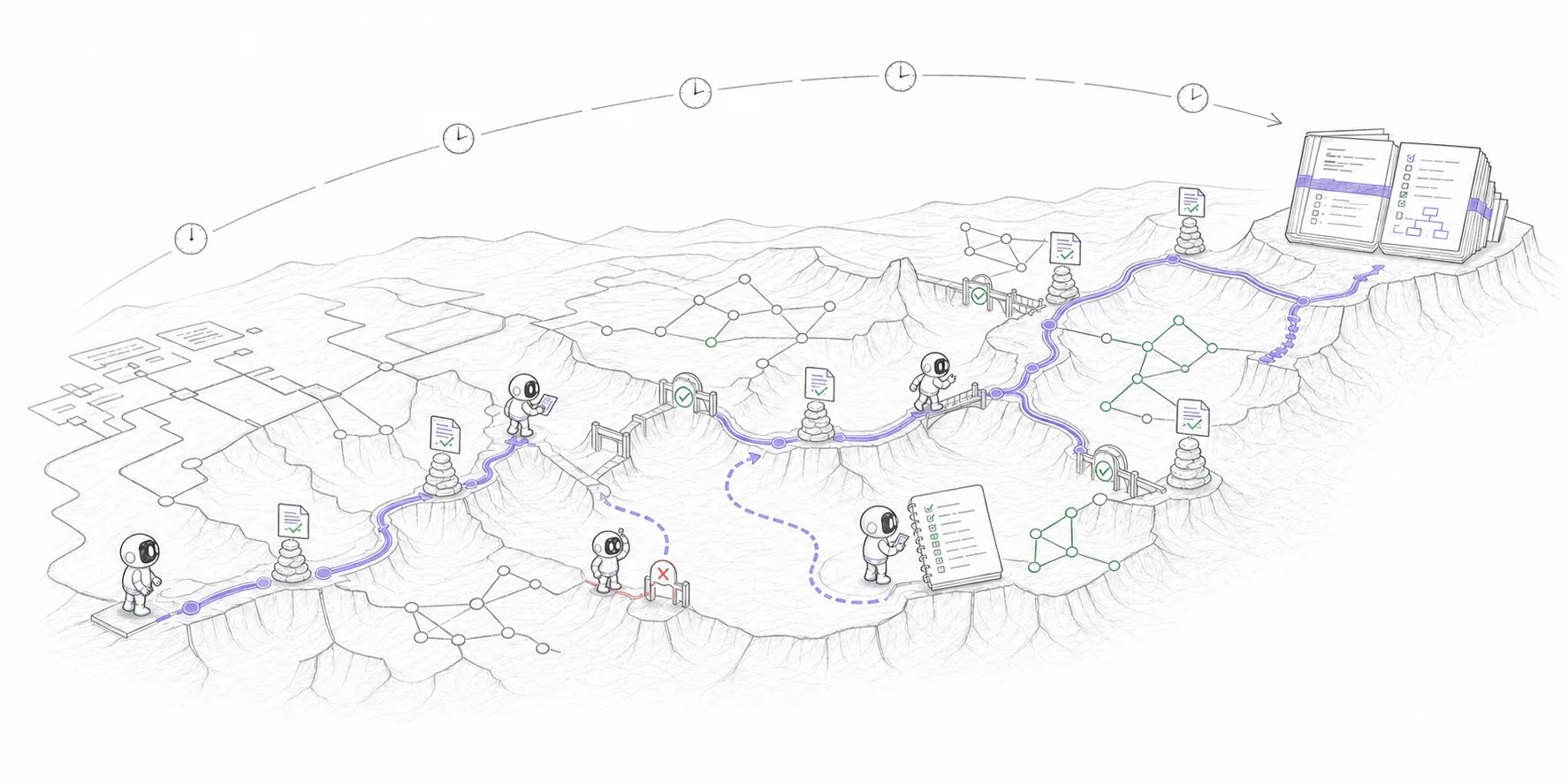
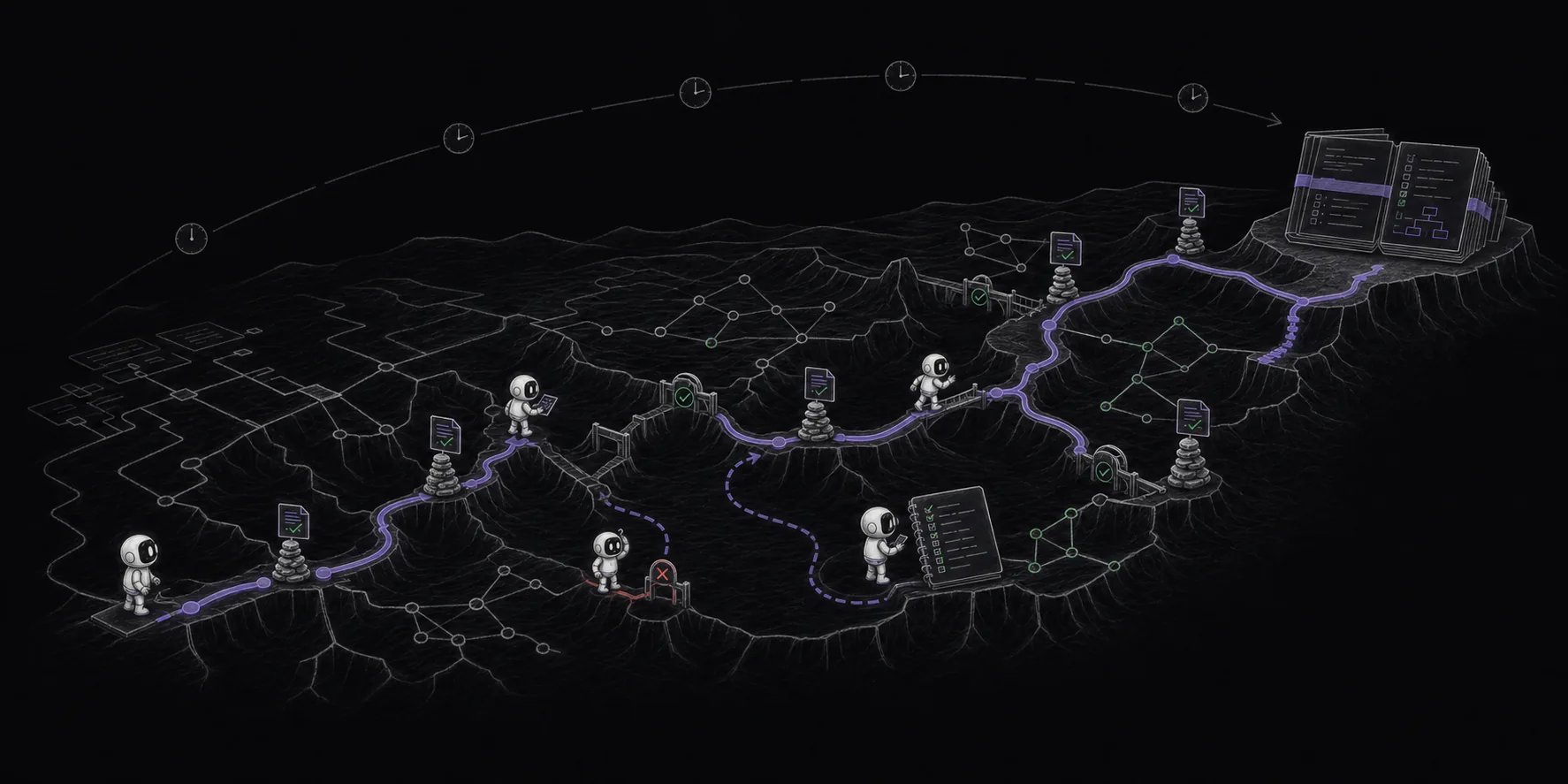
Long-horizon AI agent task

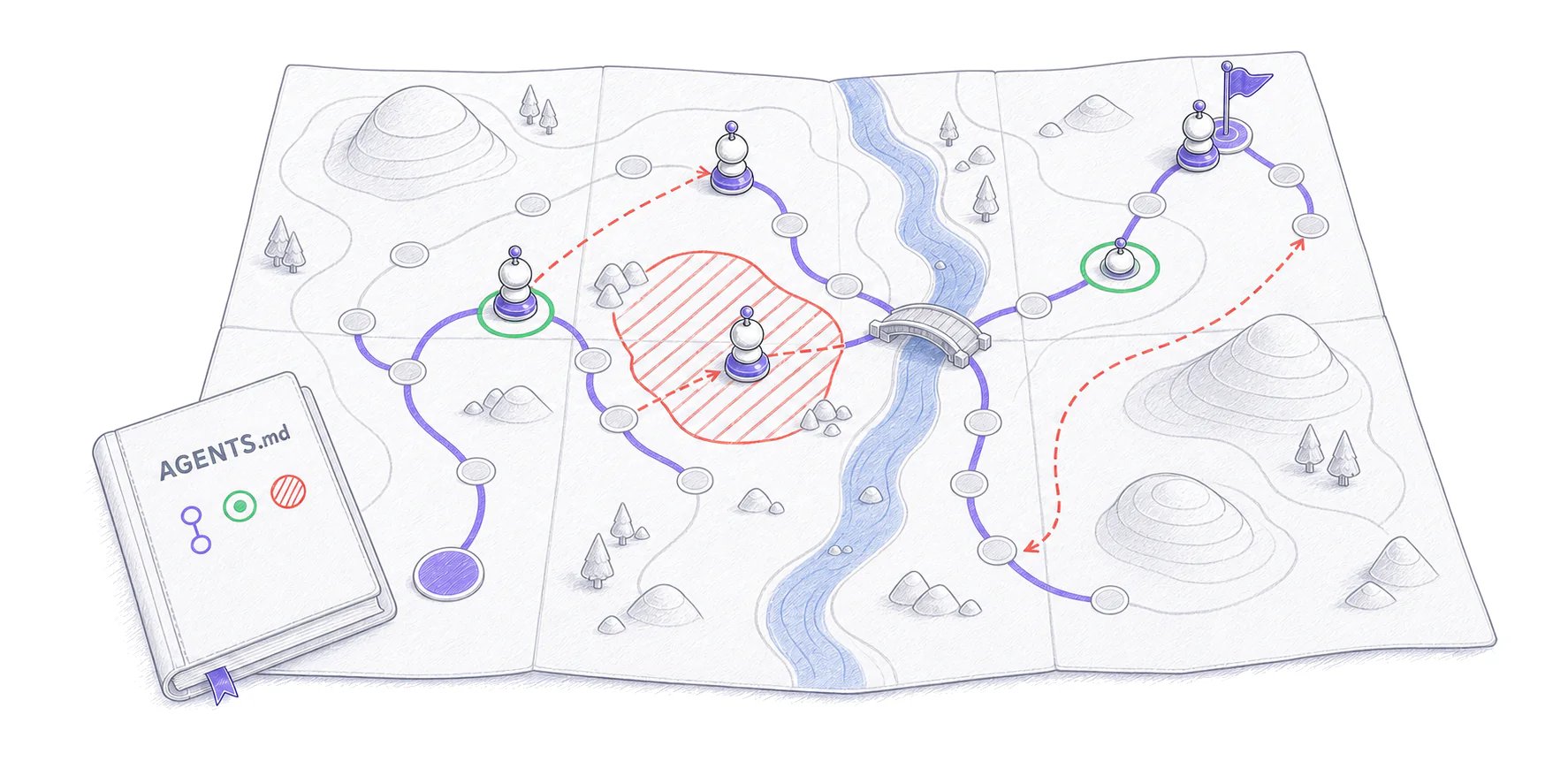
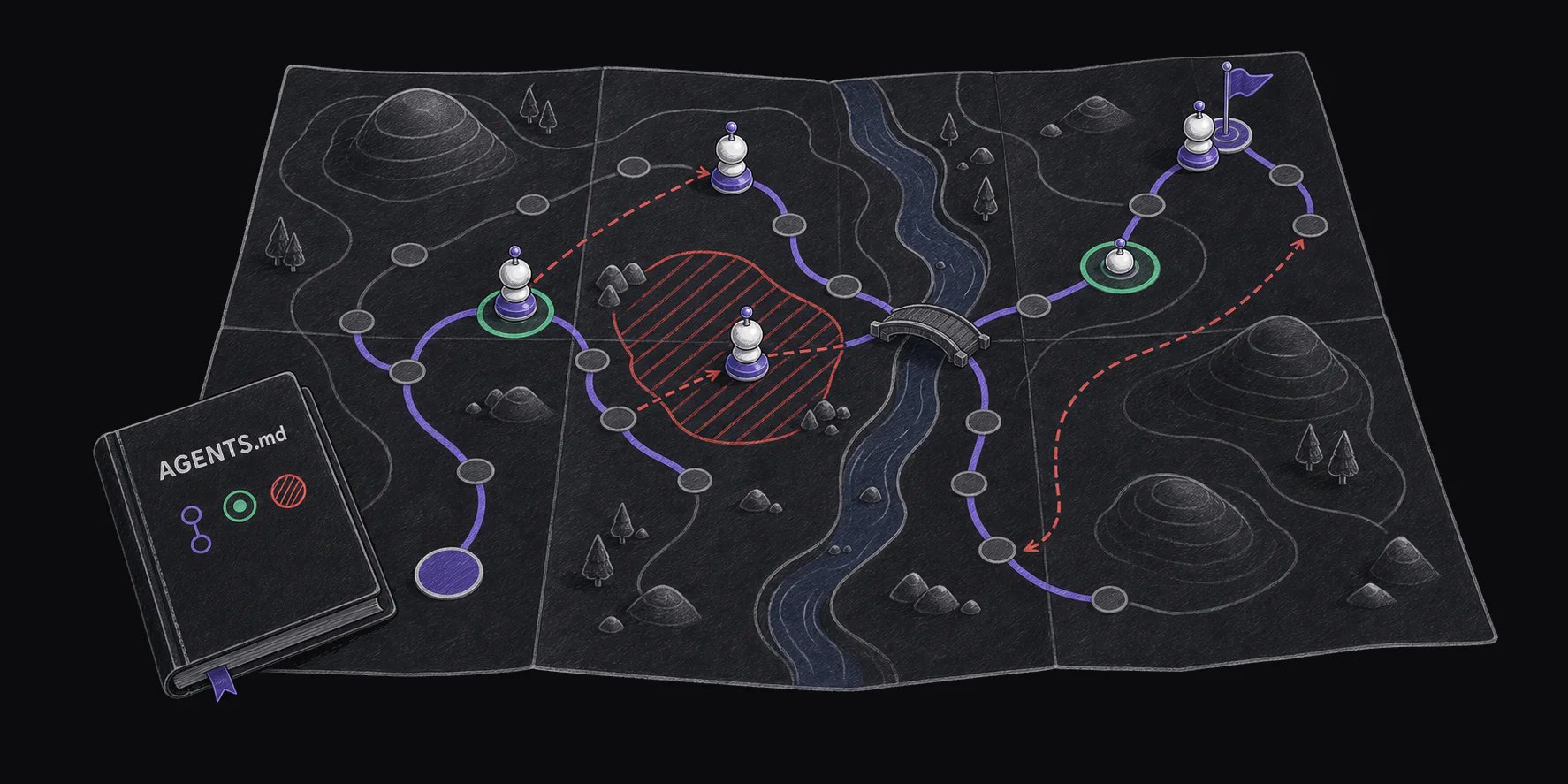
The same AI agent follows one long route across a coupled technical landscape, preserving checkpoints, recovering from a dead end, and assembling a verified review packet.

What an AI artifact can be

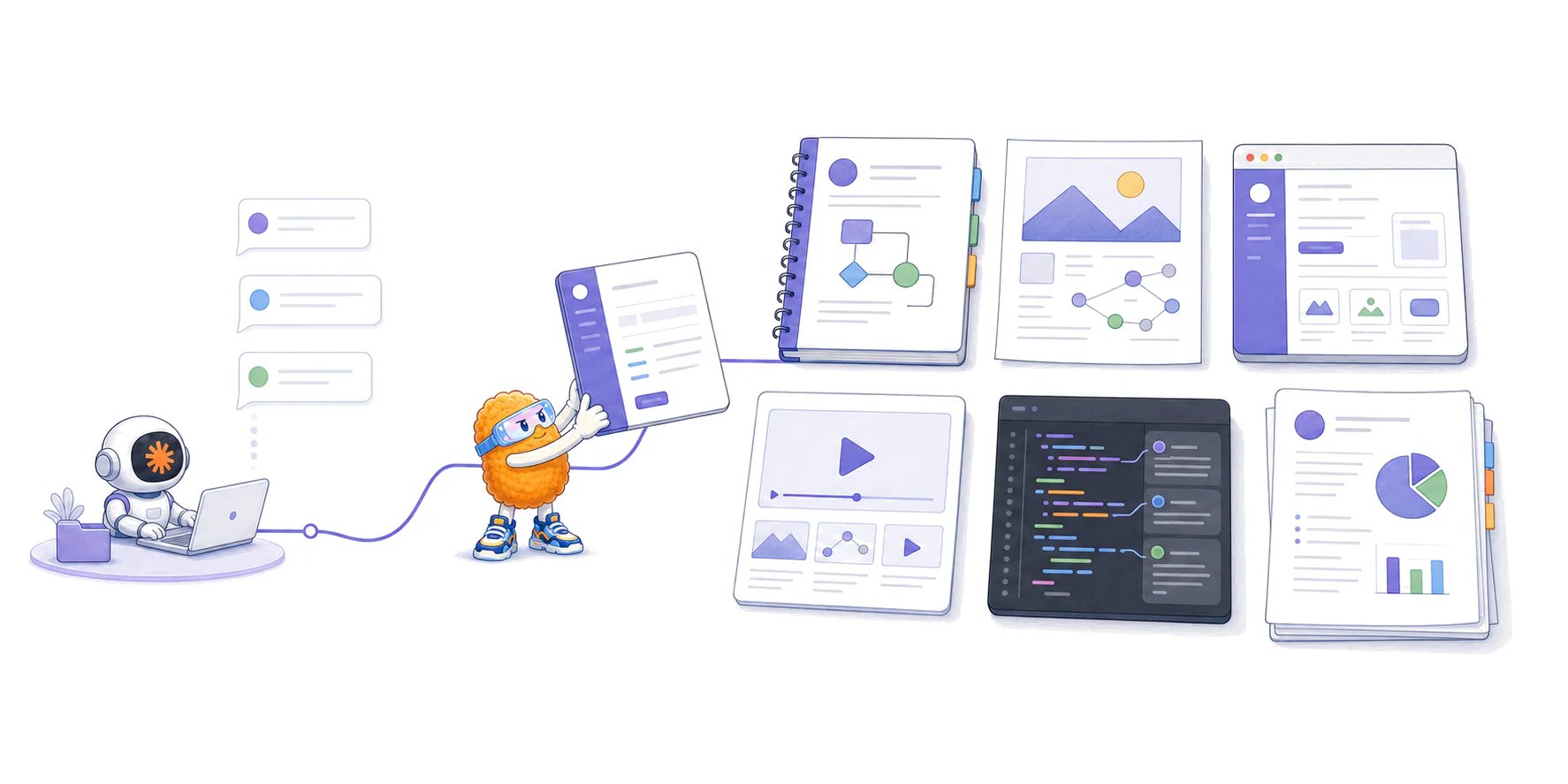
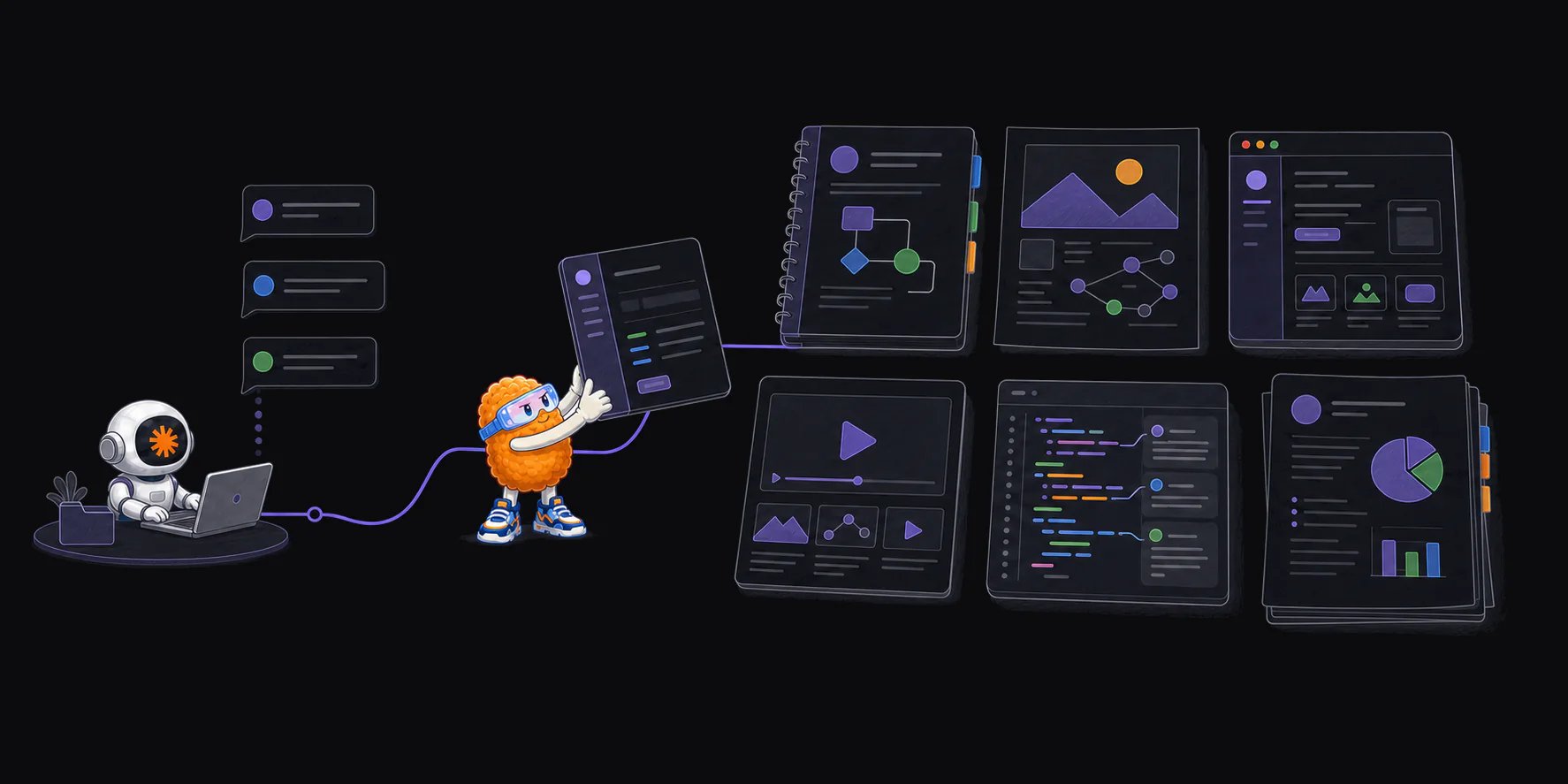
A generic AI agent turns a short chat into standalone plan, diagram, interactive prototype, video, code walkthrough, and report artifacts while Totman curates the finished work.

Why AI pull requests are harder

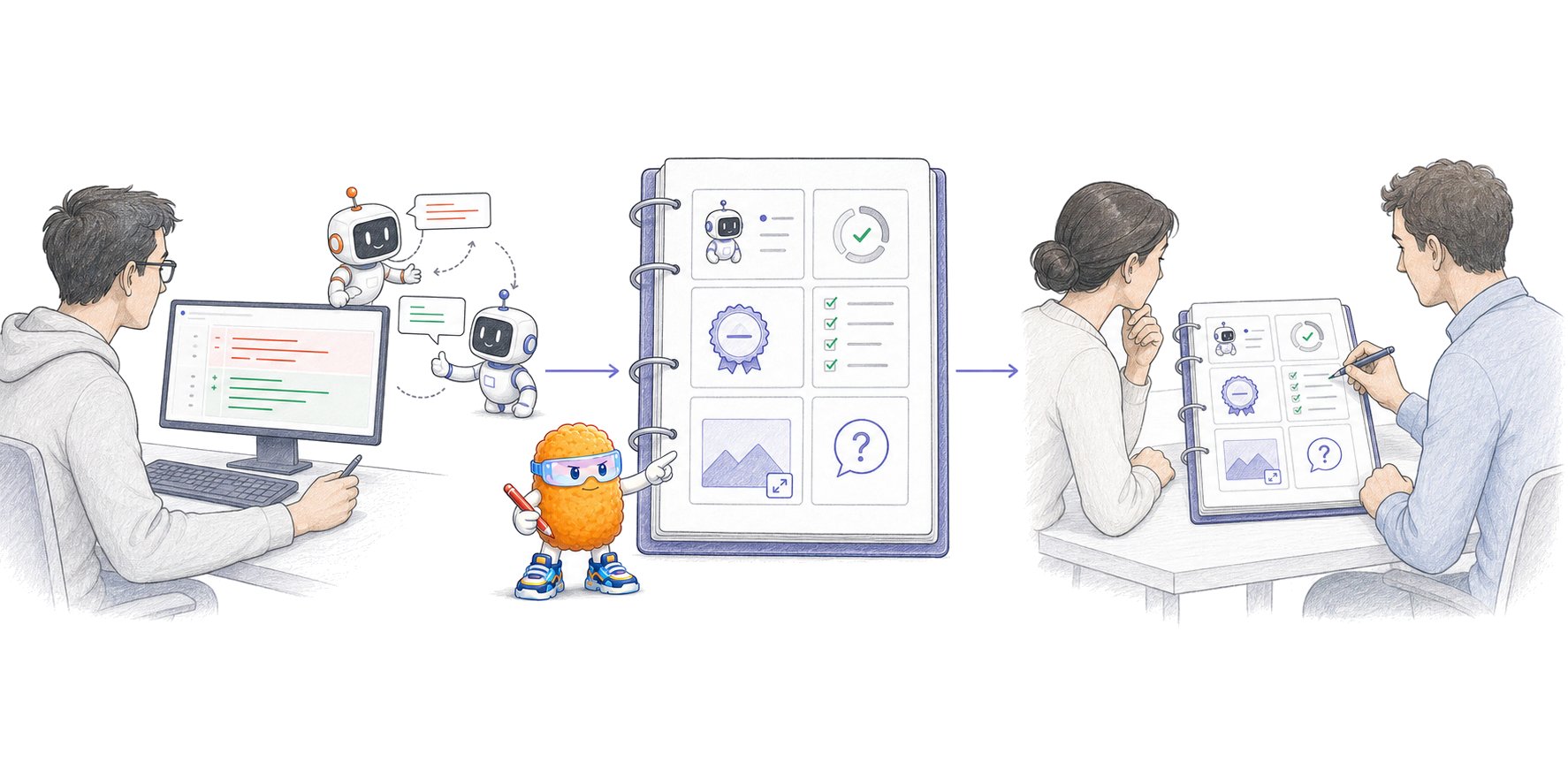
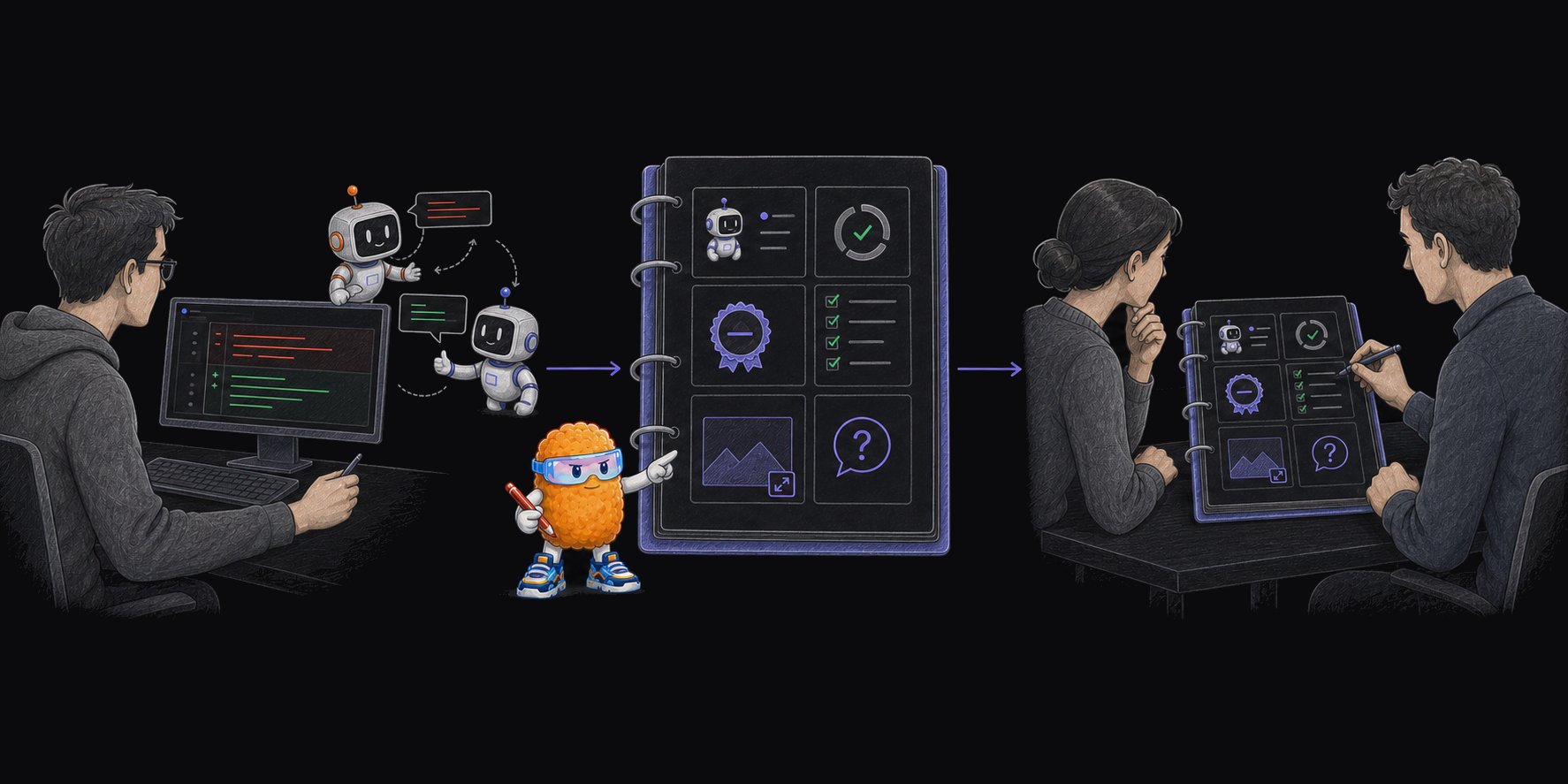
A developer discusses a pull request with coding agents while a wider team reviews the exact revision, agent provenance, readiness state, validation evidence, and unresolved questions in one shared record.

Planning and documents

Product requirements and technical design
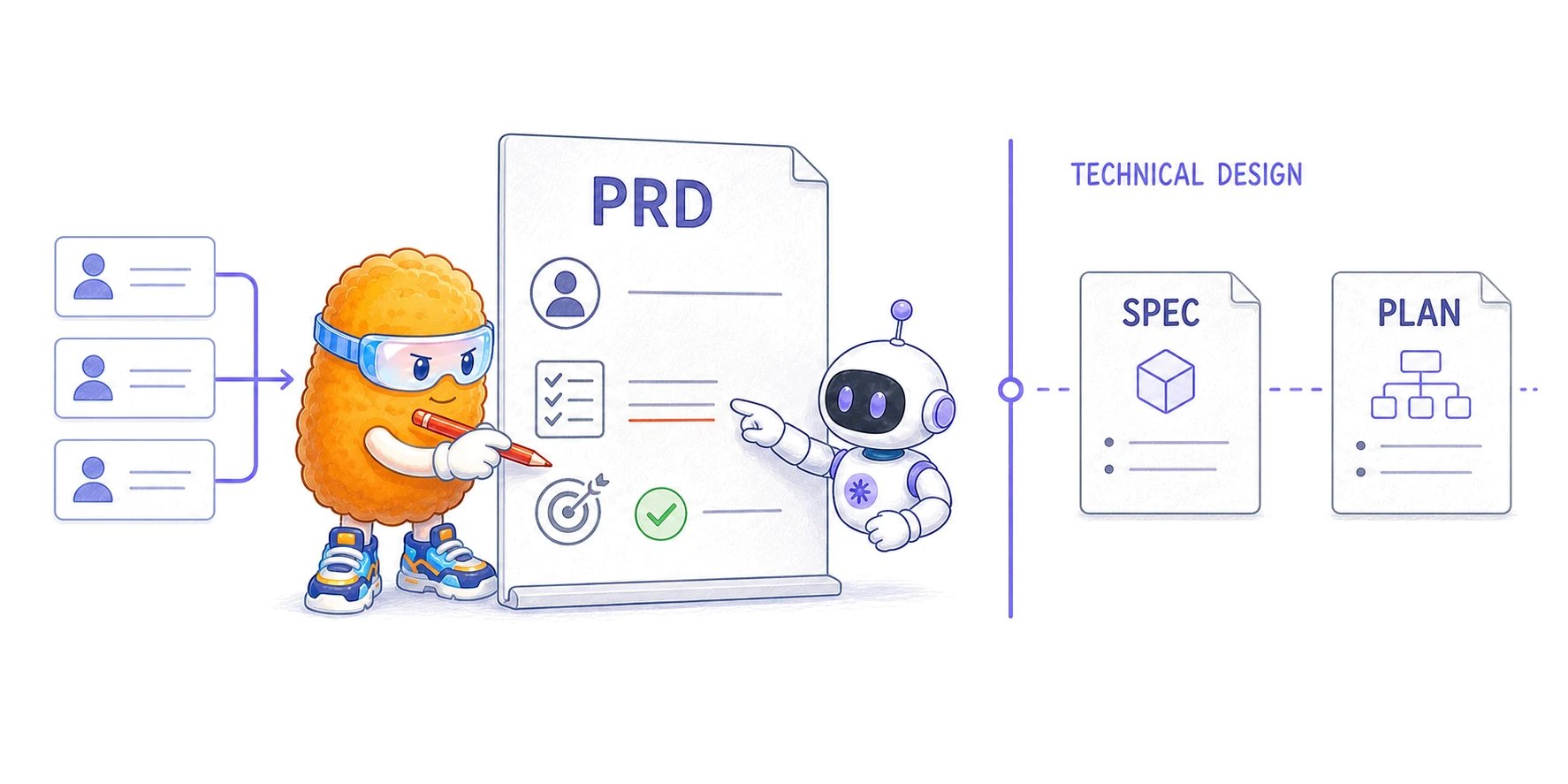
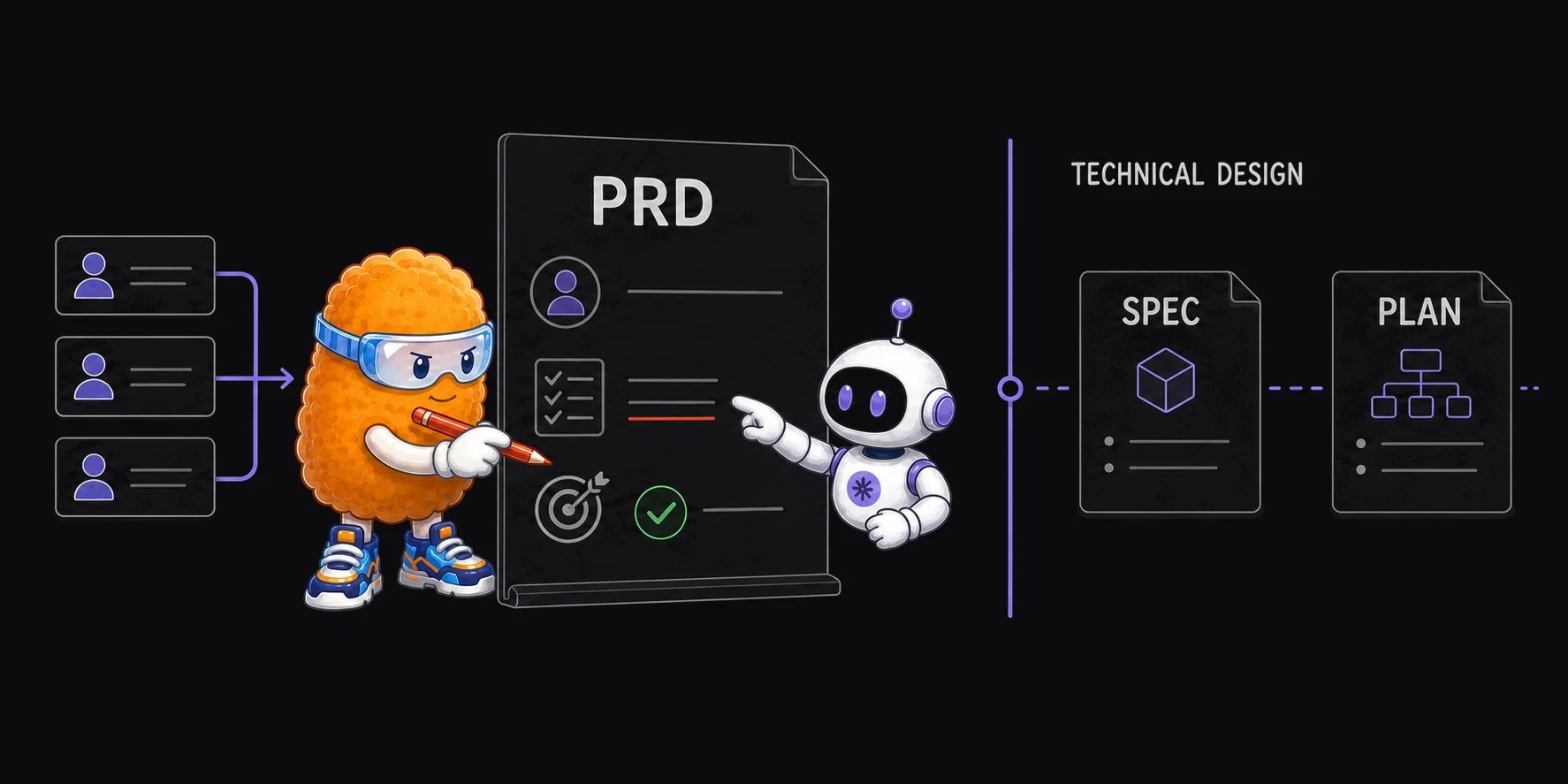
A product requirements document reviewed by Totman and a coding agent, with user evidence on the left and separate technical specification and implementation plan documents beyond the technical-design boundary.

Planning with AI coding agents

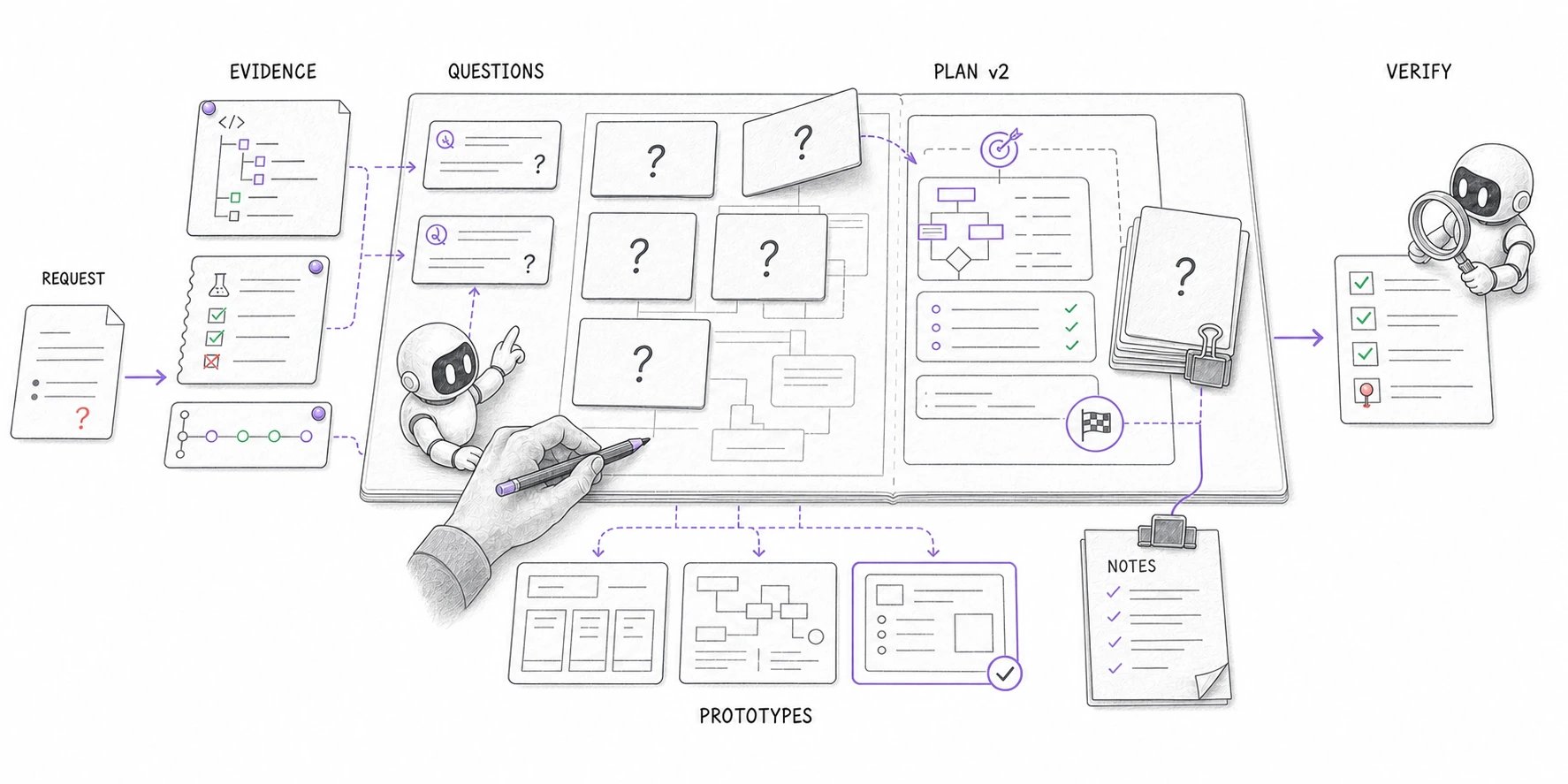
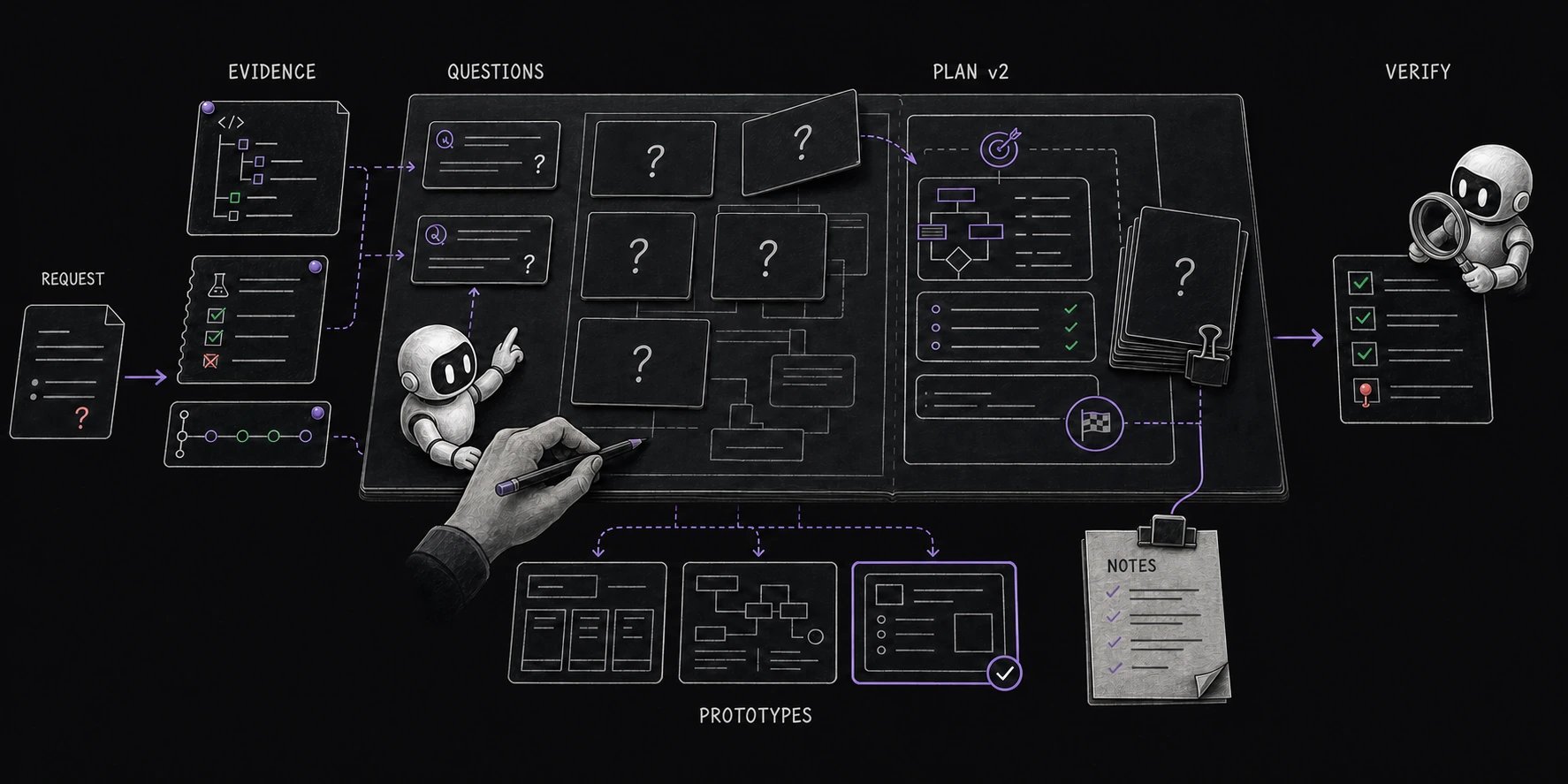
A human and two coding-agent robots uncover an AI coding plan by connecting repository evidence and interview questions to three prototypes, implementation notes, a revised plan, and independent verification.

A complete PRFAQ example

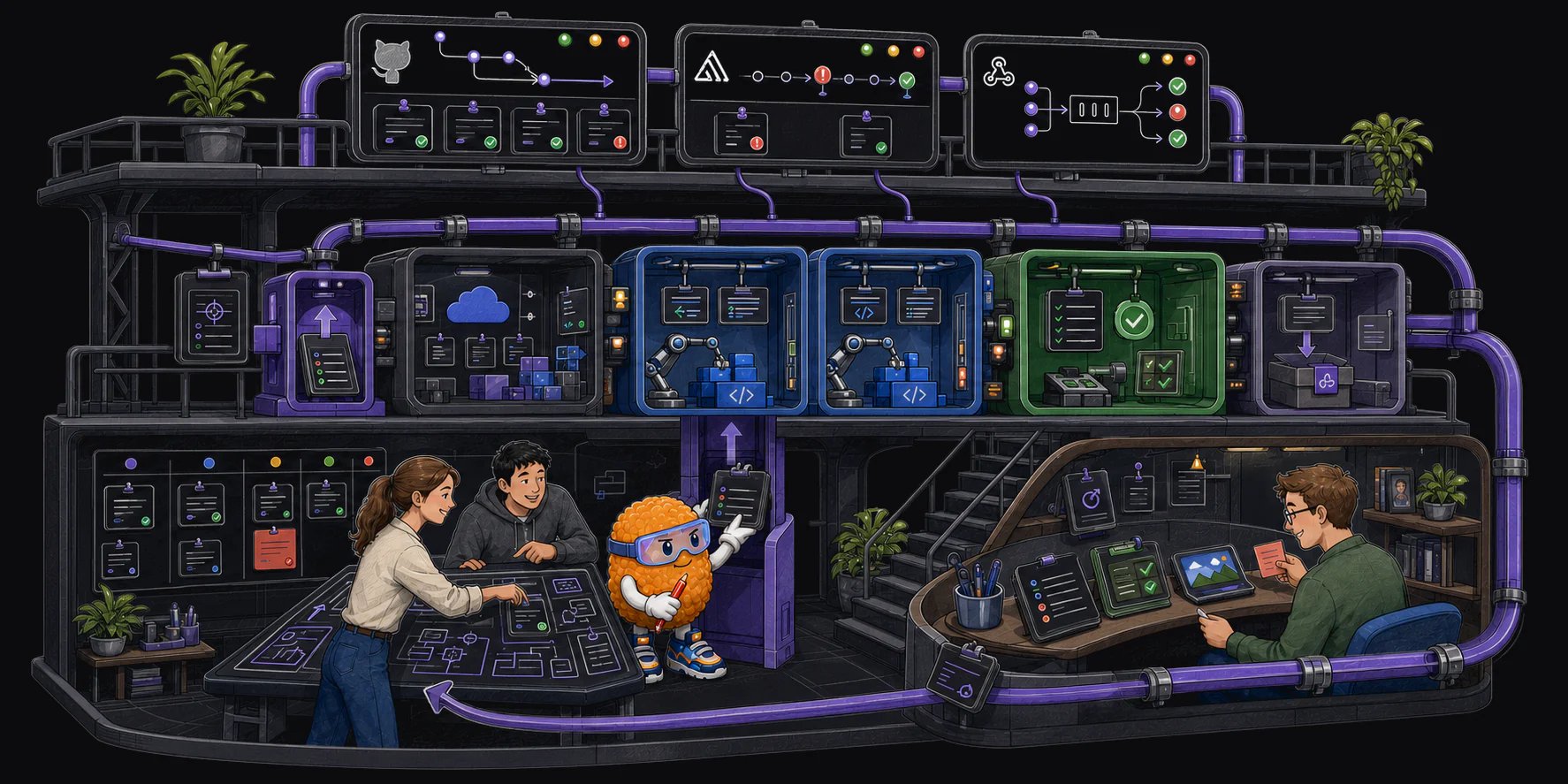
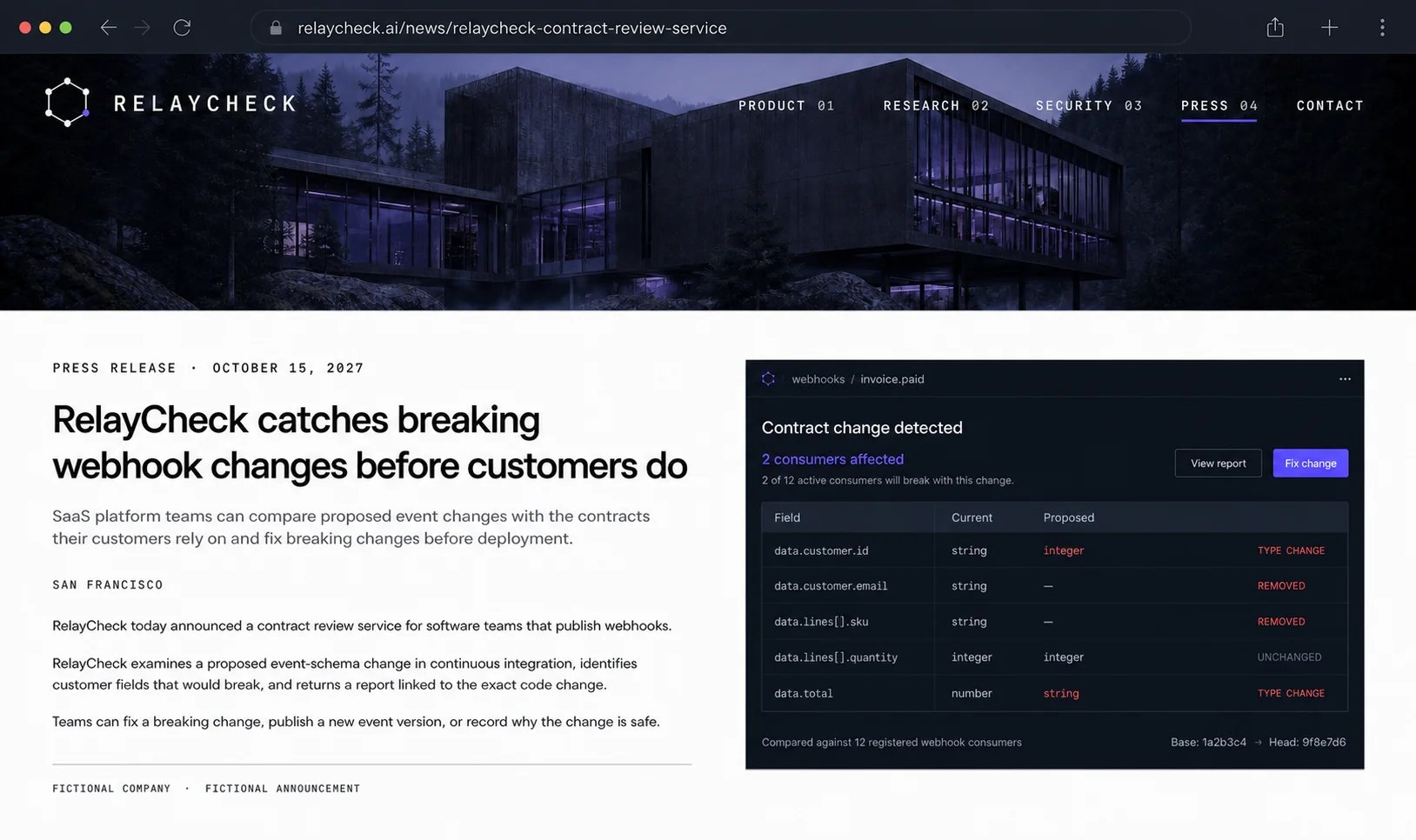
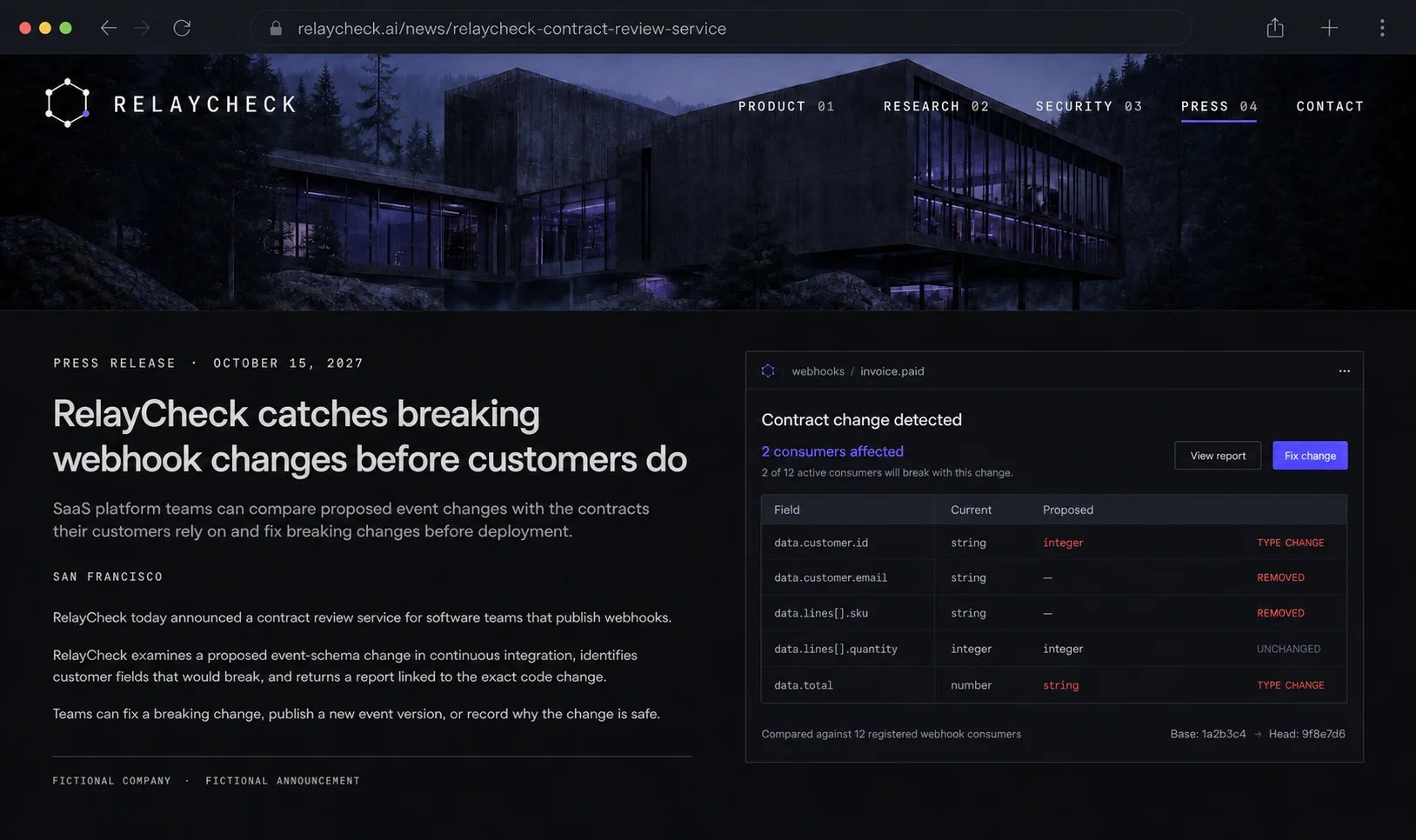
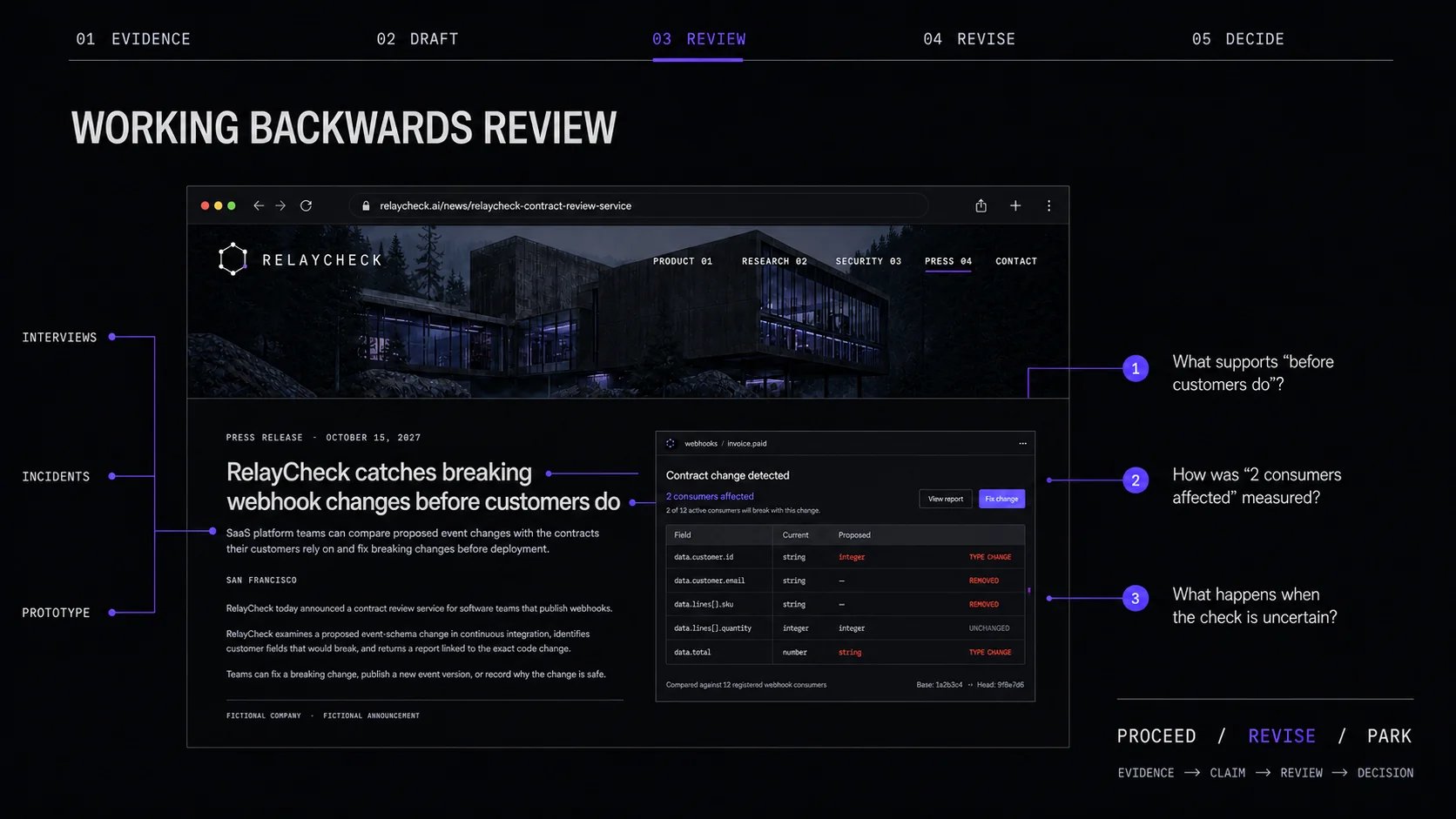
A fictional RelayCheck newsroom page presents a future press release about finding breaking webhook changes before deployment beside a contract-diff report.

Reviewing a PRFAQ with evidence

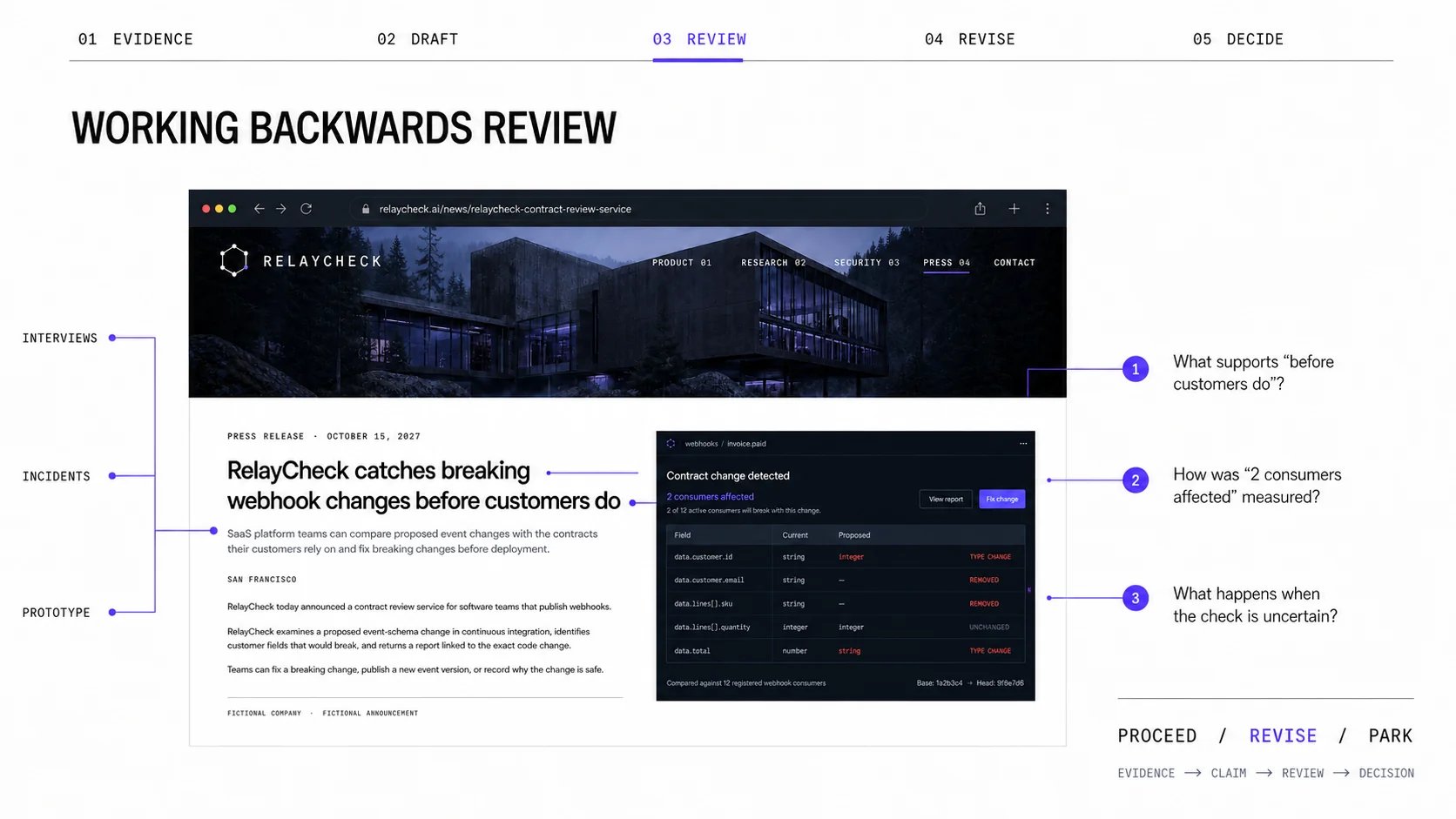
A Working Backwards review board links interviews, incidents, and prototype evidence to a fictional RelayCheck press release, three claim-level questions, and a proceed, revise, or park decision.

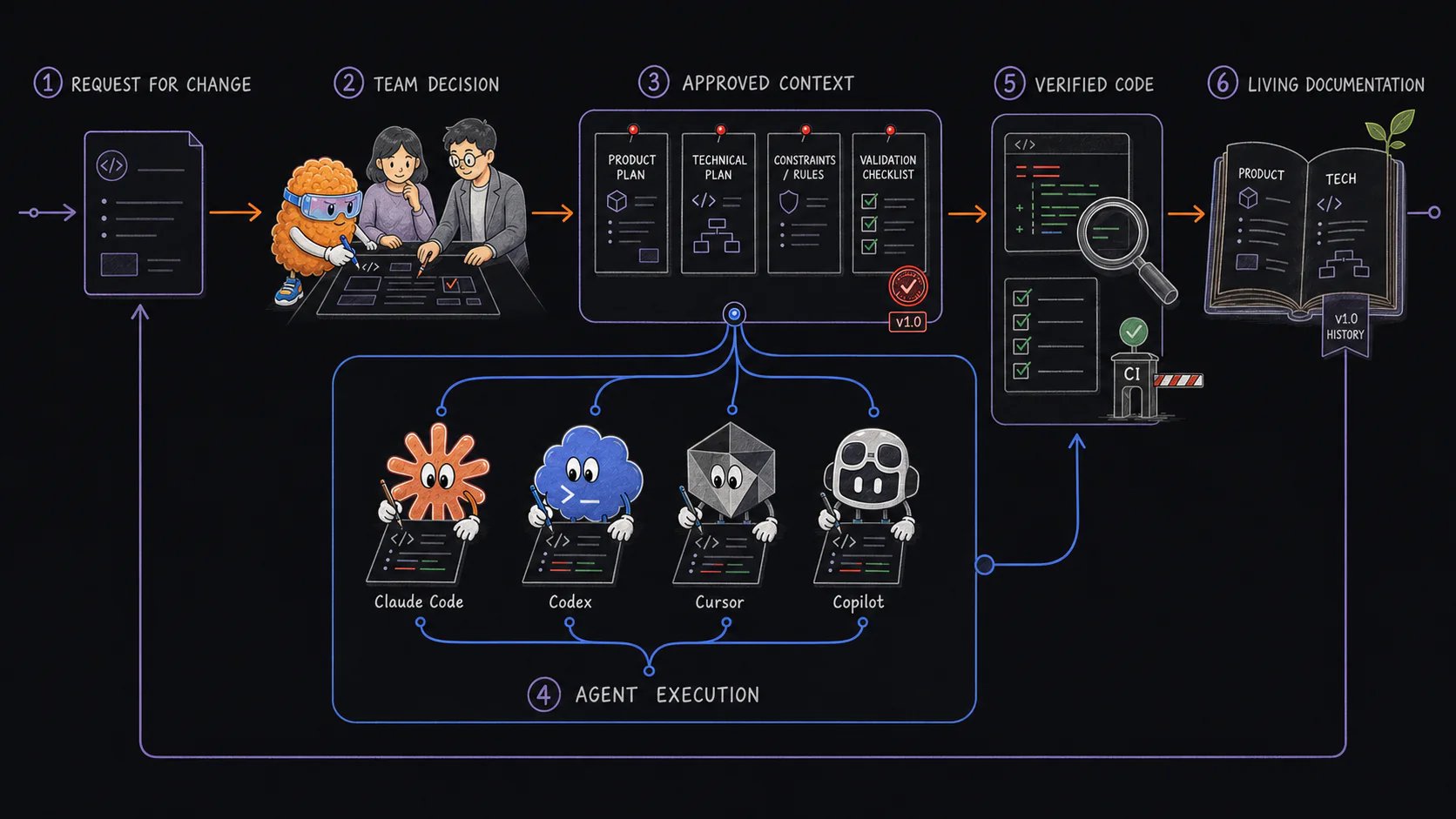
From request to maintained documentation
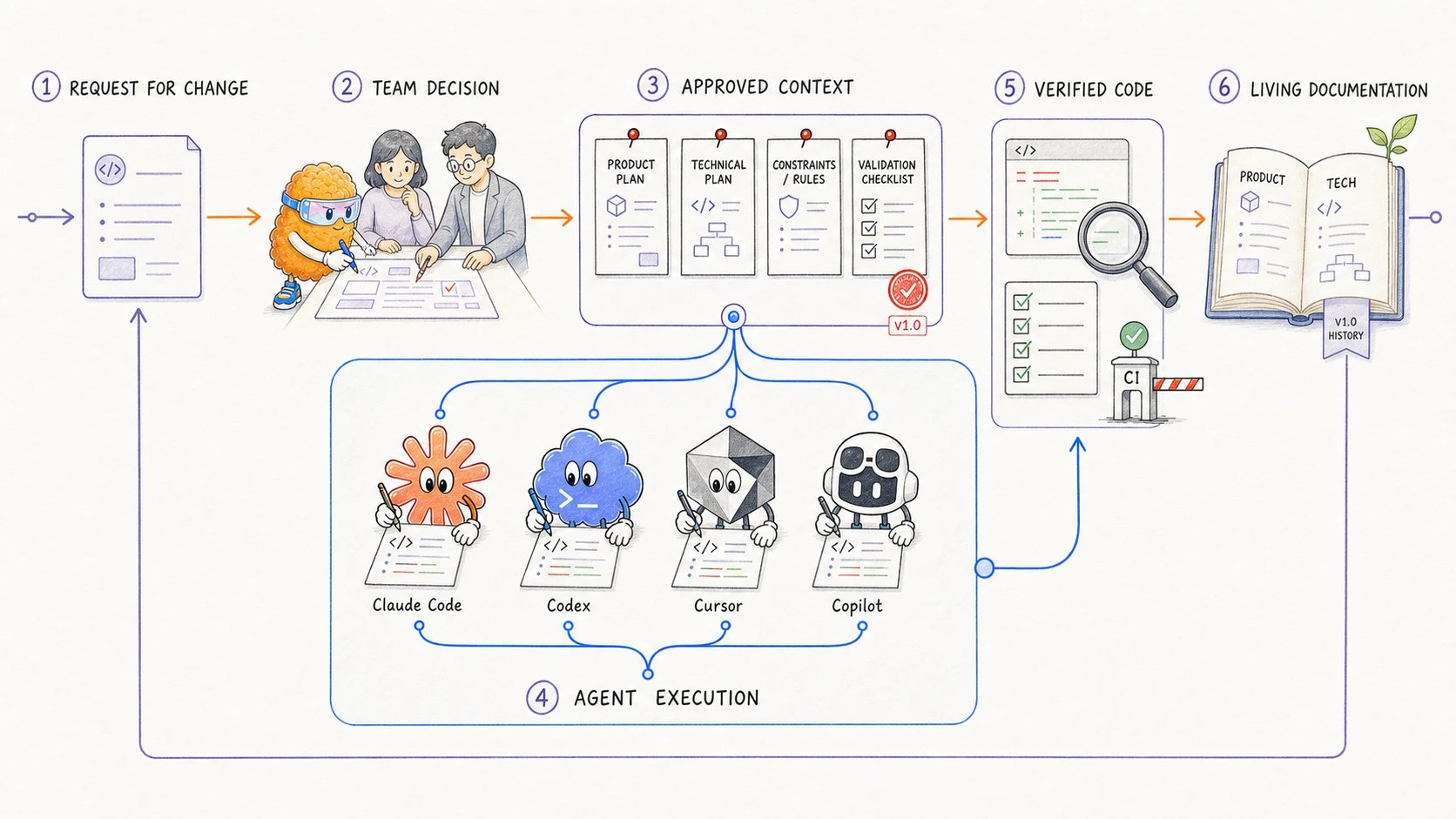
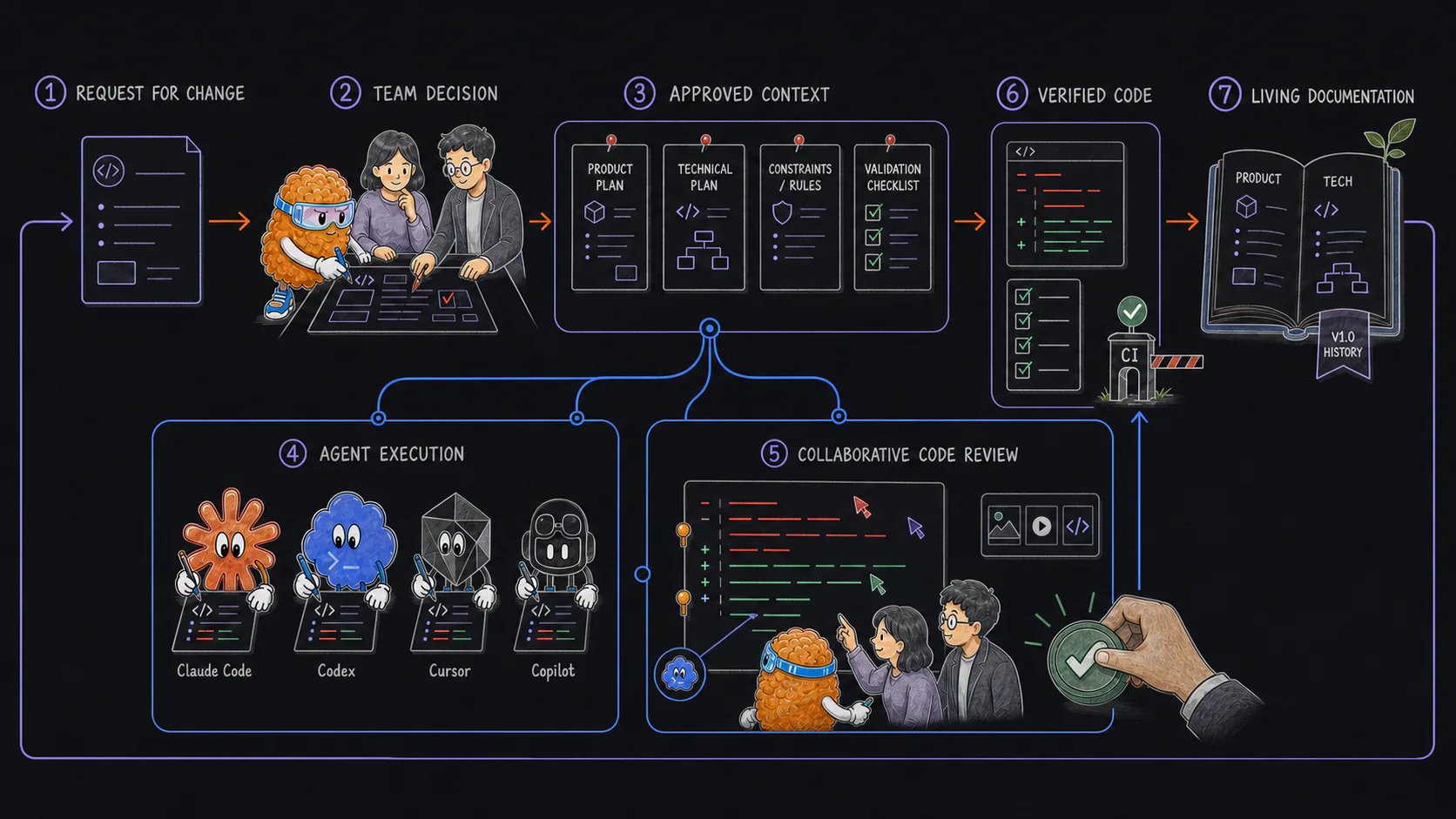
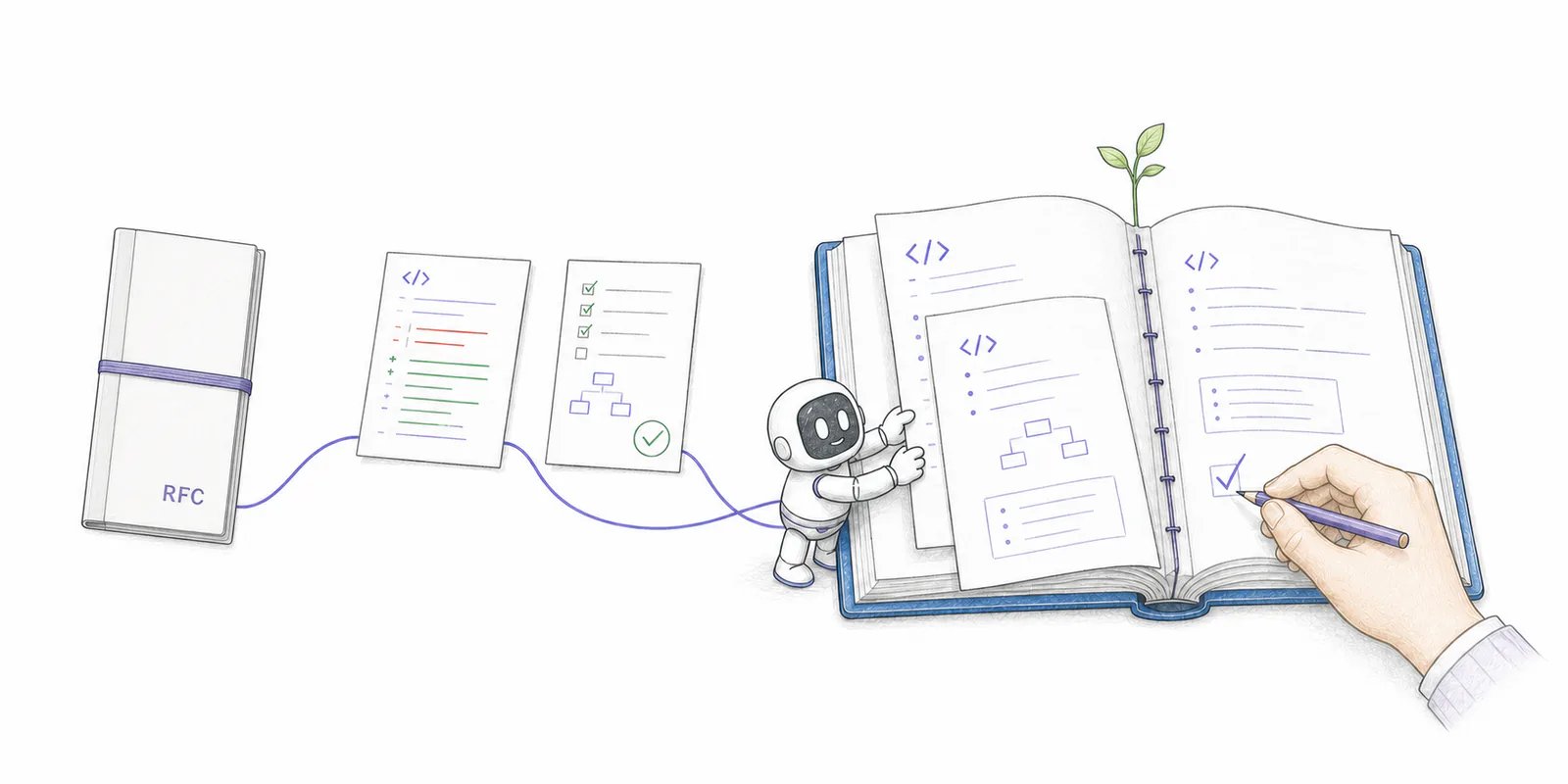
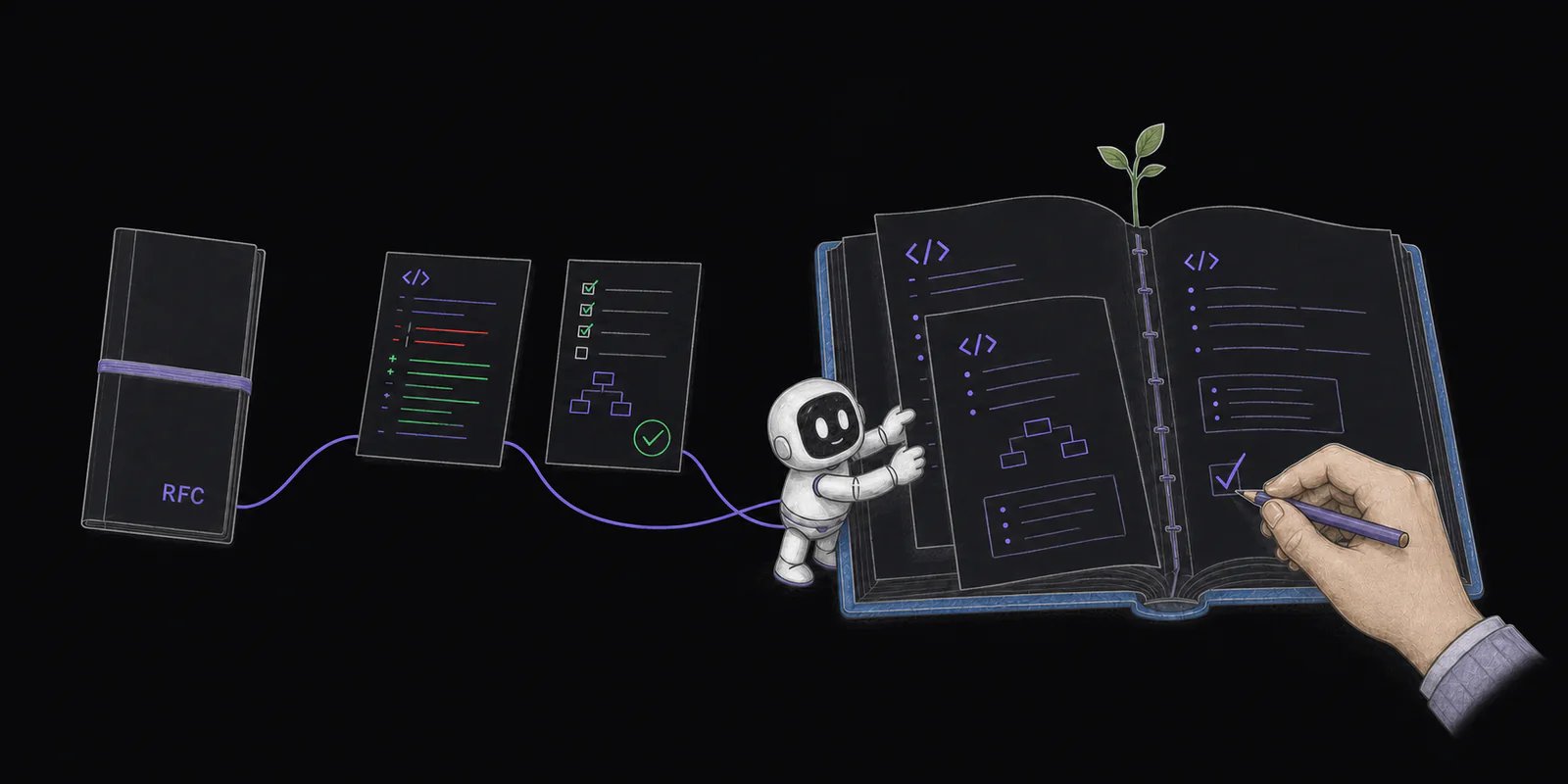
A conceptual software workflow moves from a change request through a team decision and planning context to agent execution, verified code, and maintained documentation.

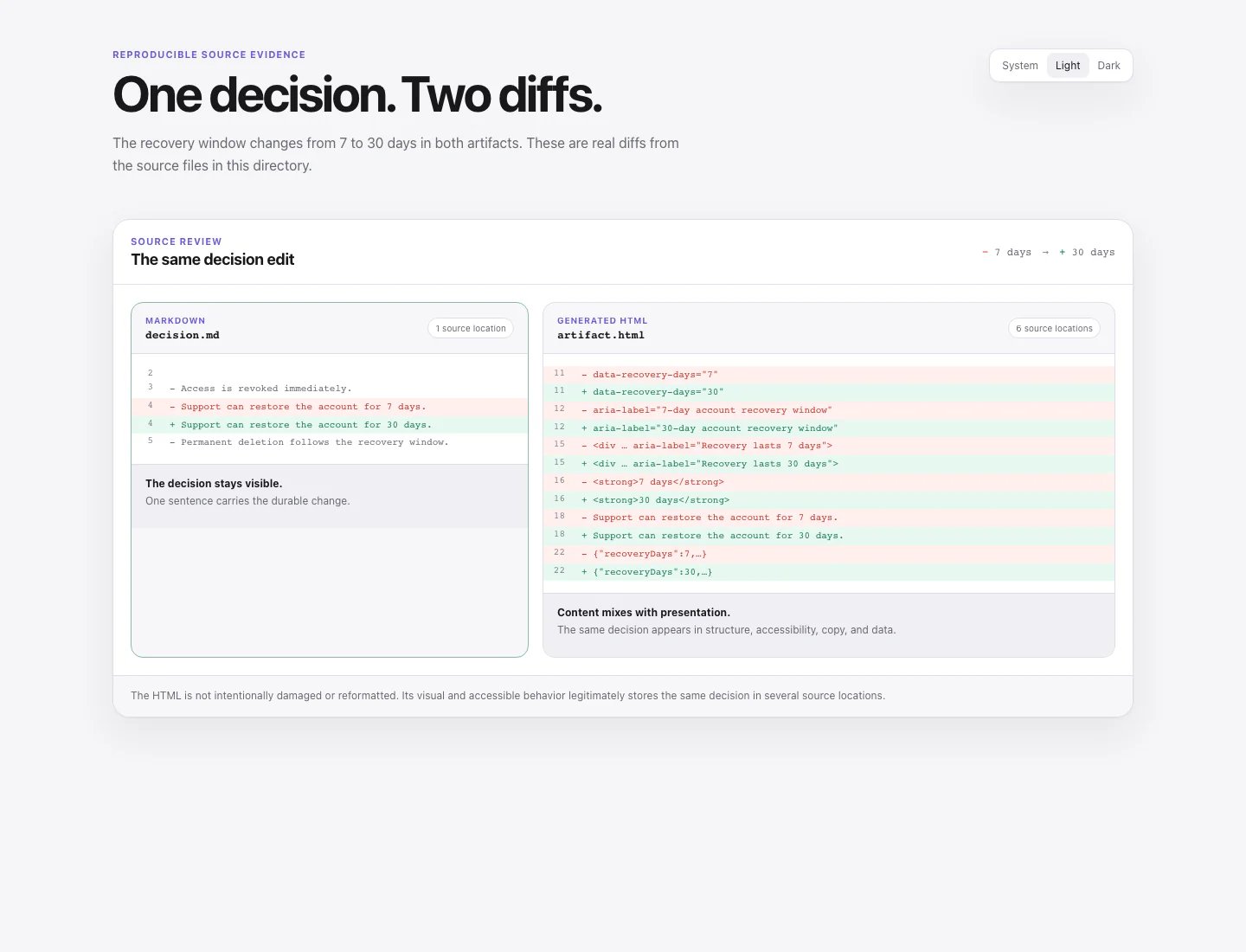
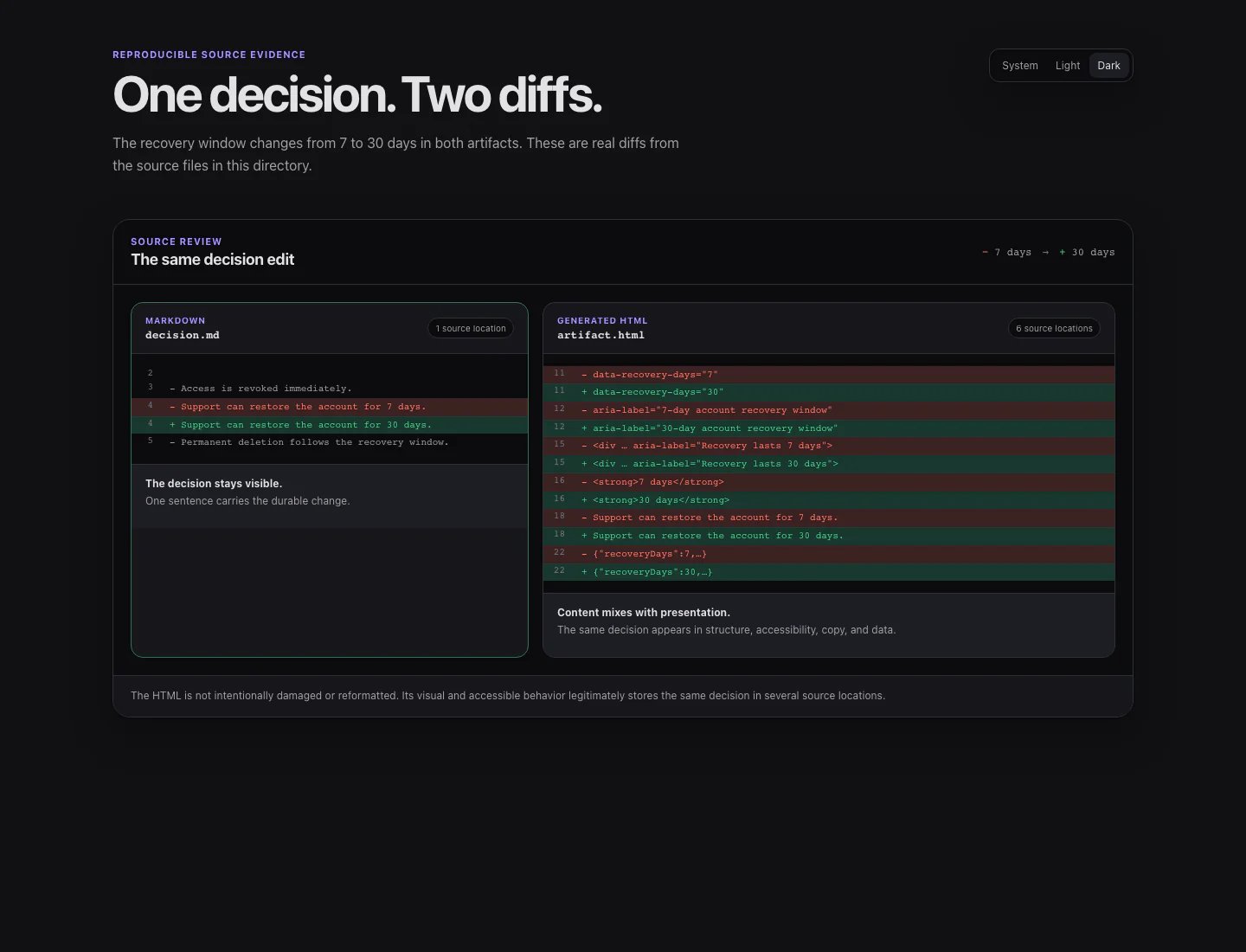
Markdown source versus HTML source

A real source comparison where one recovery-window decision changes one line in Markdown but six locations in generated HTML.

Agent handoff packet

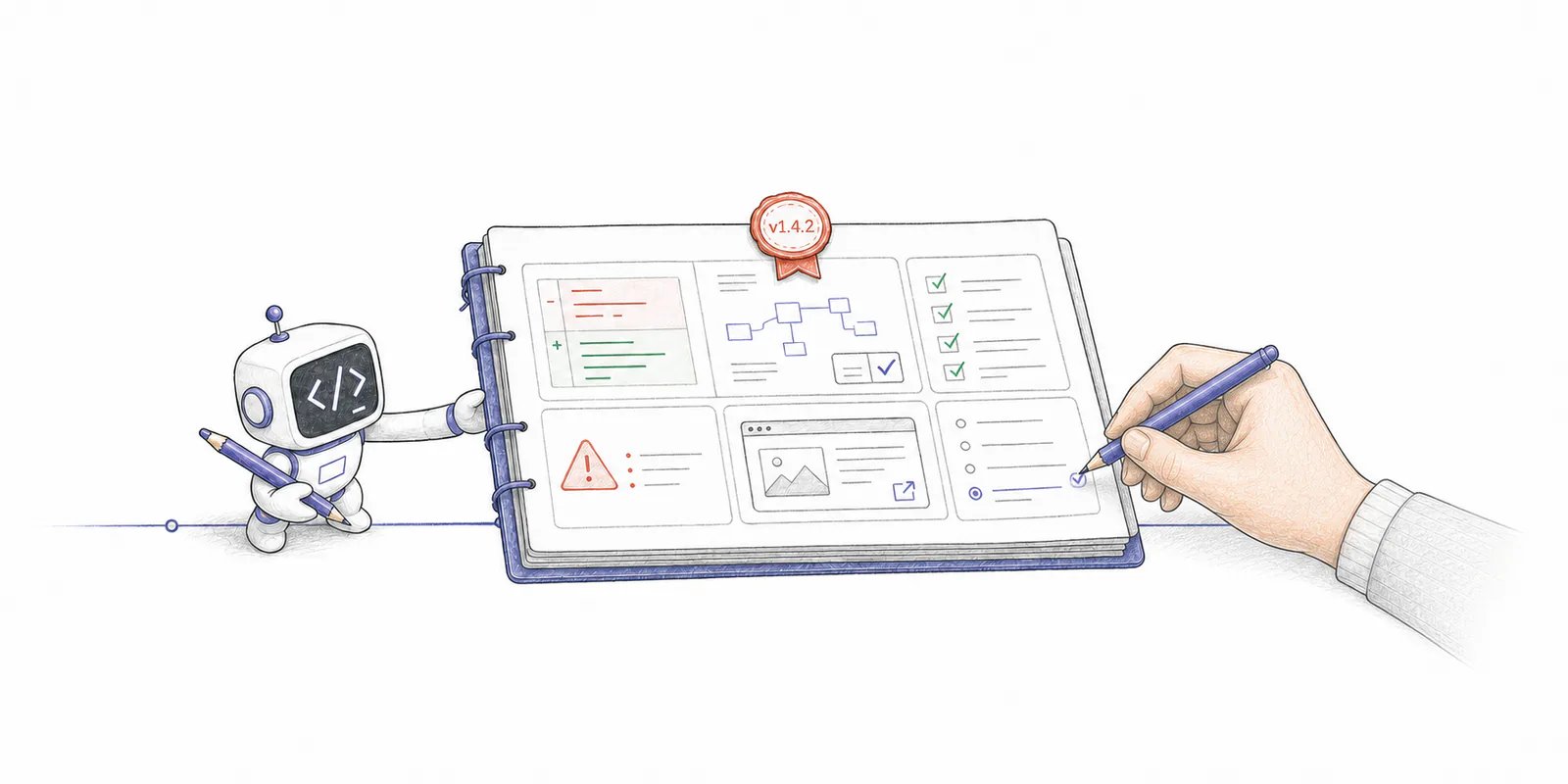
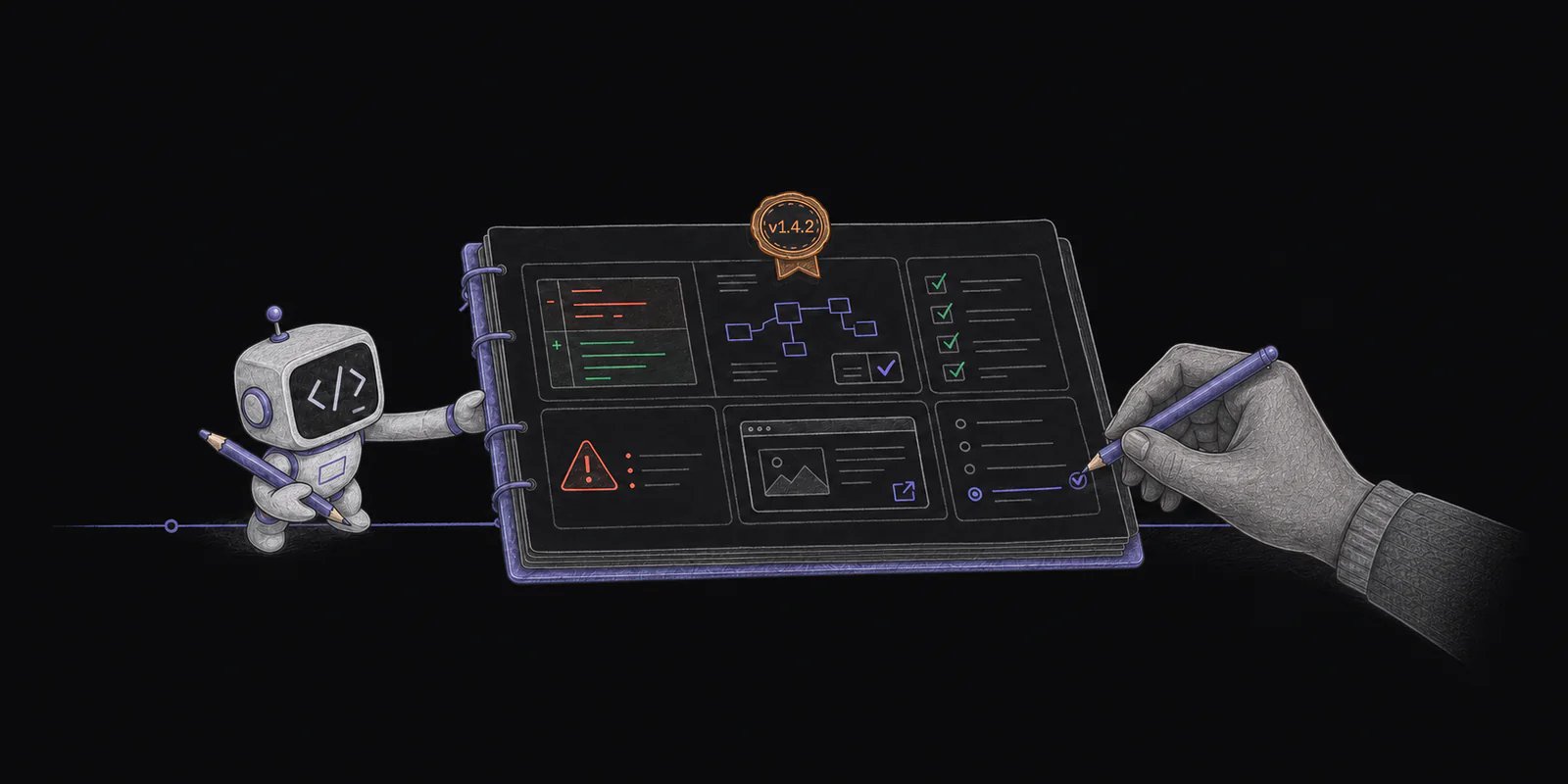
An AI coding agent hands a team one versioned evidence folio containing the code diff, decision context, validation, risks, review artifact, and follow-up work.

Living documentation for AI agents

An AI coding agent and a human reviewer update a living codebase handbook from the current code diff and validation while preserving an earlier RFC as history.

Compounding plan feedback

A four-step diagram shows reviewed plan feedback, a pattern report, a maintained instruction, and the next planning session.

Agent instructions and context

Writing AGENTS.md

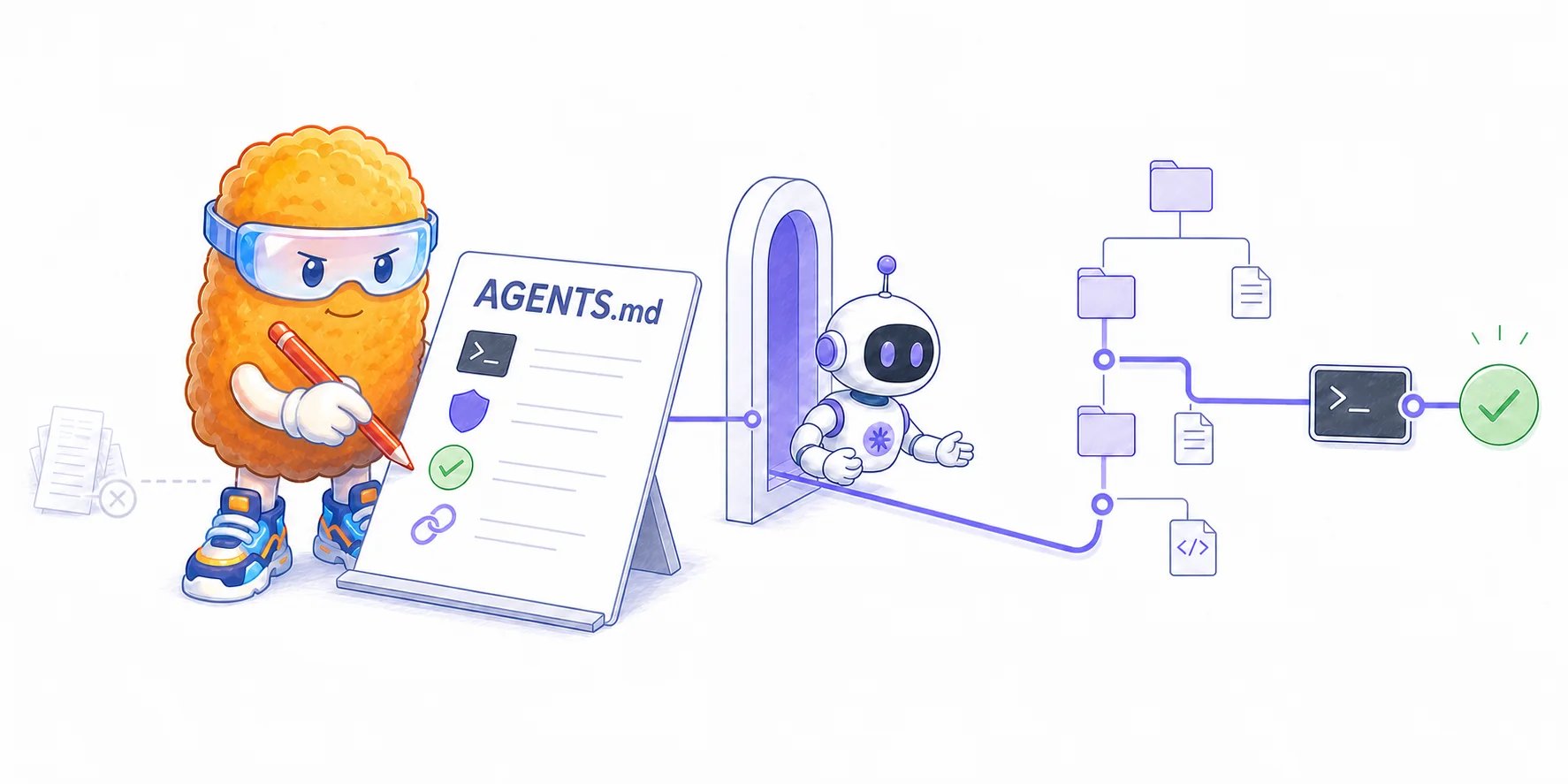
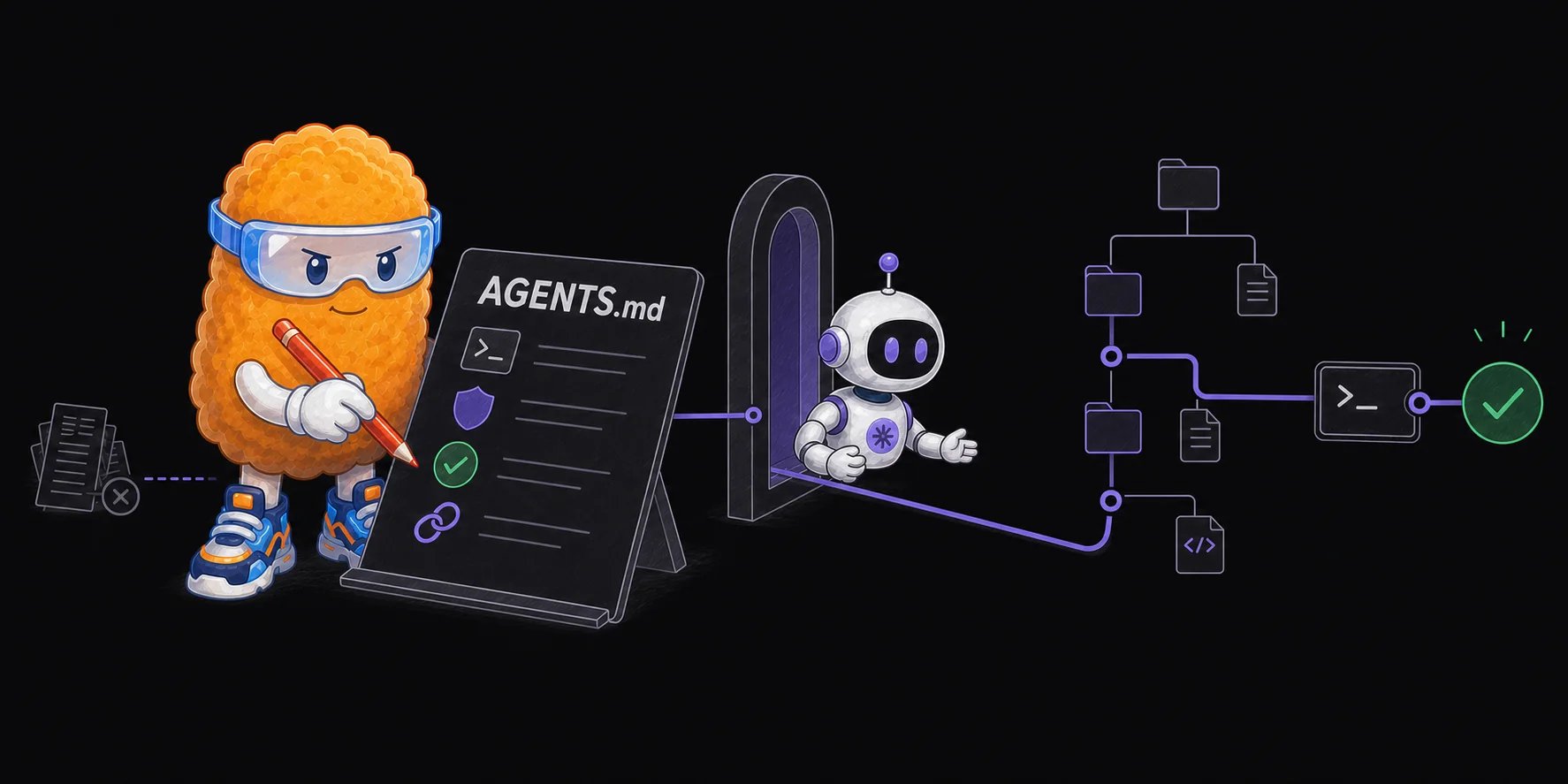
Totman writes a single AGENTS.md file containing commands, boundaries, verification, and documentation pointers before one coding agent carries its guidance through the repository and reaches a passing check.

How CLAUDE.md files load

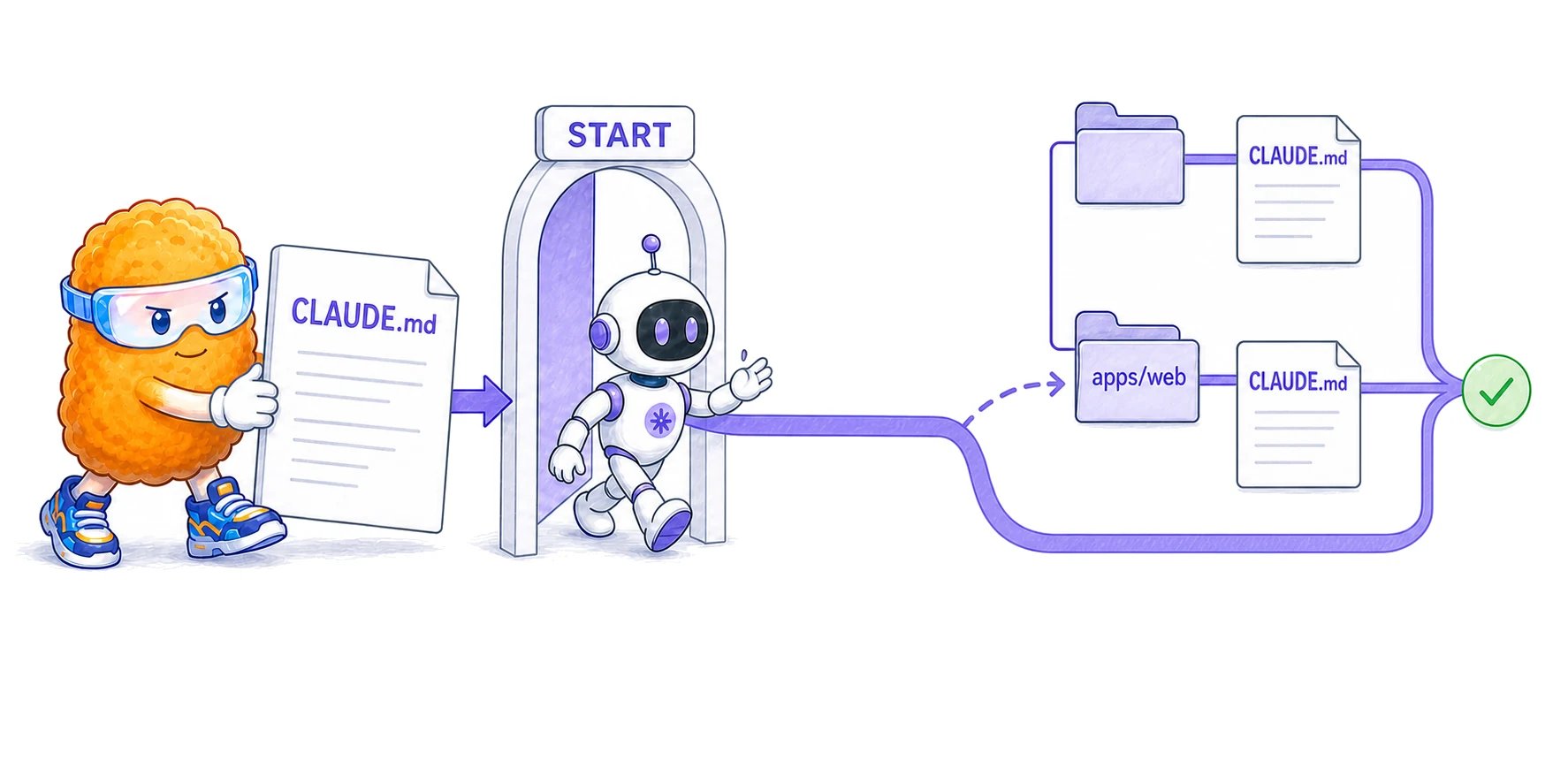
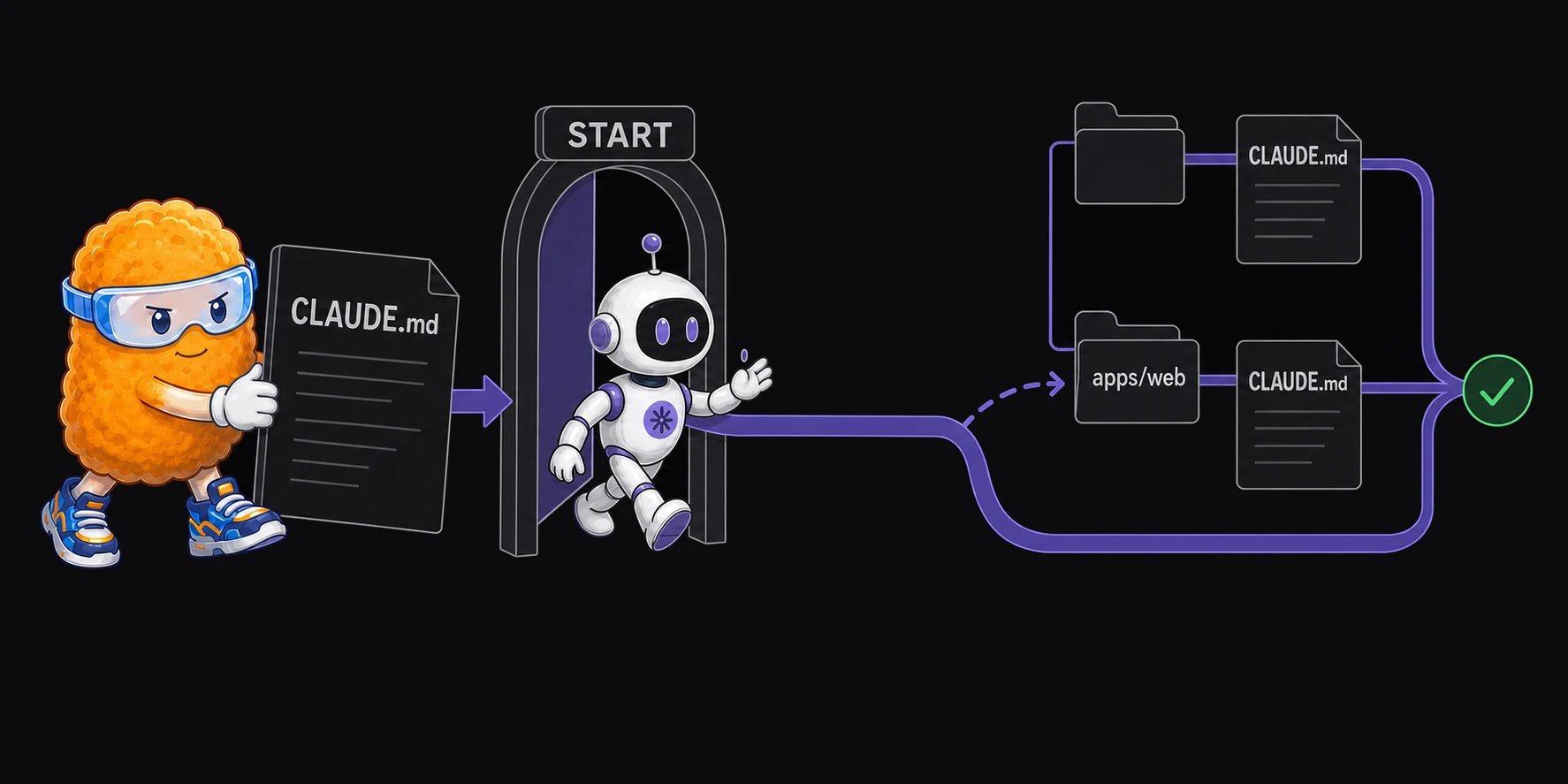
Totman places a root CLAUDE.md at session start while a coding agent enters a repository where top-level and apps/web CLAUDE.md files join the same context path.

A focused AI agent context window

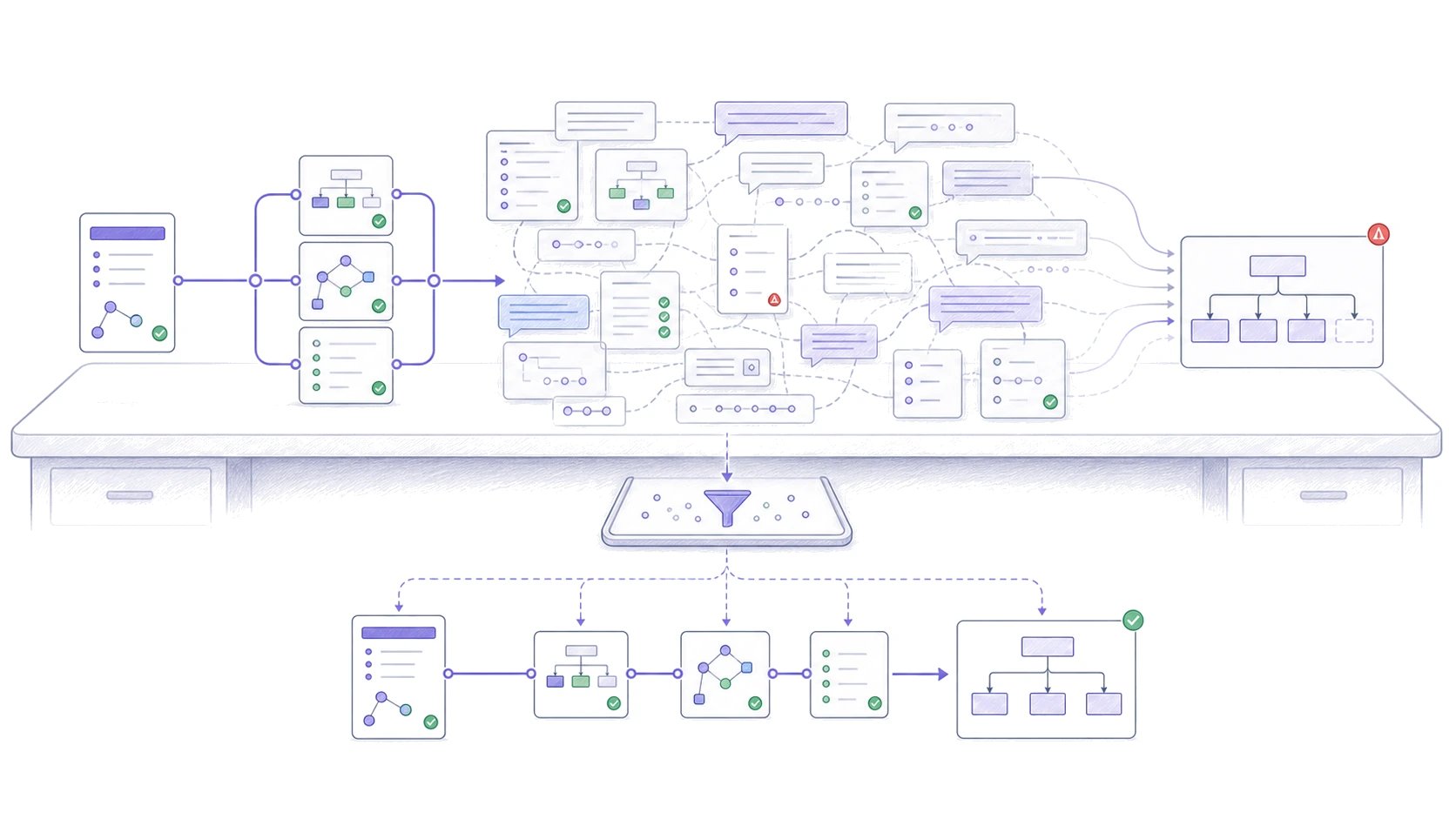
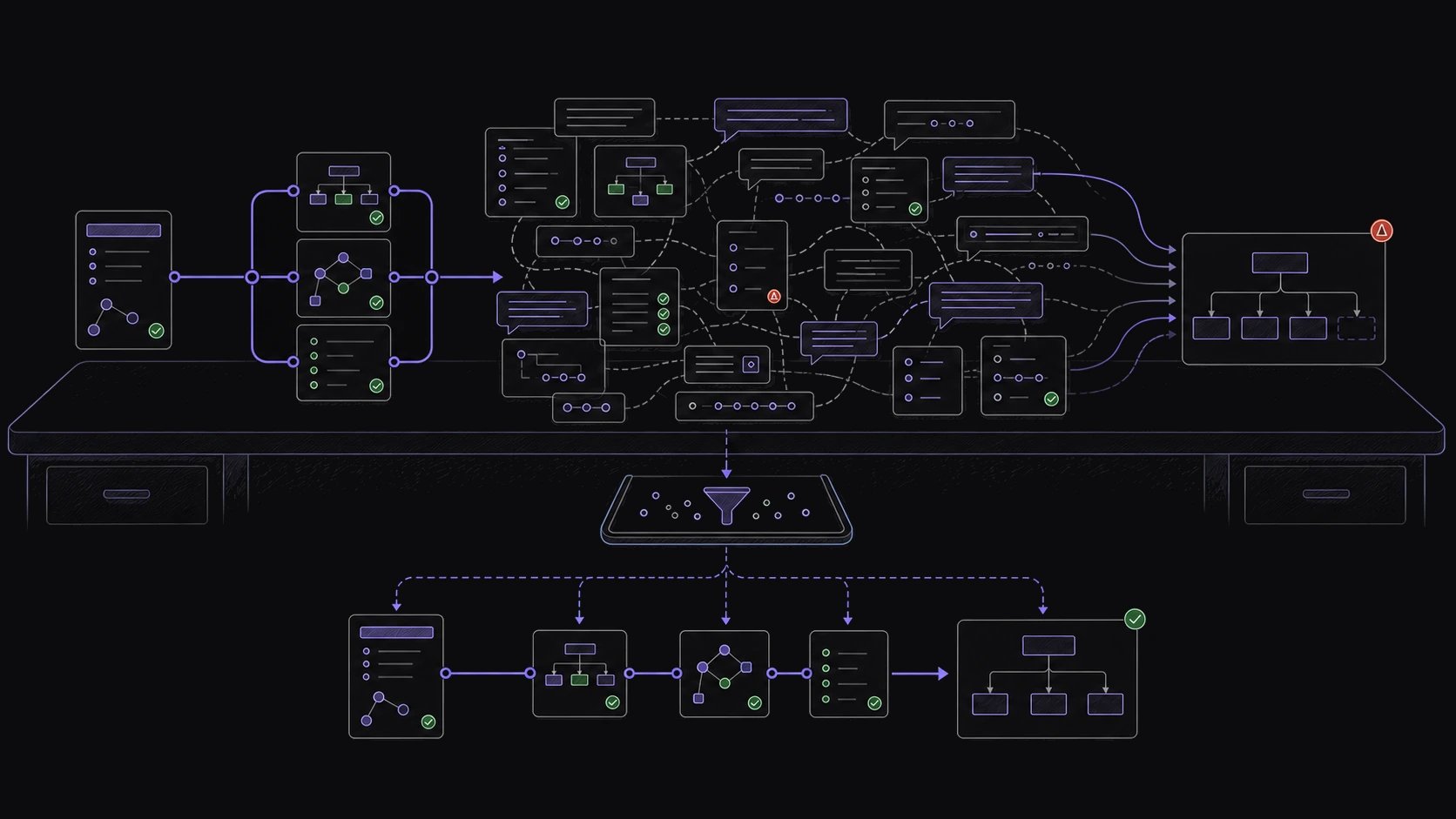
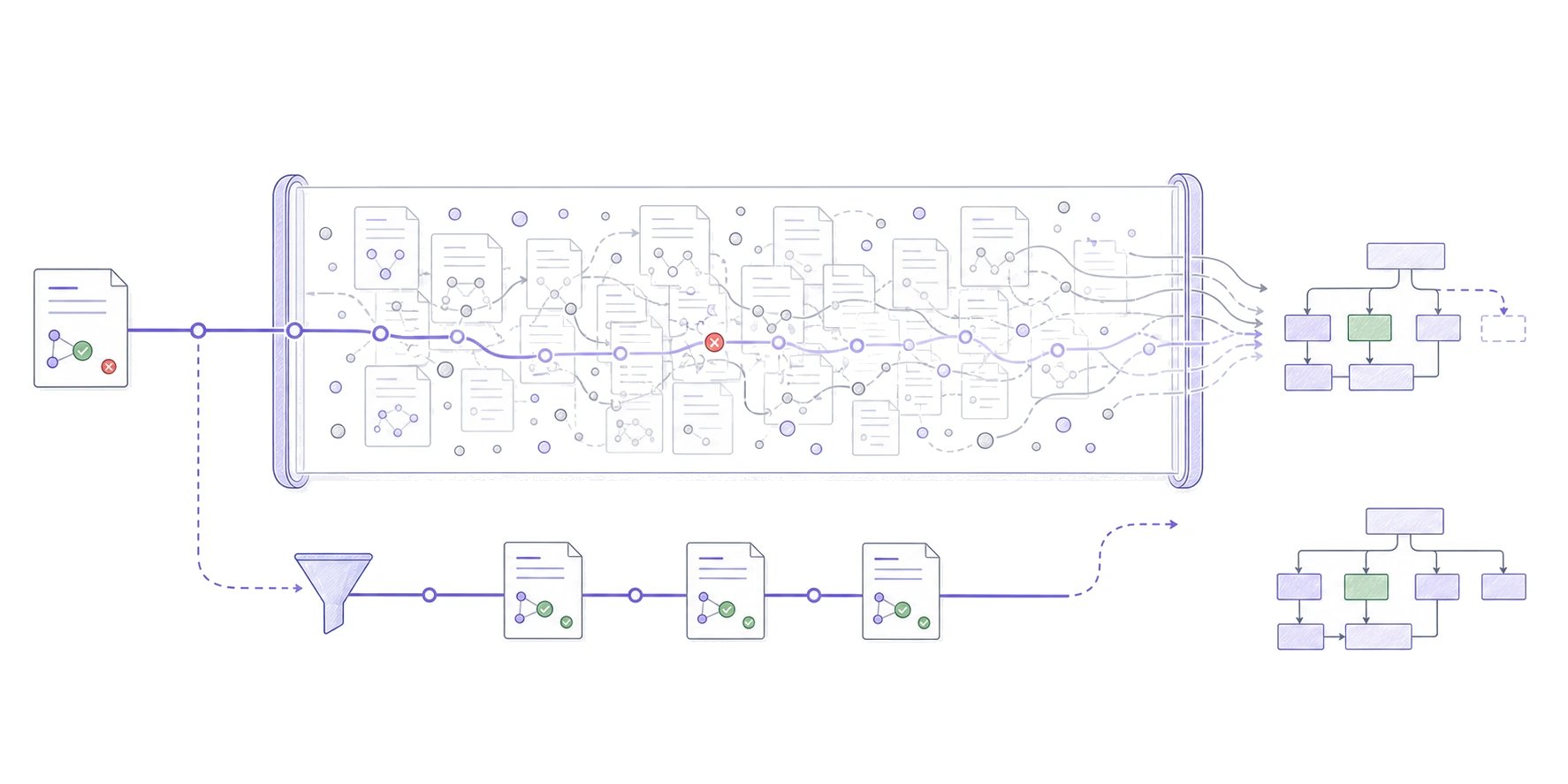
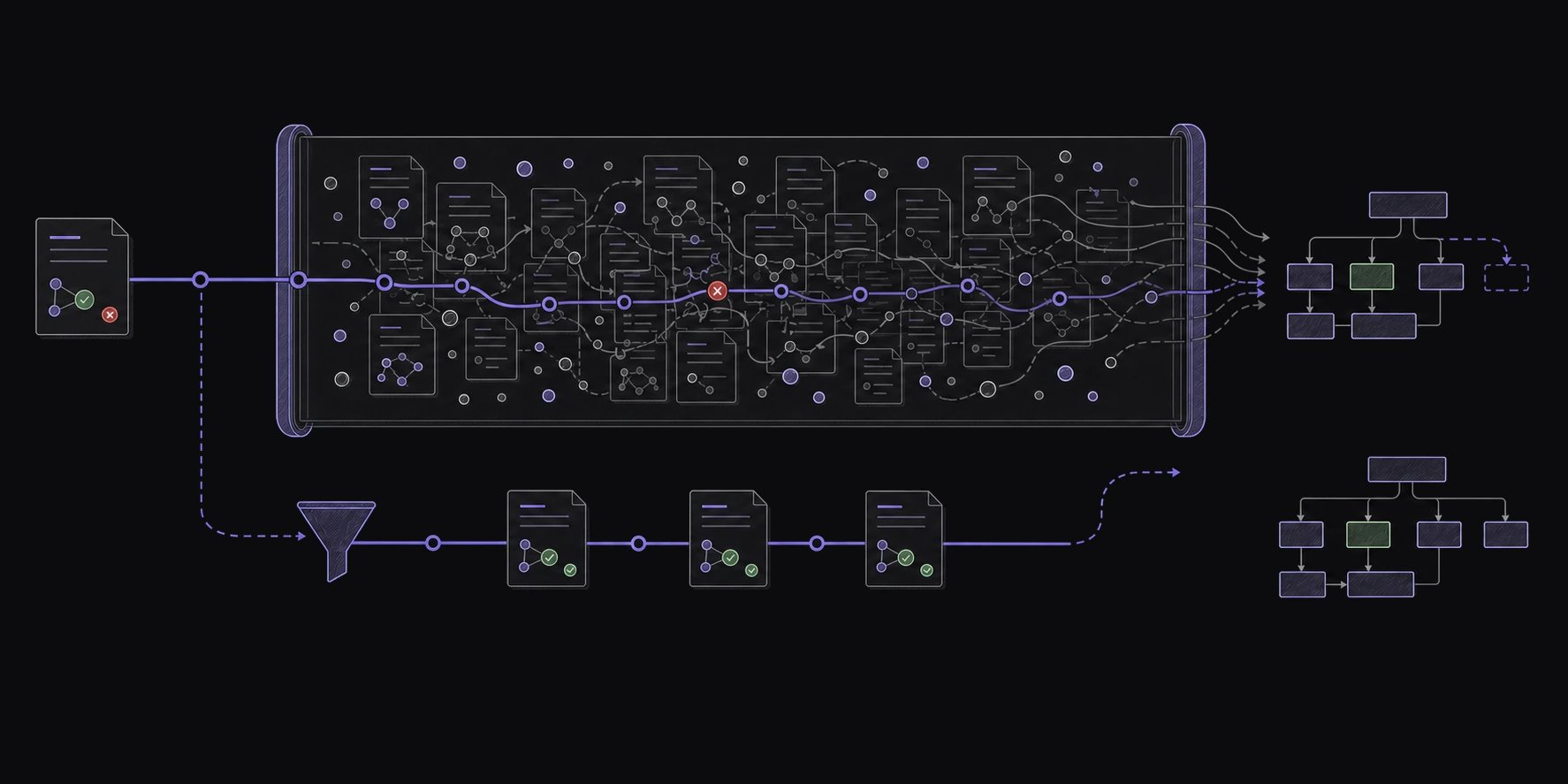
An AI agent's crowded working context is reduced to a focused set of relevant sources, current instructions, and a verified output.

AI agent morning review packet

An approved goal packet connected to a code diff, validation receipt, interface evidence, open question, and a final human decision sheet for morning review.

LLM codebase wiki

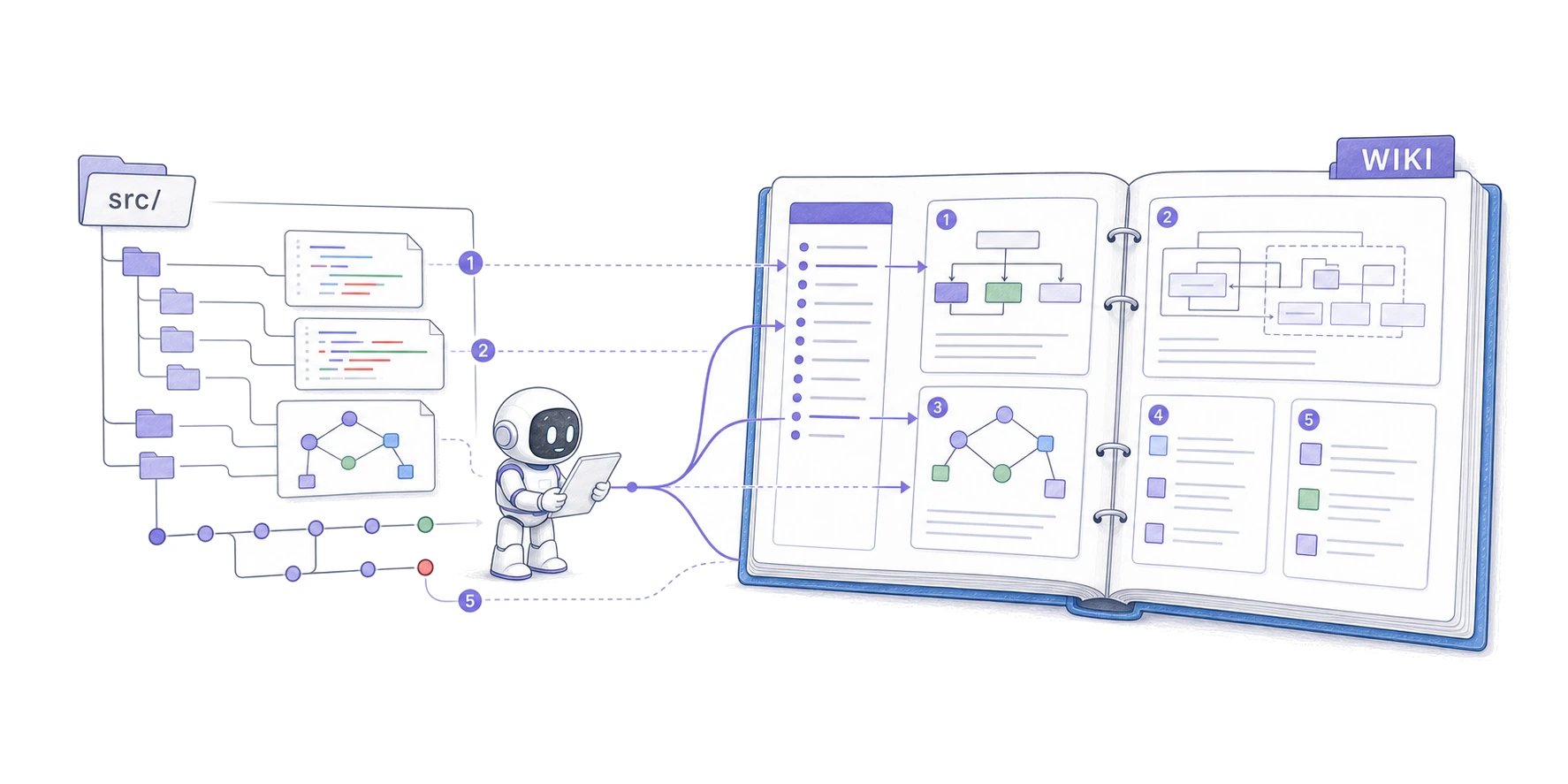
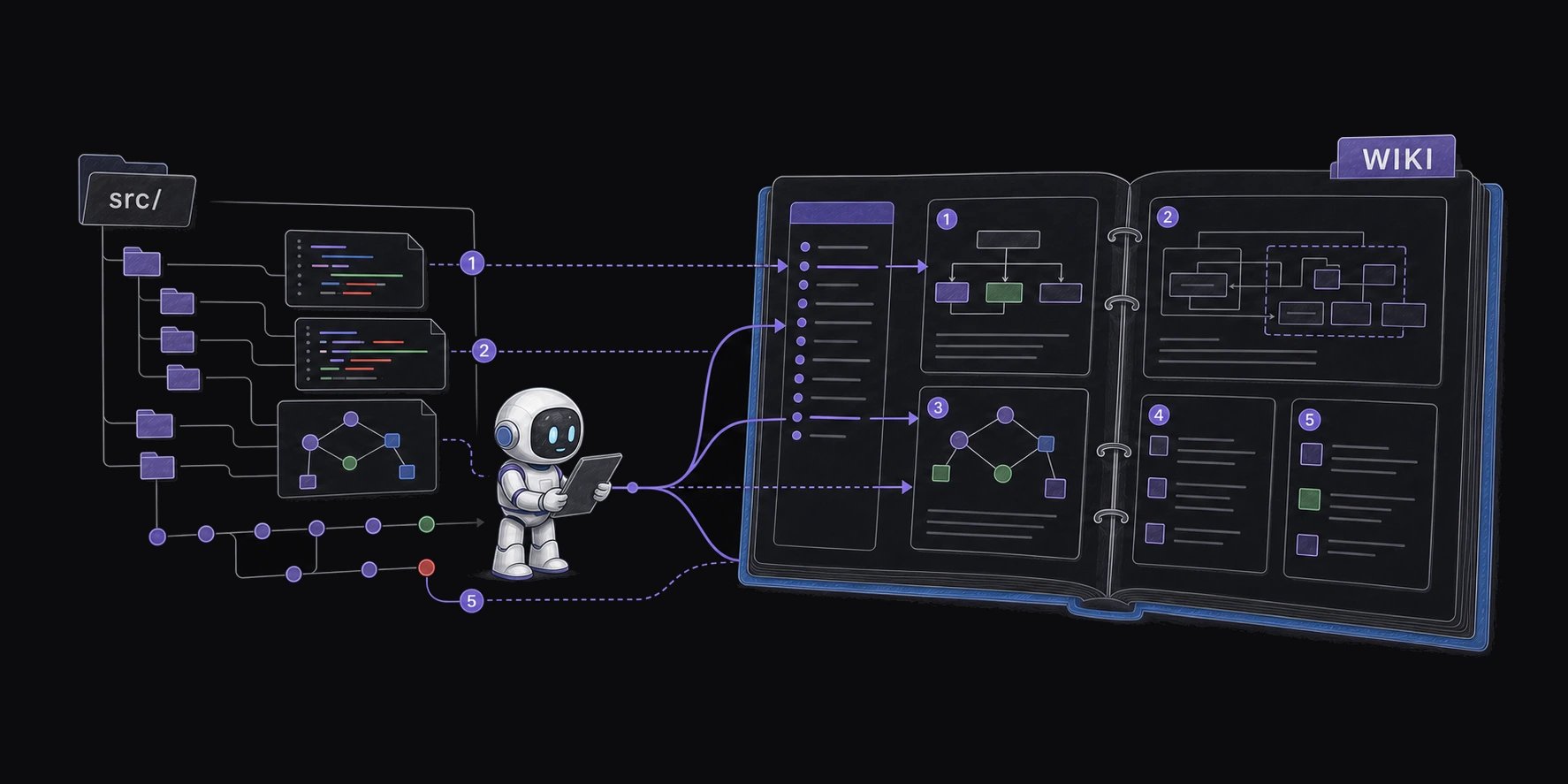
An AI agent turns a source-code repository tree and Git history into a navigable codebase wiki whose architecture pages cite the exact files and commits they explain.

Context curation for a wiki

A verified source signal becomes diluted inside a crowded context window, while a focused route selects three relevant wiki pages and preserves a complete architecture map.

The cost of keeping a wiki current

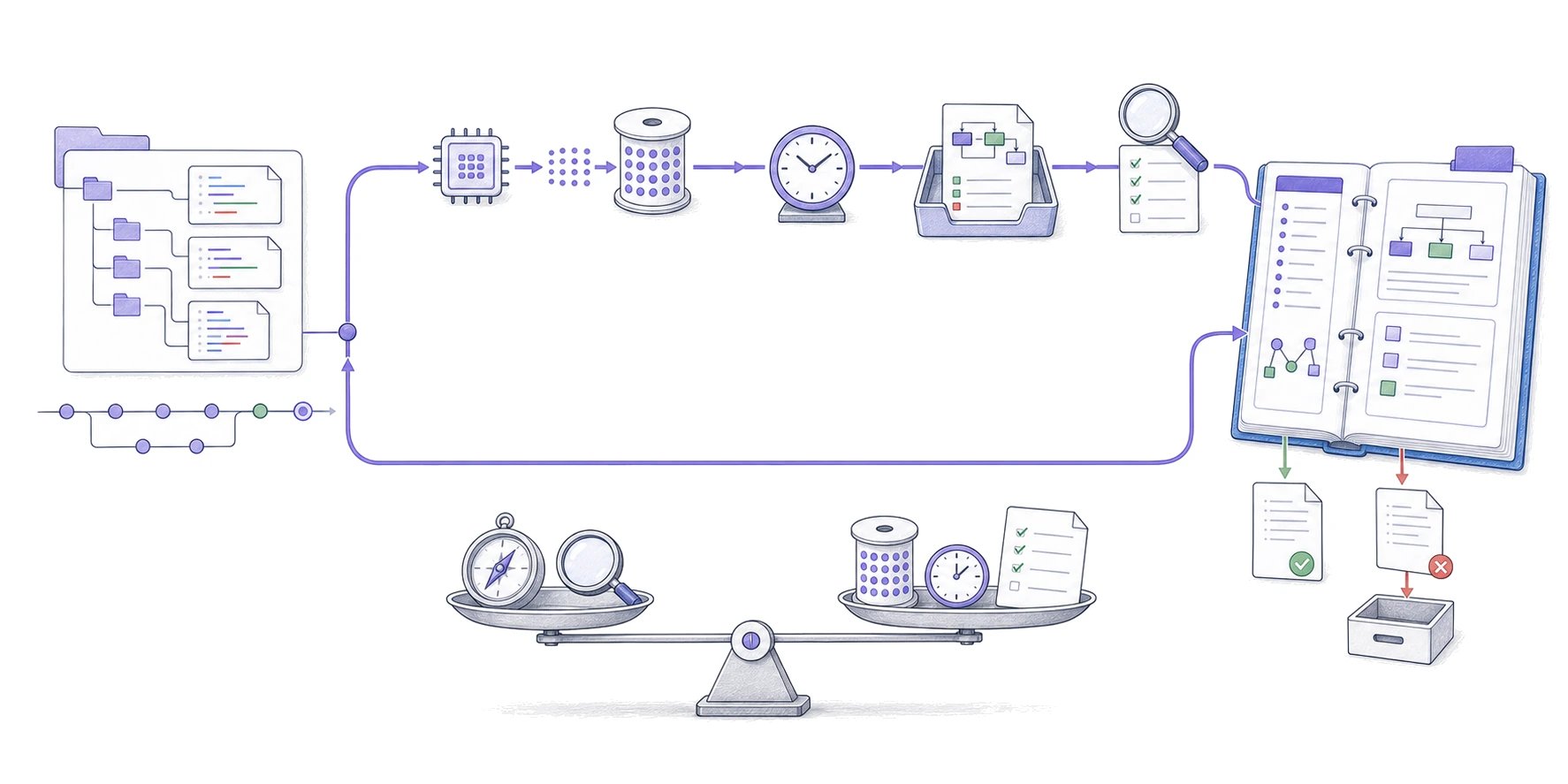
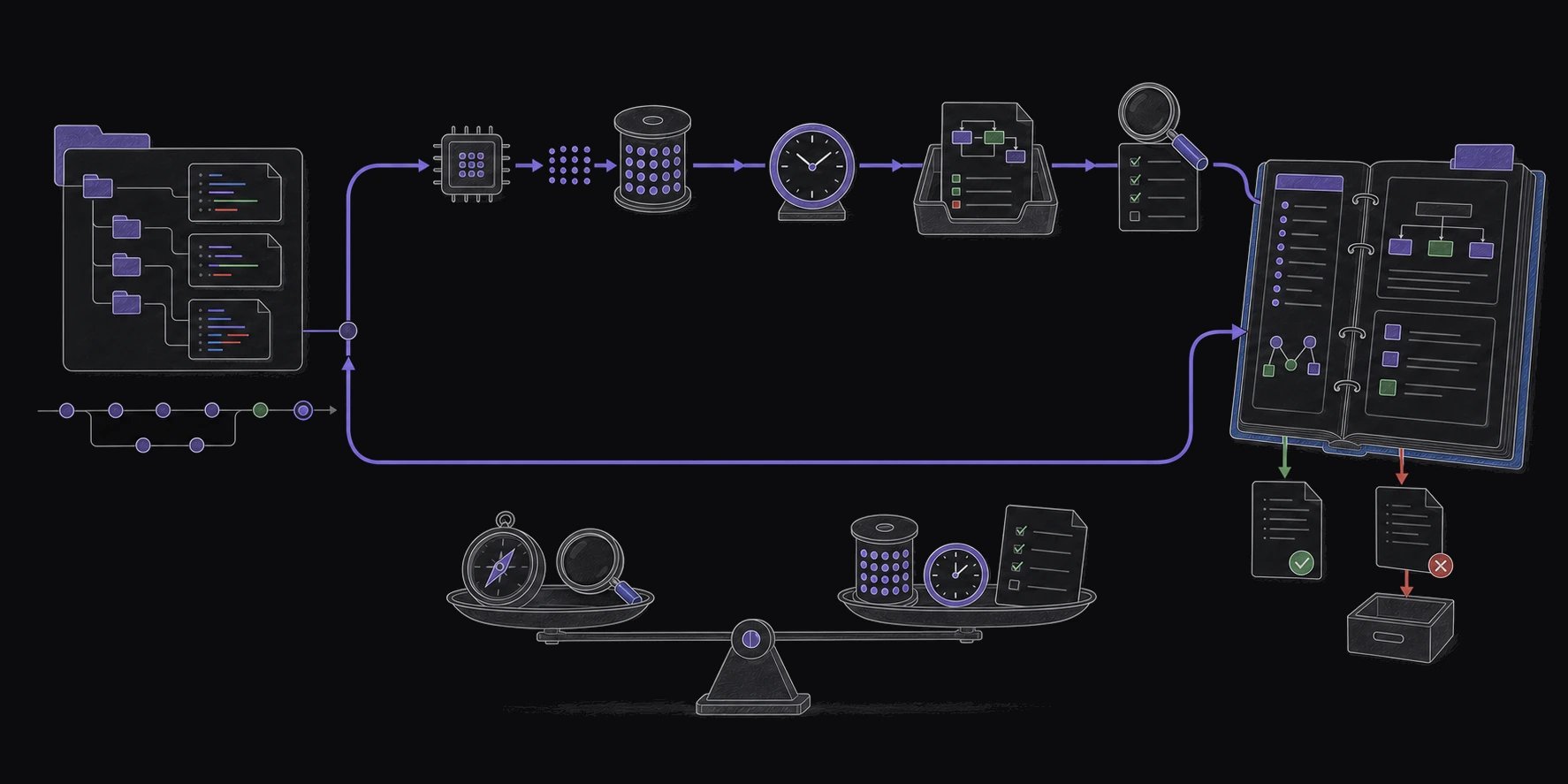
A recurring loop turns repository changes into reviewed wiki updates through model inference, scheduled CI, pull requests, and review, balanced against the exploration time it saves.

Specifications before code

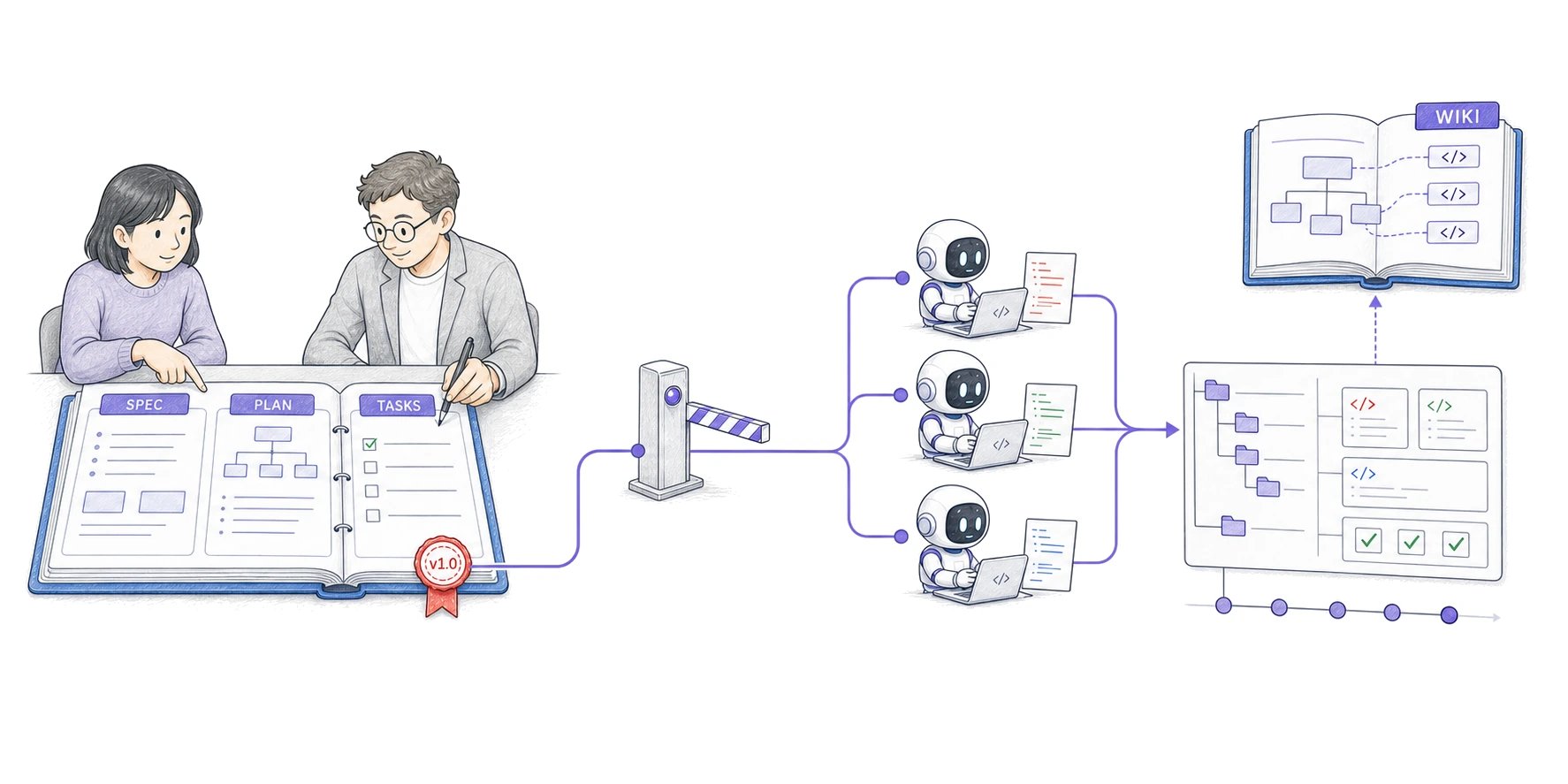
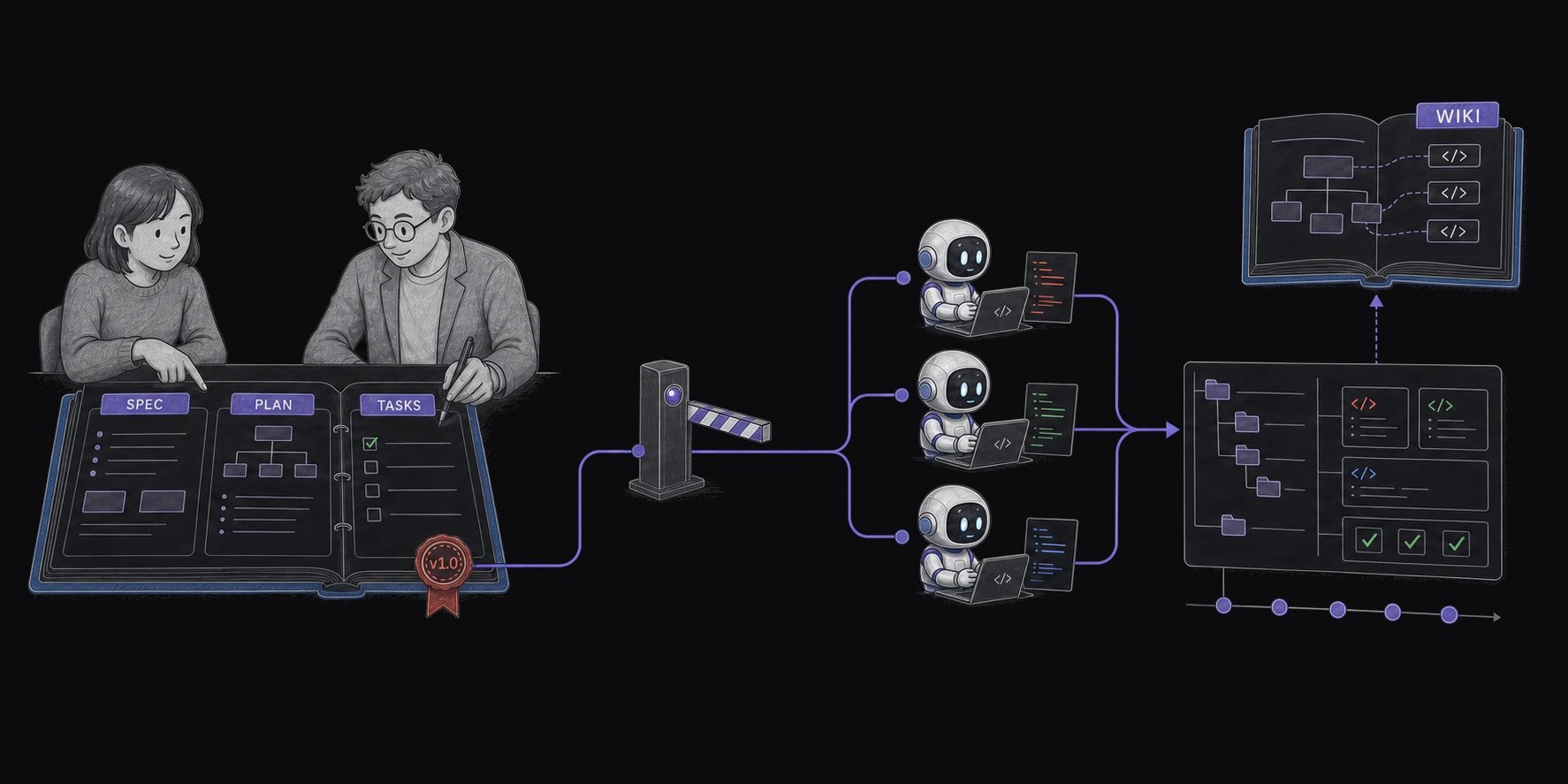
Two teammates approve a versioned specification, plan, and task set before three coding agents implement the work; the resulting repository then produces a downstream codebase wiki.

Code review

Understanding AI-generated code
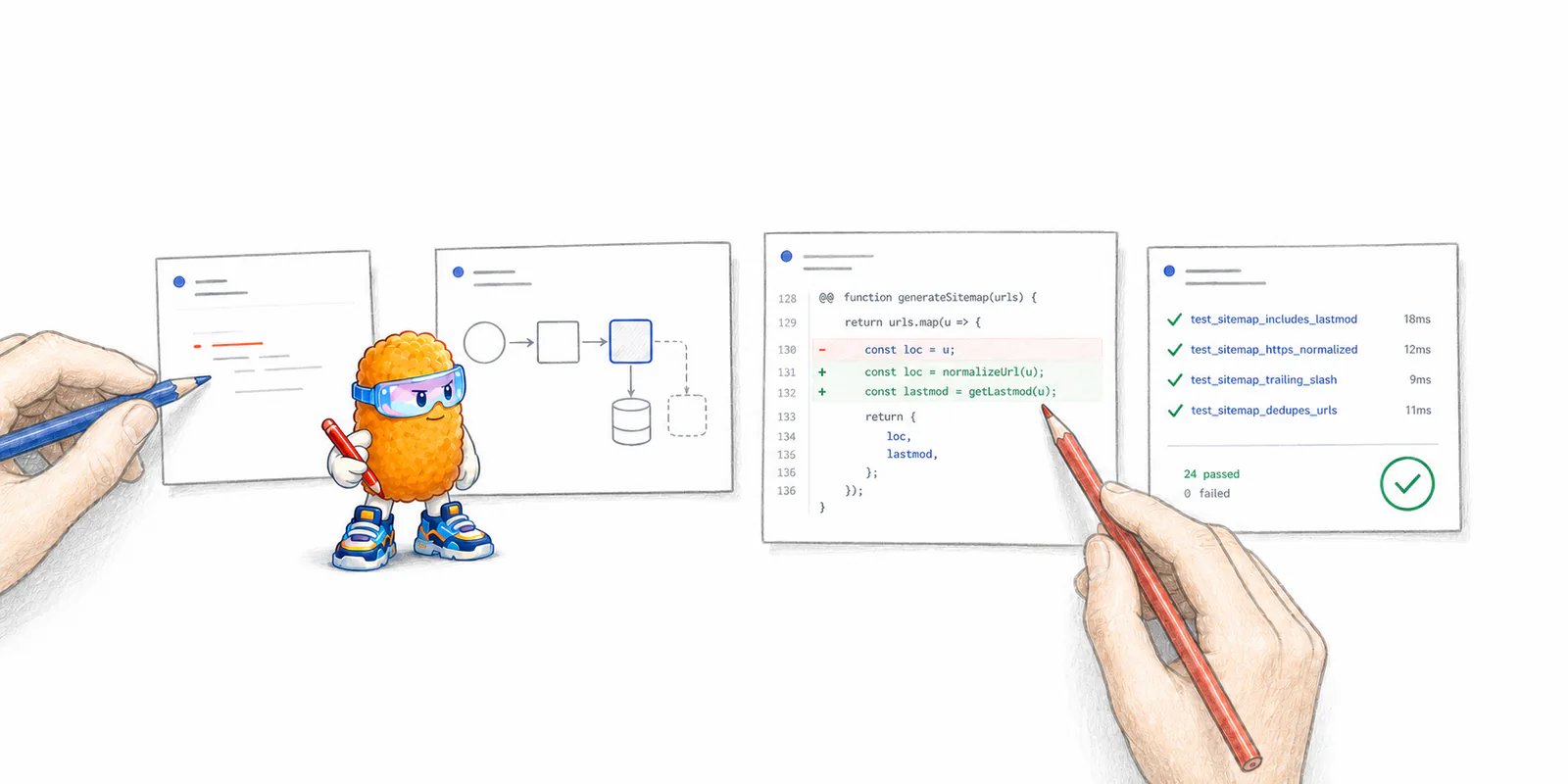
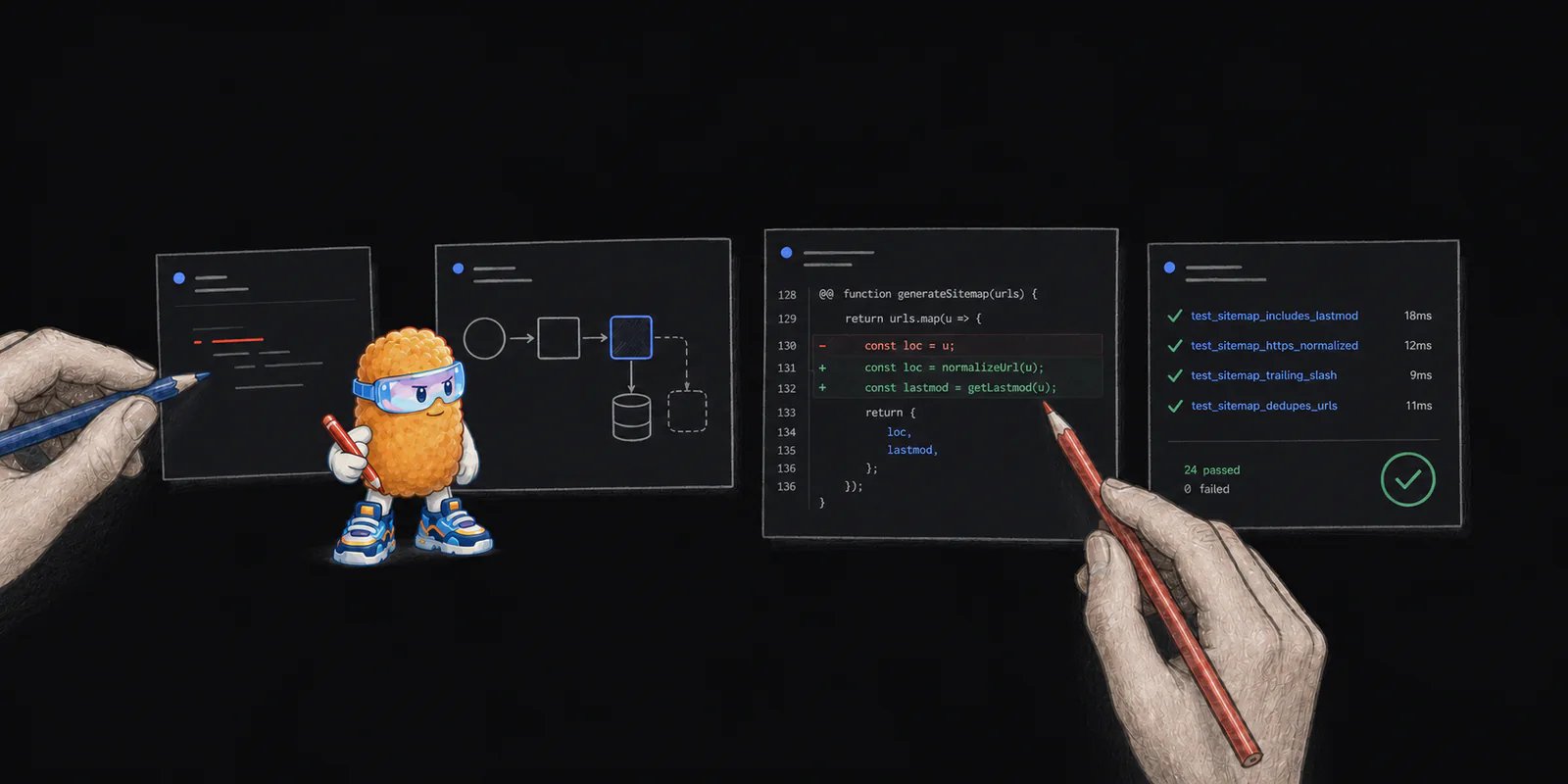
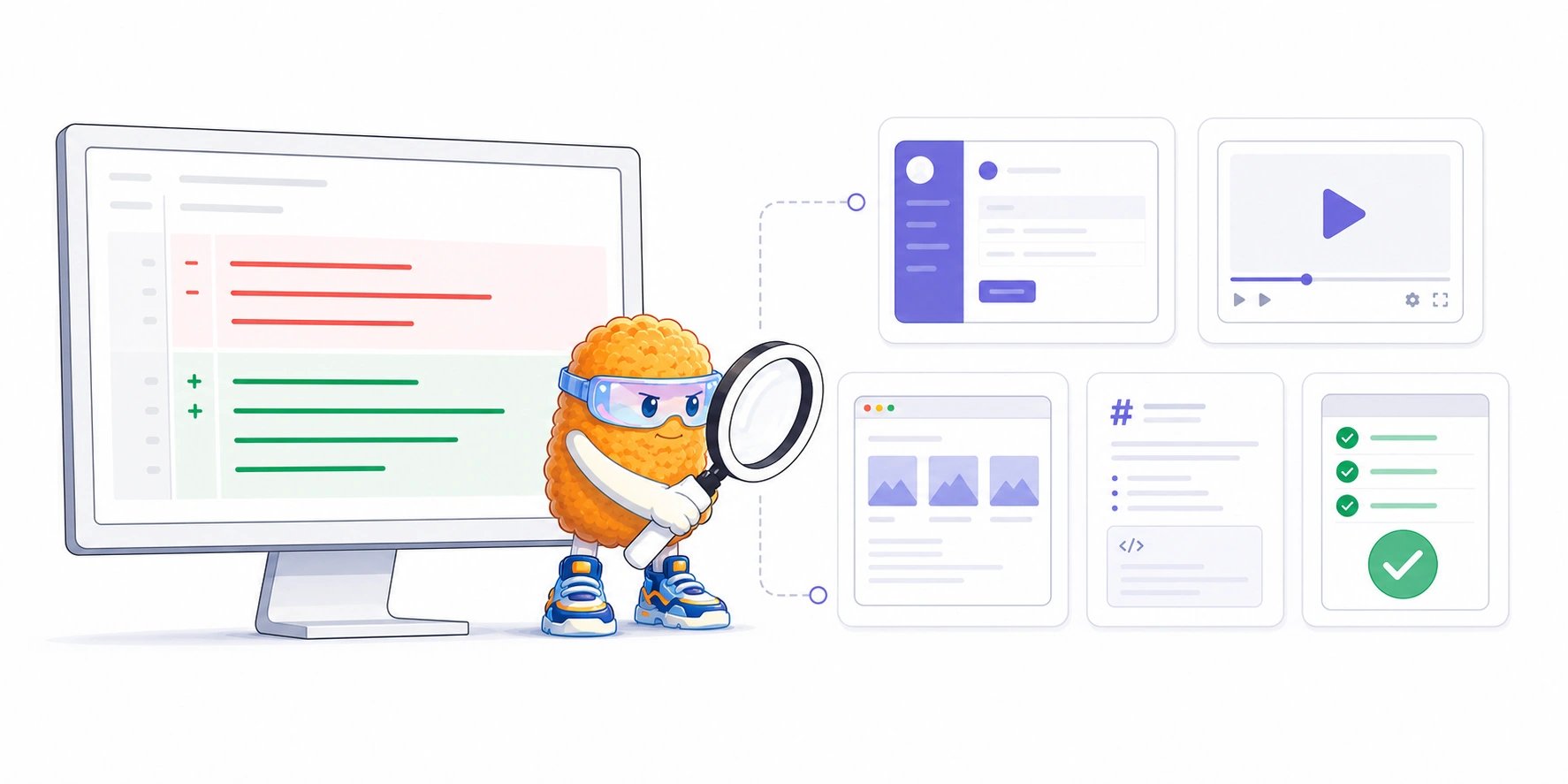
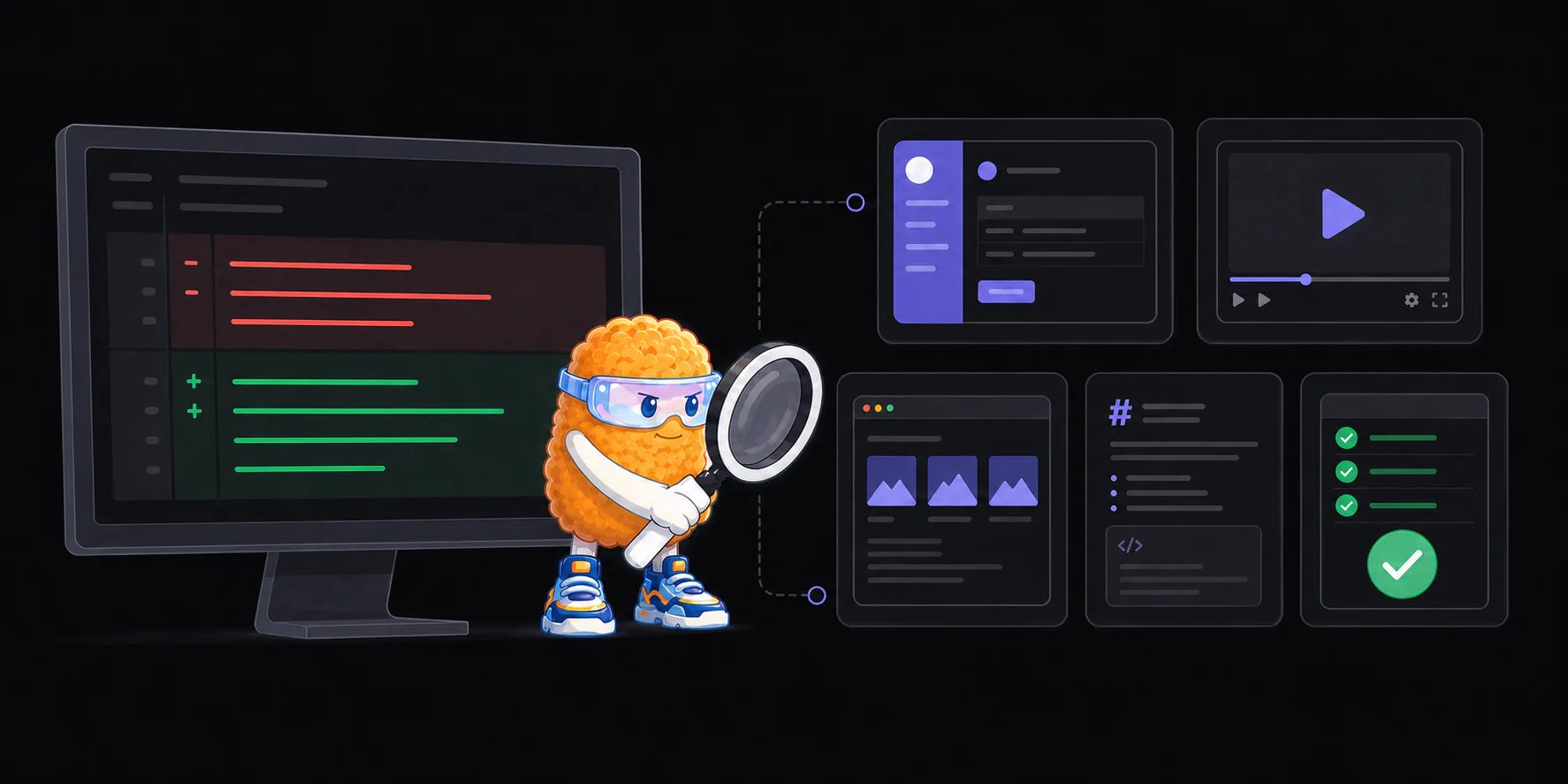
Two teammates and the Plannotator mascot trace one AI-generated change from its request and system behavior through the code diff to passing validation evidence.

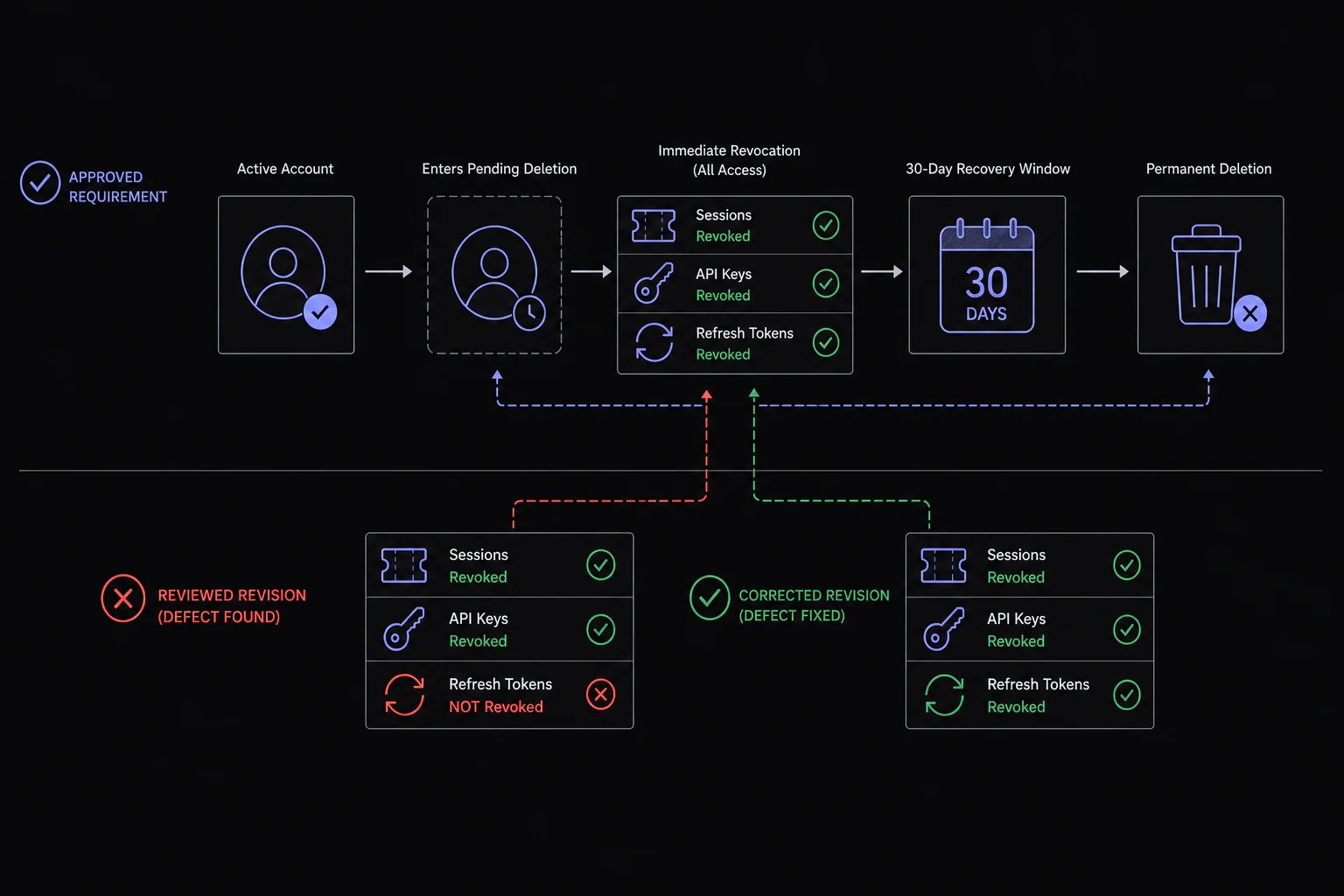
Finding a missing cleanup step

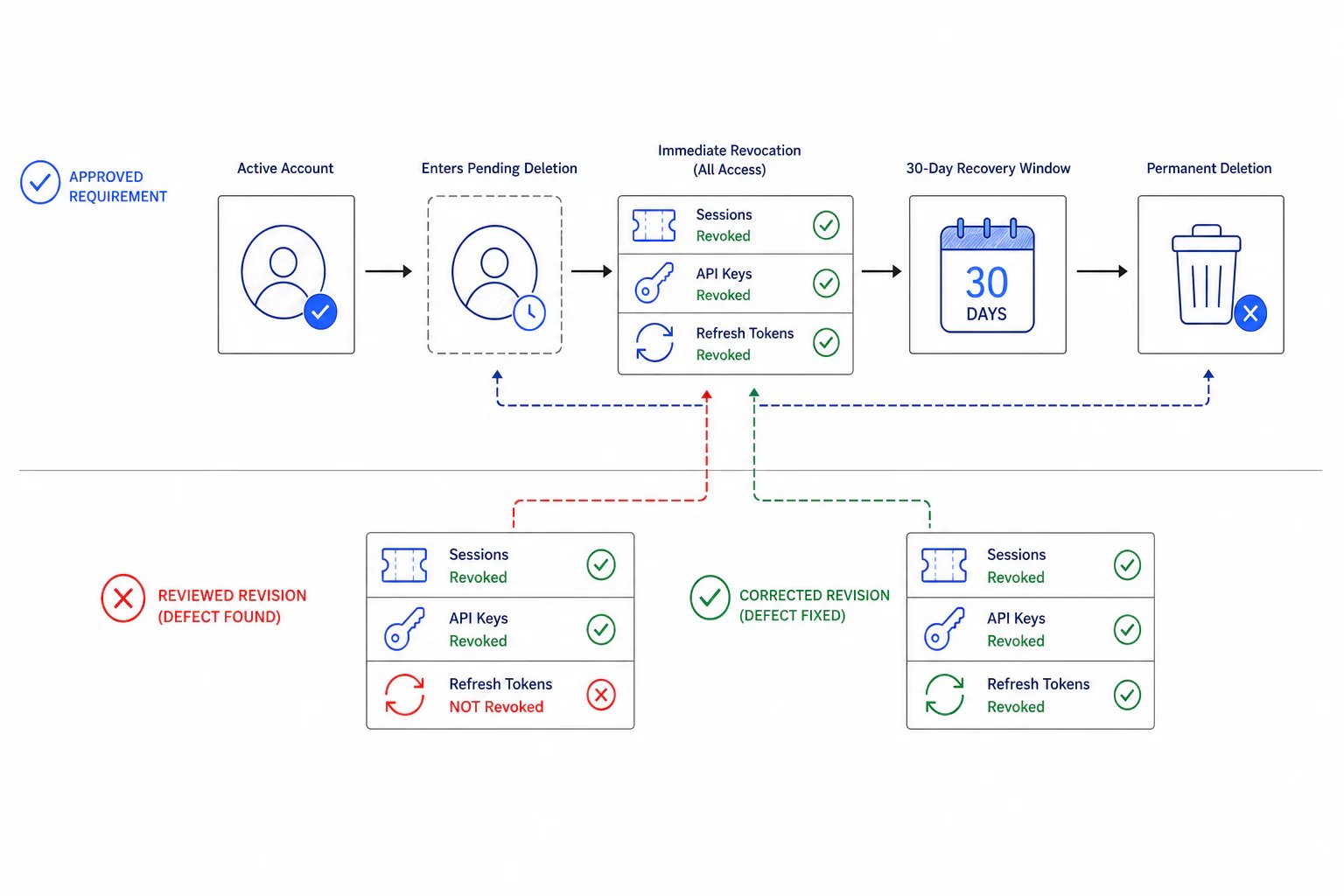
An approved account-deletion lifecycle compared with a reviewed revision that fails to revoke refresh tokens and a corrected revision that closes the gap.

Code review artifacts

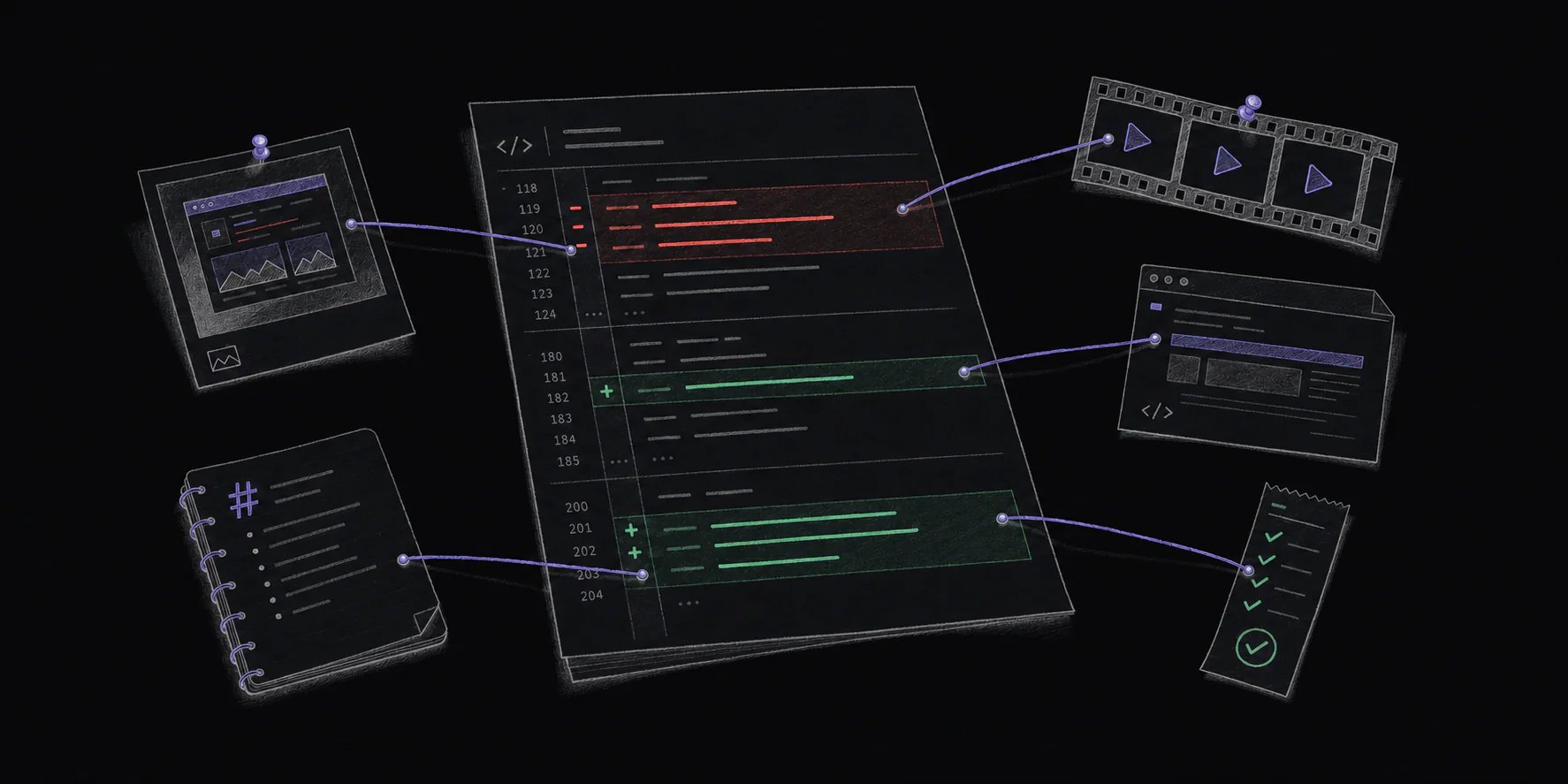
A reviewer compares a code diff with supporting screenshot, video, HTML, Markdown, and test-result artifacts.

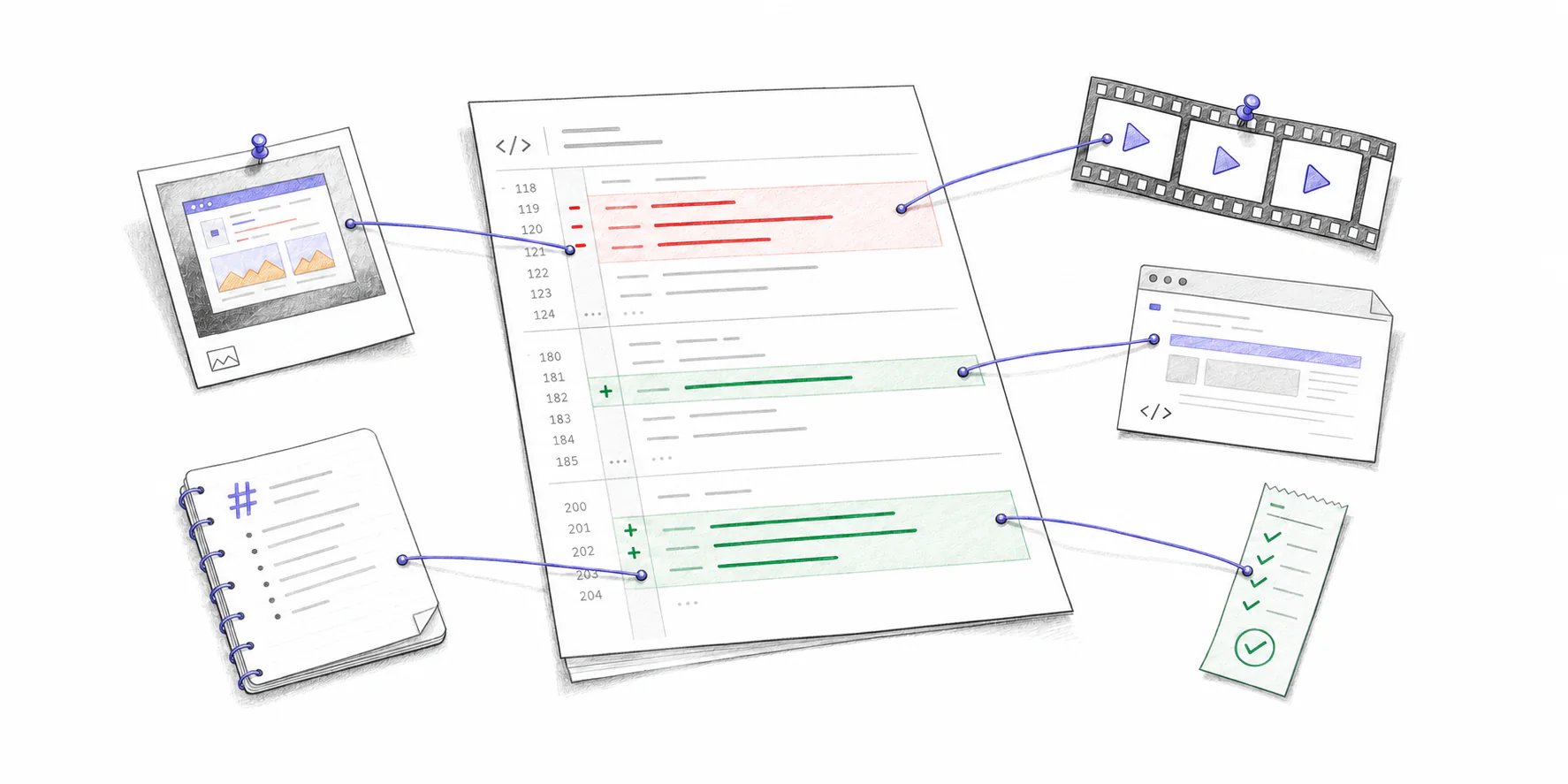
Evidence attached to a diff

A central code diff is connected by violet threads to screenshot, video, HTML, Markdown, and test-result evidence.

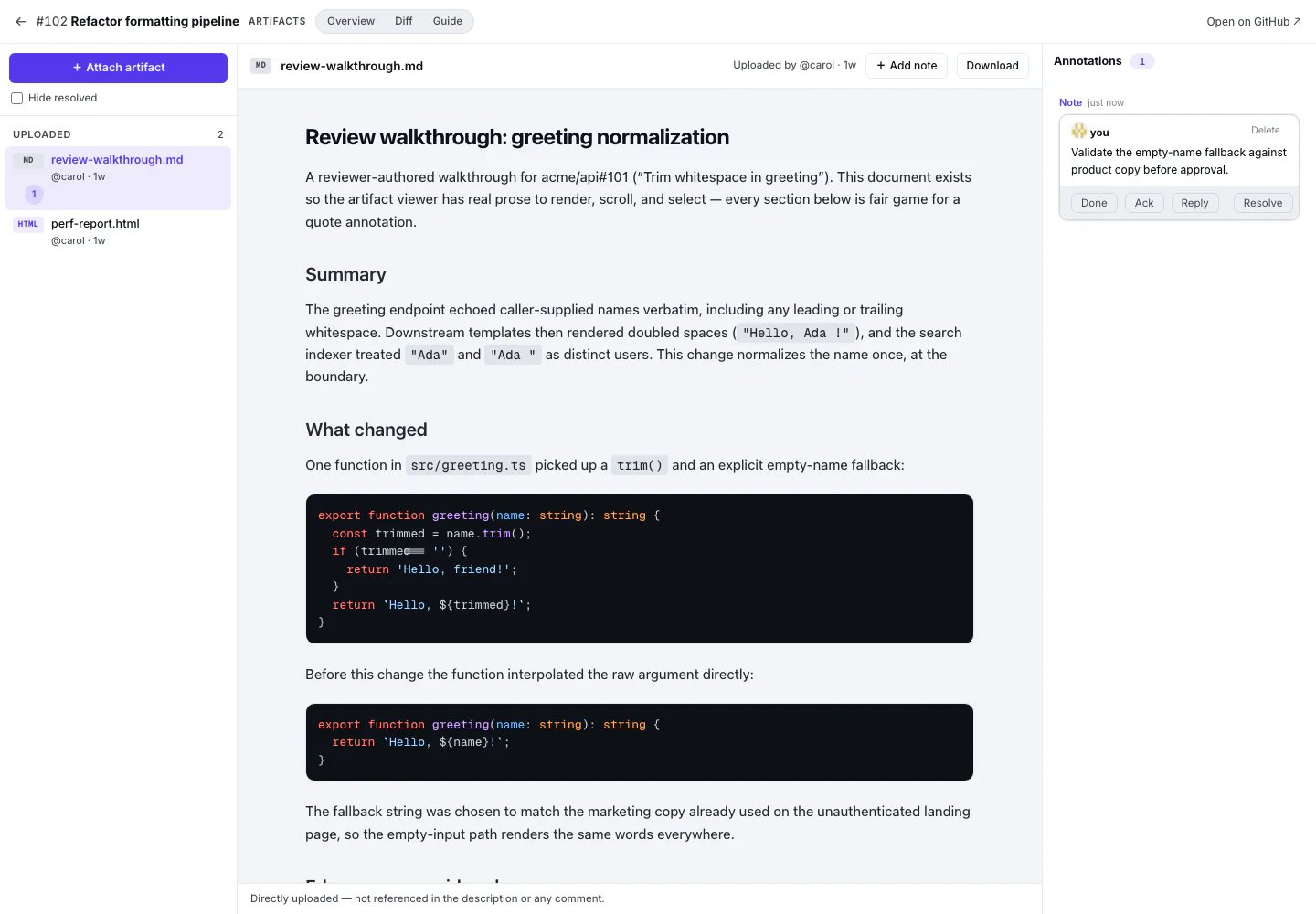
Artifacts inside Plannotator Review
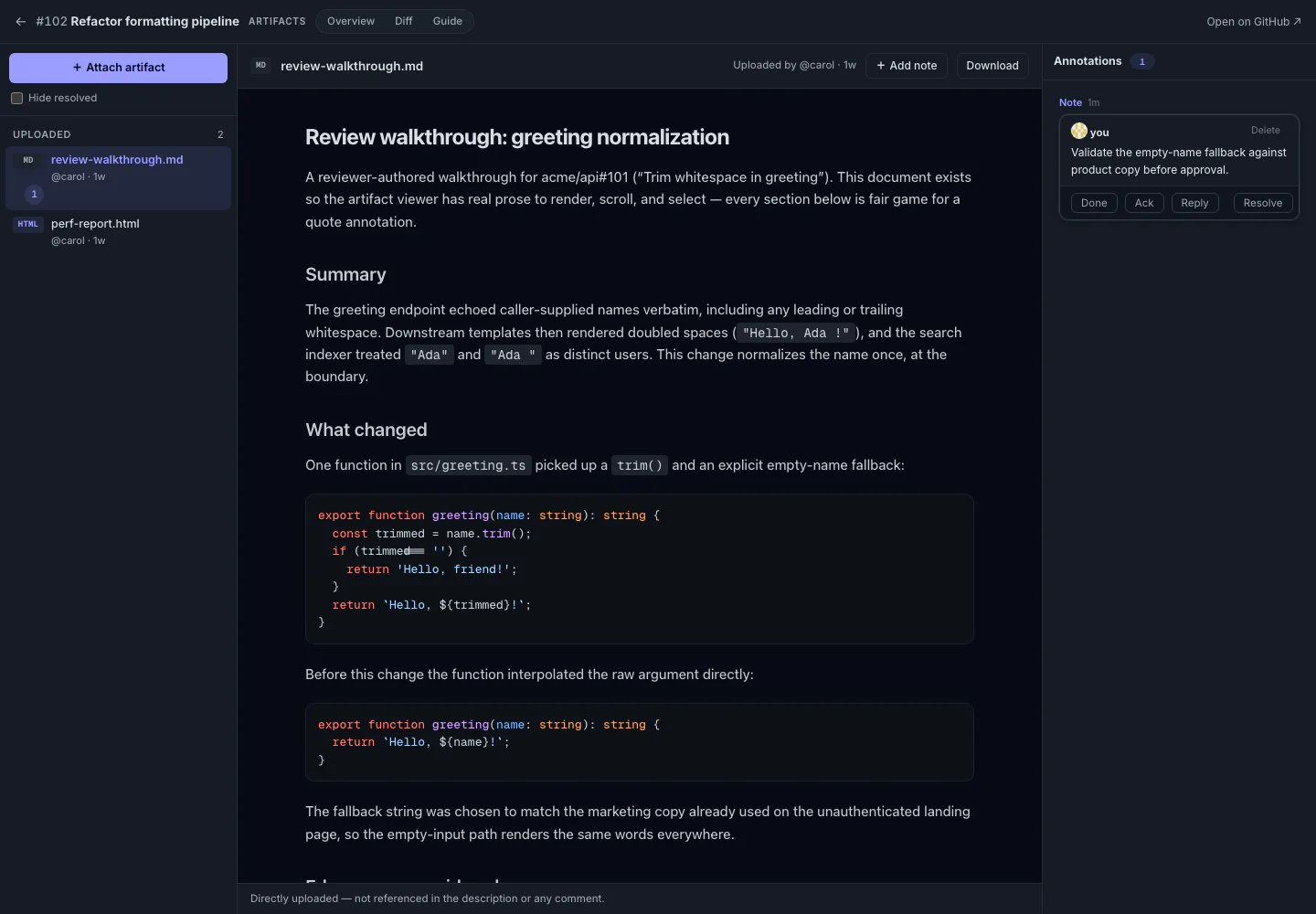
Plannotator Review showing a Markdown review artifact selected beside its uploaded artifact list and an annotation about validating product behavior.

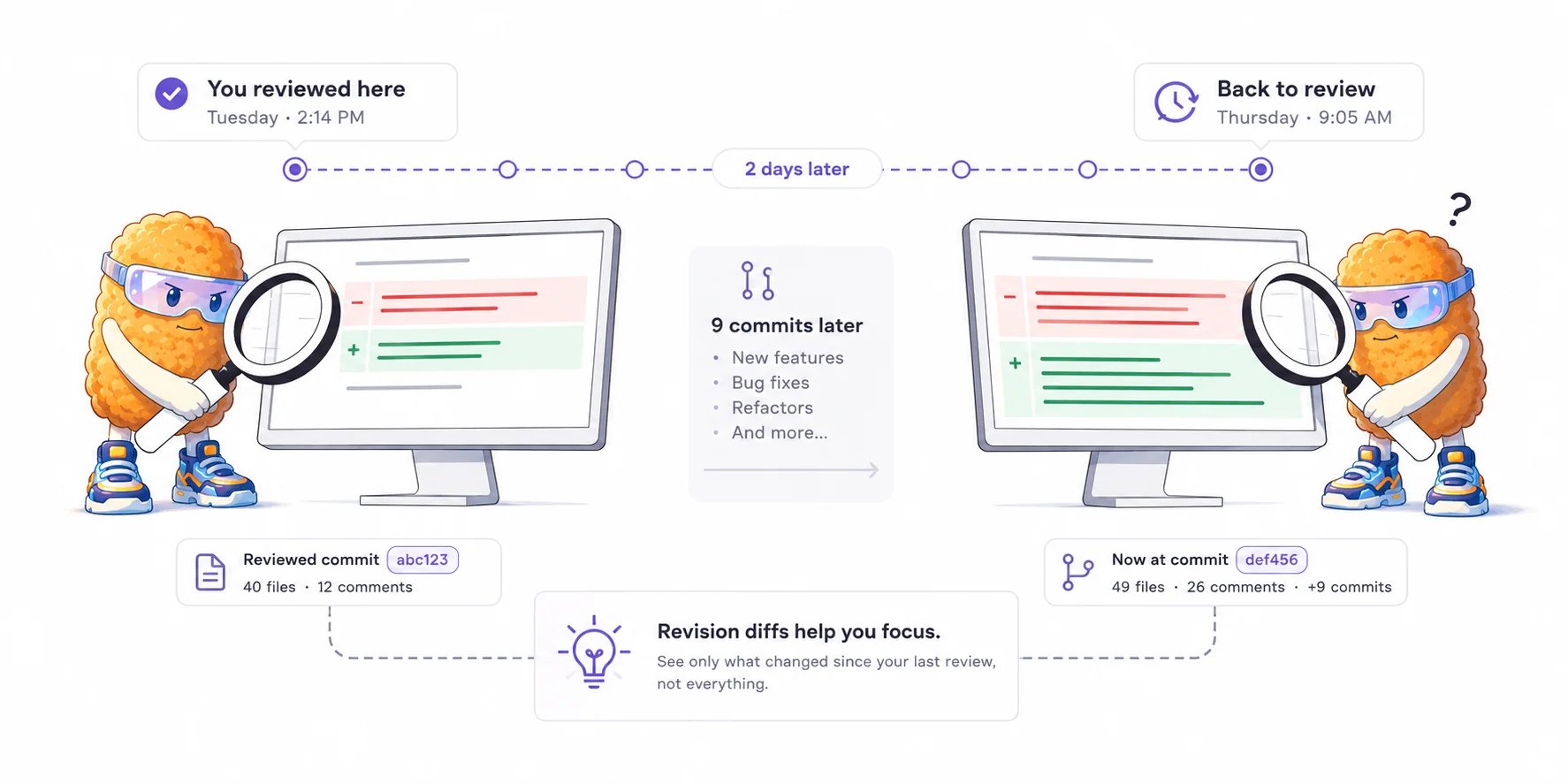
Reviewing an exact revision

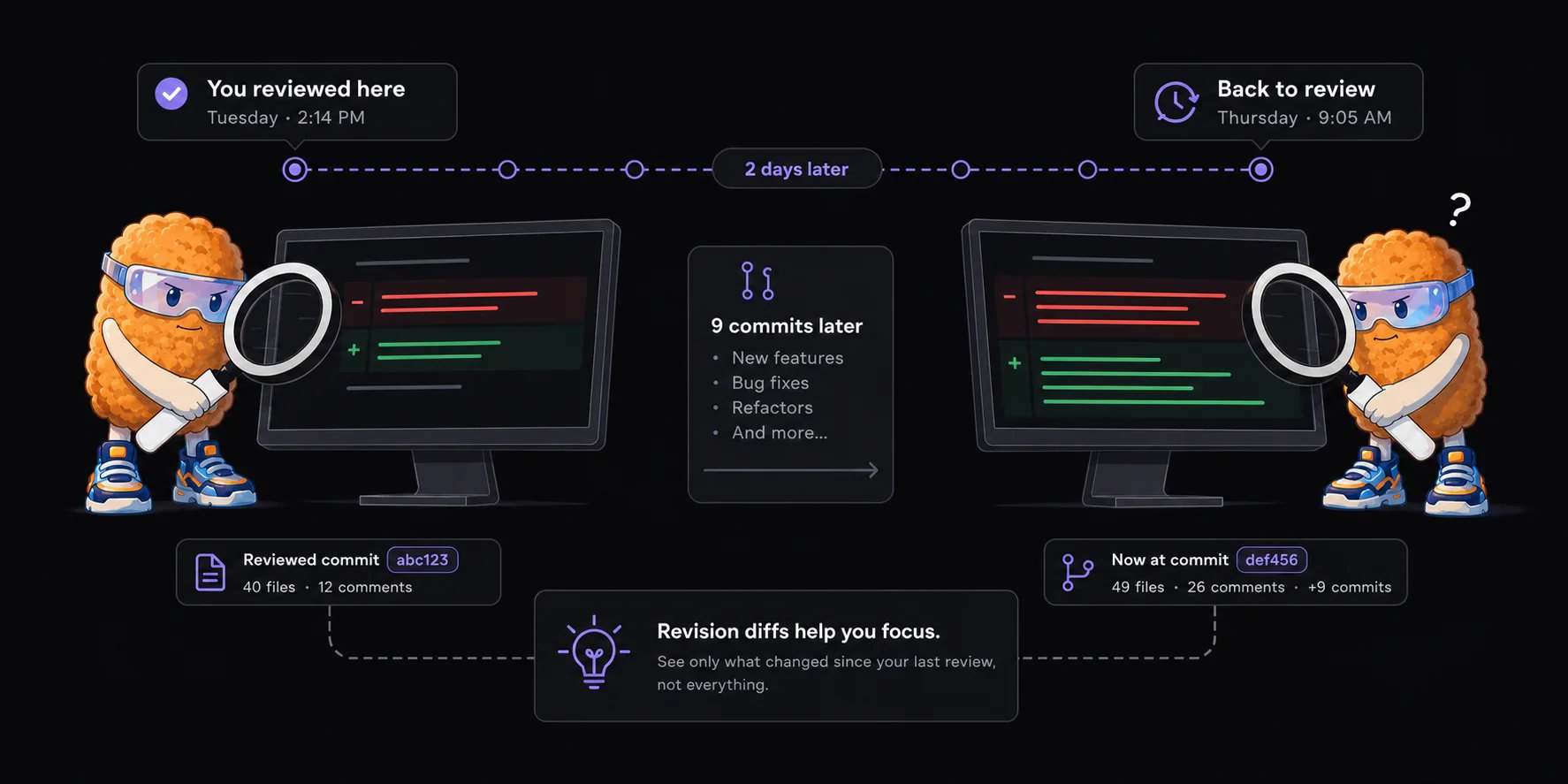
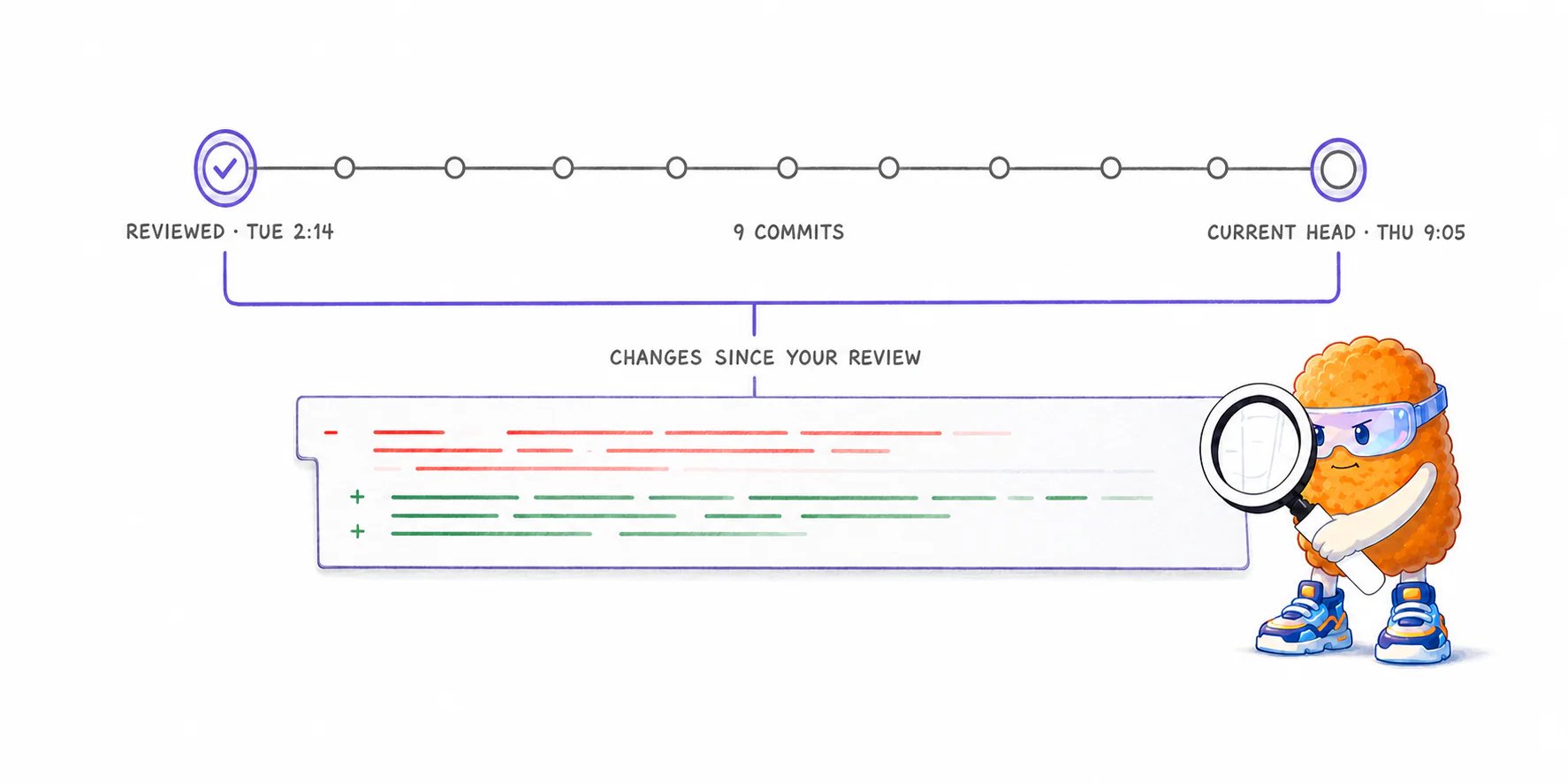
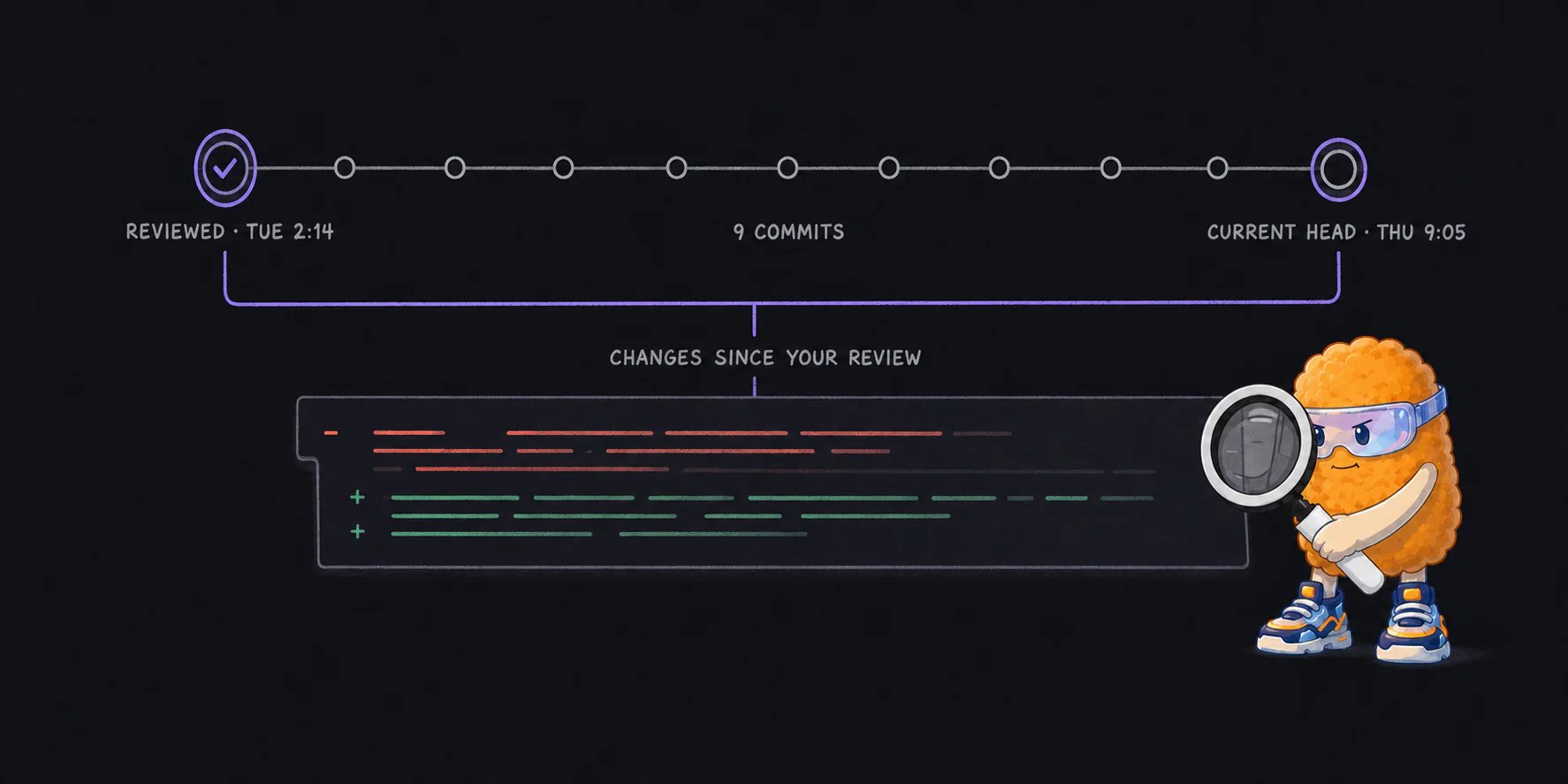
A reviewer returns to a pull request after nine commits and compares the current head with the exact revision reviewed on Tuesday.

Pull request review timeline

A Git commit timeline shows nine commits between a Tuesday code-review checkpoint and Thursday's current head, while Totman inspects the cumulative revision diff since the last review.

Choosing a comparison baseline

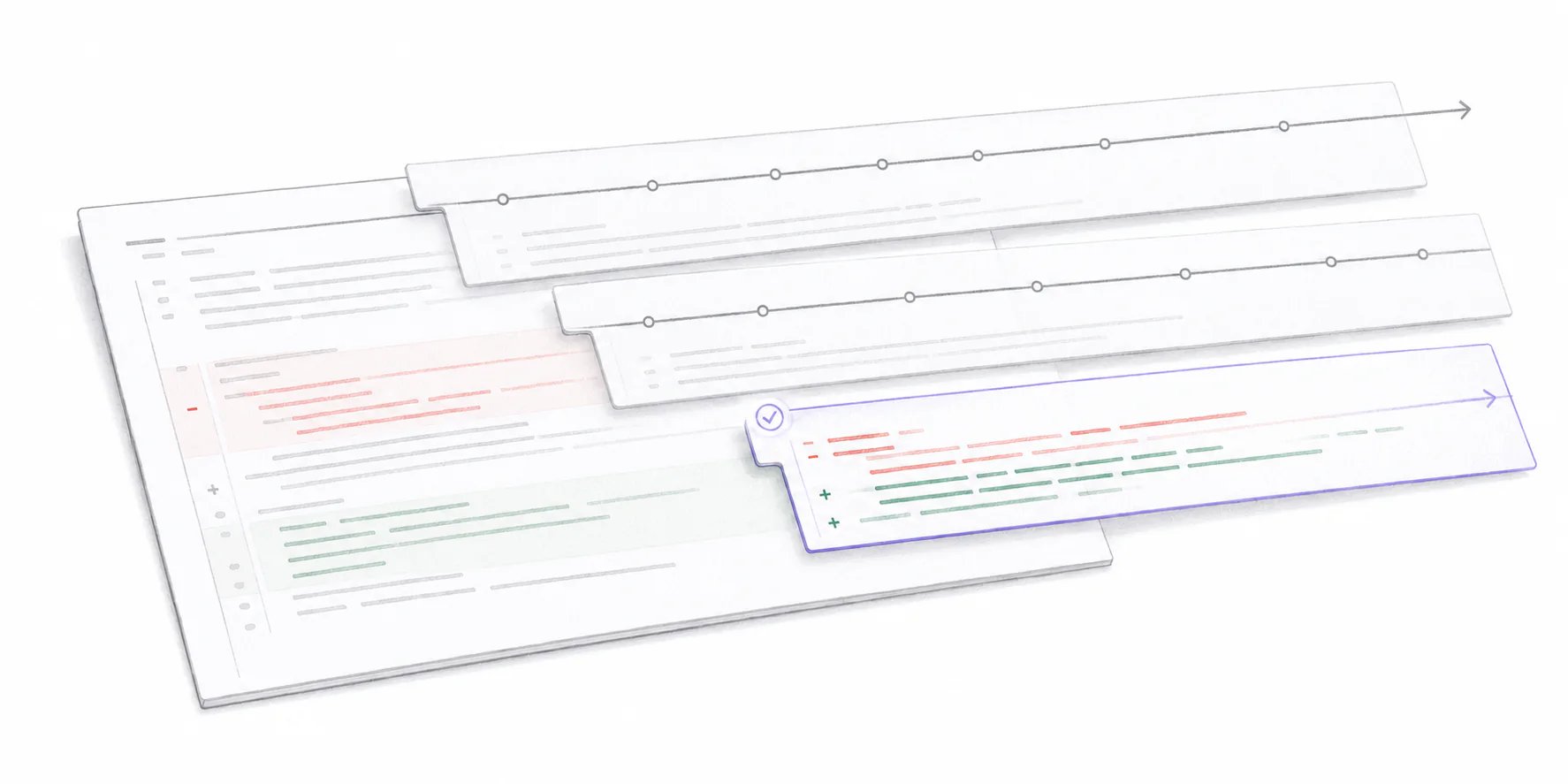
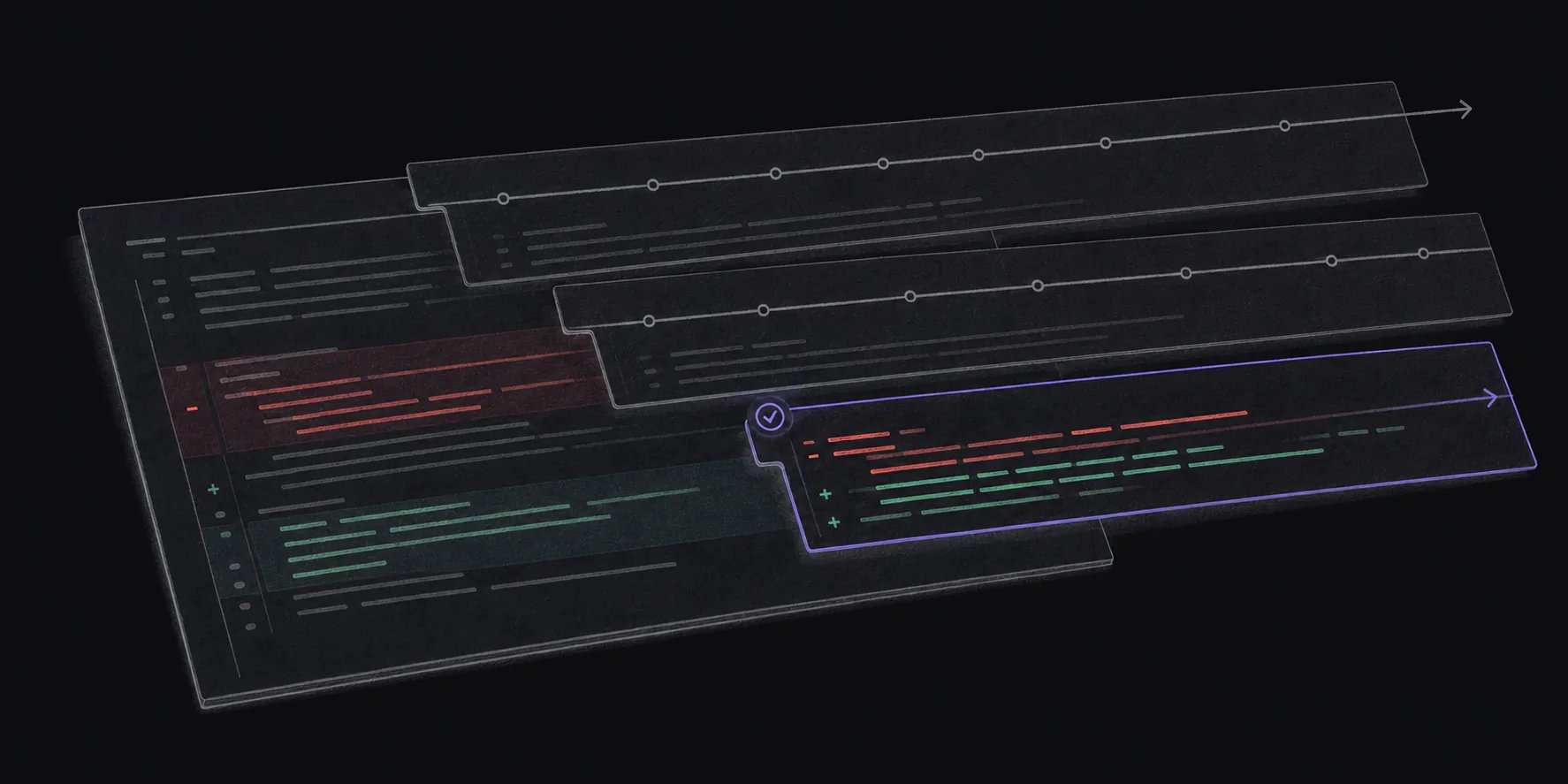
Three translucent Git comparison baselines overlay the same pull request, with the reviewer's last checkpoint highlighted in violet through the current head.

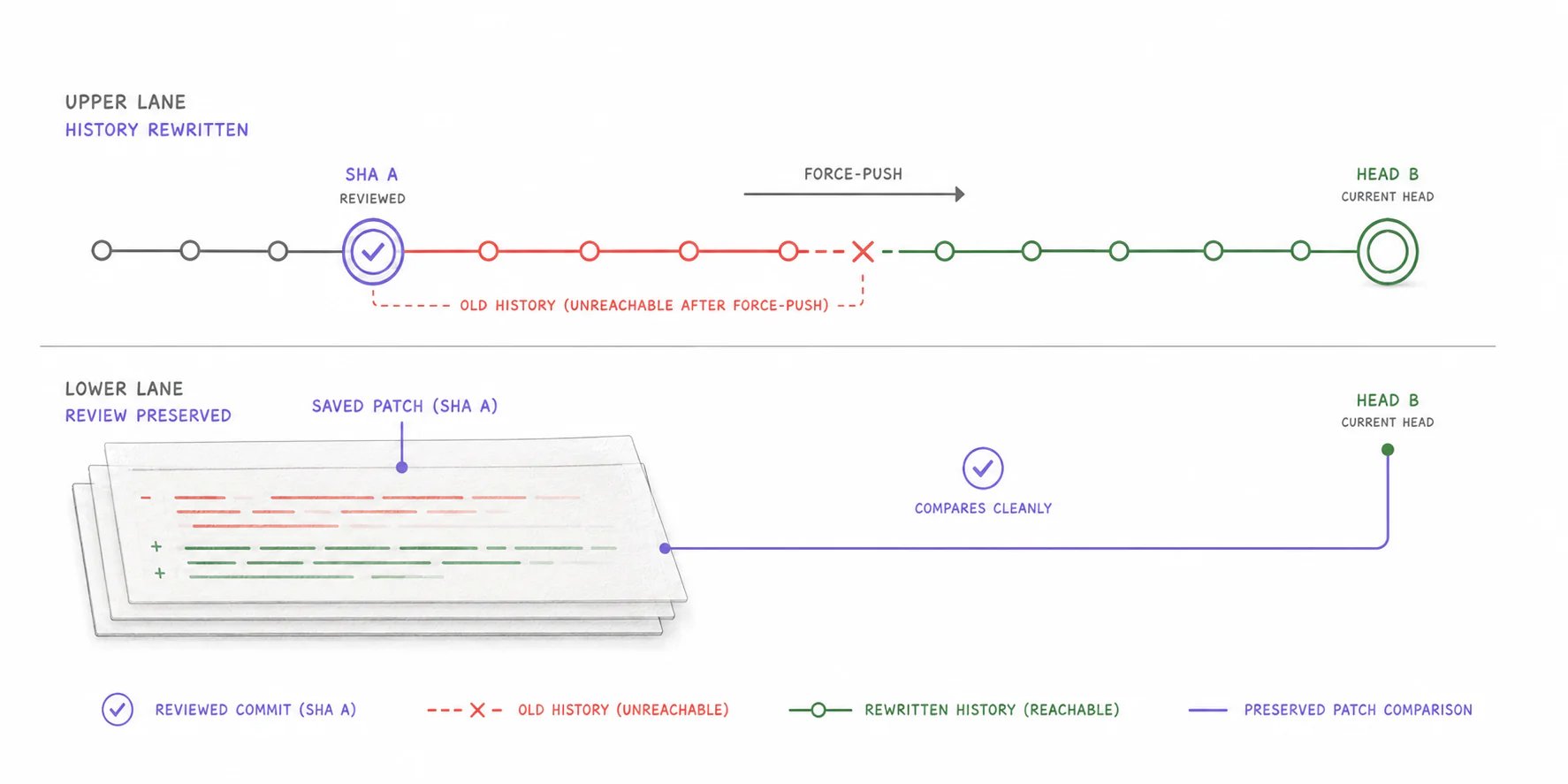
Revision history after a force-push
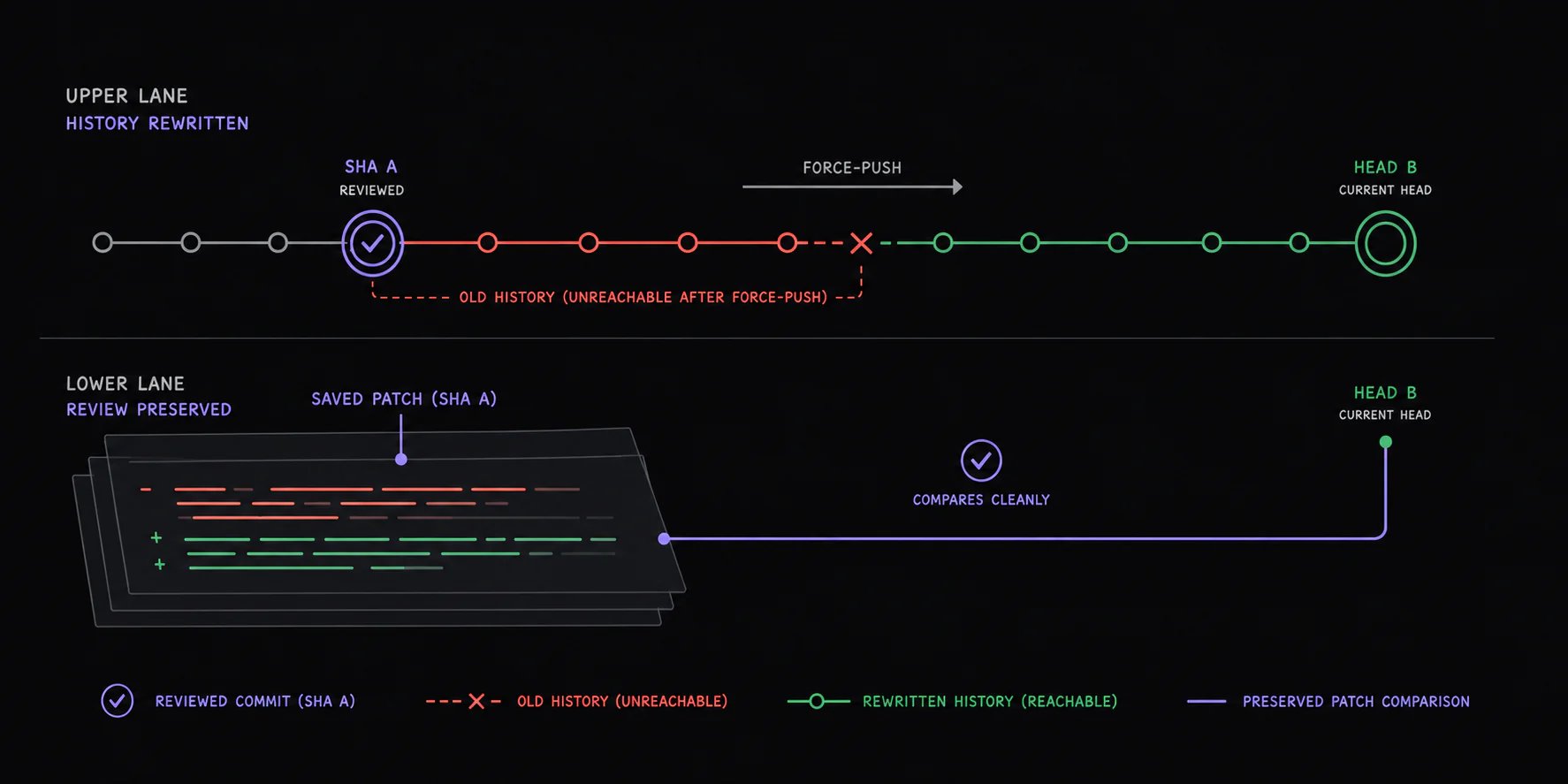
A two-lane Git diagram where a force-push makes a reviewed commit unreachable while a preserved patch still compares cleanly with the current head.
Reviewed July 20, 2026. Maintained by the Plannotator documentation team.
Last modified on July 21, 2026