
Why better models can need fewer instructions
The message you type is only one part of an agent’s context. The model may also receive a system prompt, repository instructions, skills, memory, tool definitions, and files it opens while working. In The new rules of context engineering for Claude 5 generation models, Anthropic reports that it removed more than 80 percent of Claude Code’s system prompt for newer Claude models with no measurable loss on its coding evaluations. The team found that many older instructions were now overconstraining the model or conflicting with one another. The article describes several related changes:- Replace rigid rules with guidance that lets the model use judgment.
- Design clear tools and interfaces instead of teaching every use through examples.
- Load detailed guidance when it becomes relevant instead of putting everything up front.
- Keep repository instruction files lightweight.
- Give the model richer references instead of relying only on written plans and specifications.
What is a rich reference?
A rich reference is concrete material that an agent can inspect and use while it works. The word rich does not mean long, complicated, or heavily structured. It means the reference contains more useful information than a prose description alone.
A Markdown plan can still be a good reference. Anthropic’s point is not that plans or specifications are obsolete. Newer models can also work from more expressive material.
Why richer references can beat longer prompts
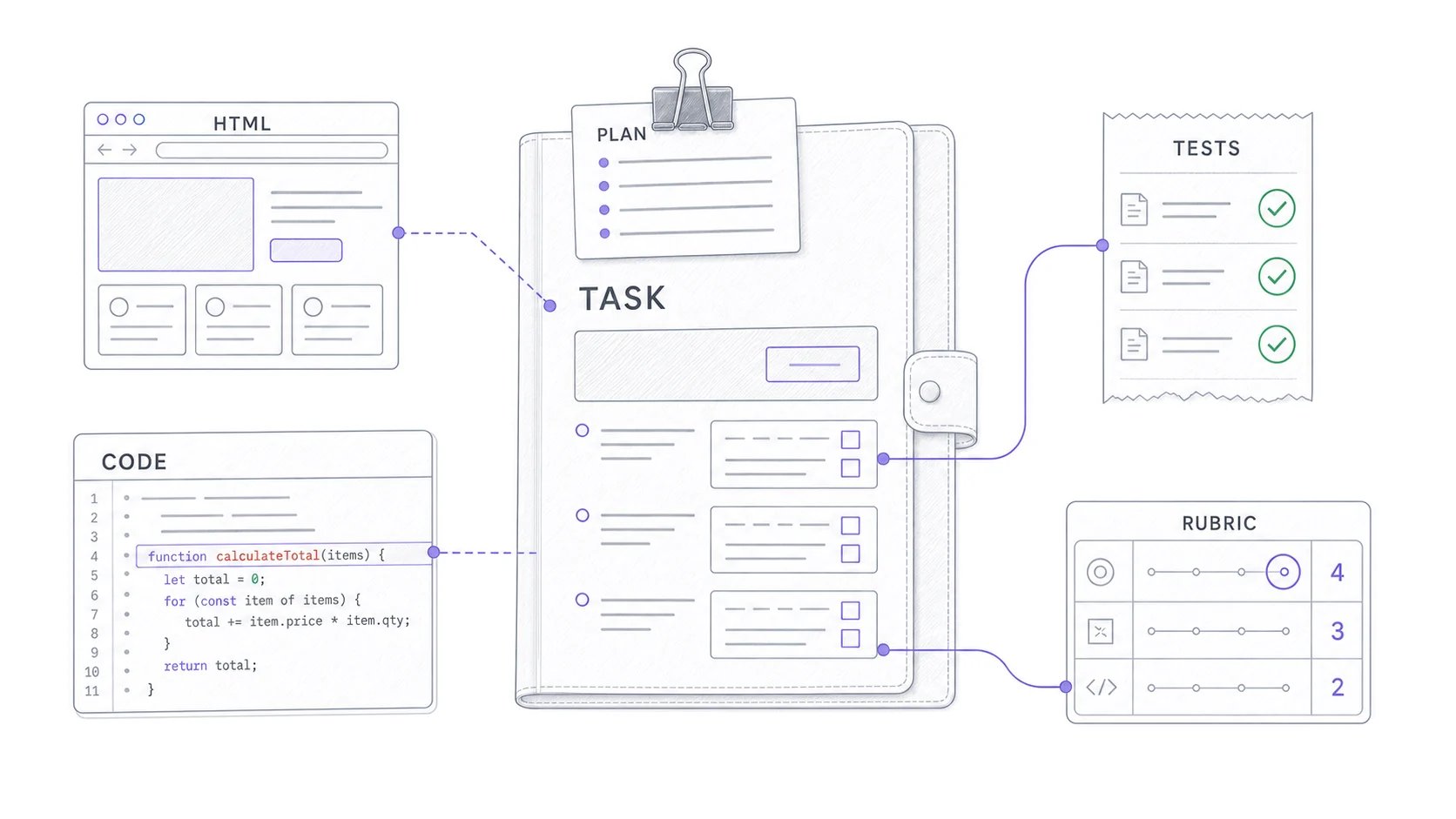
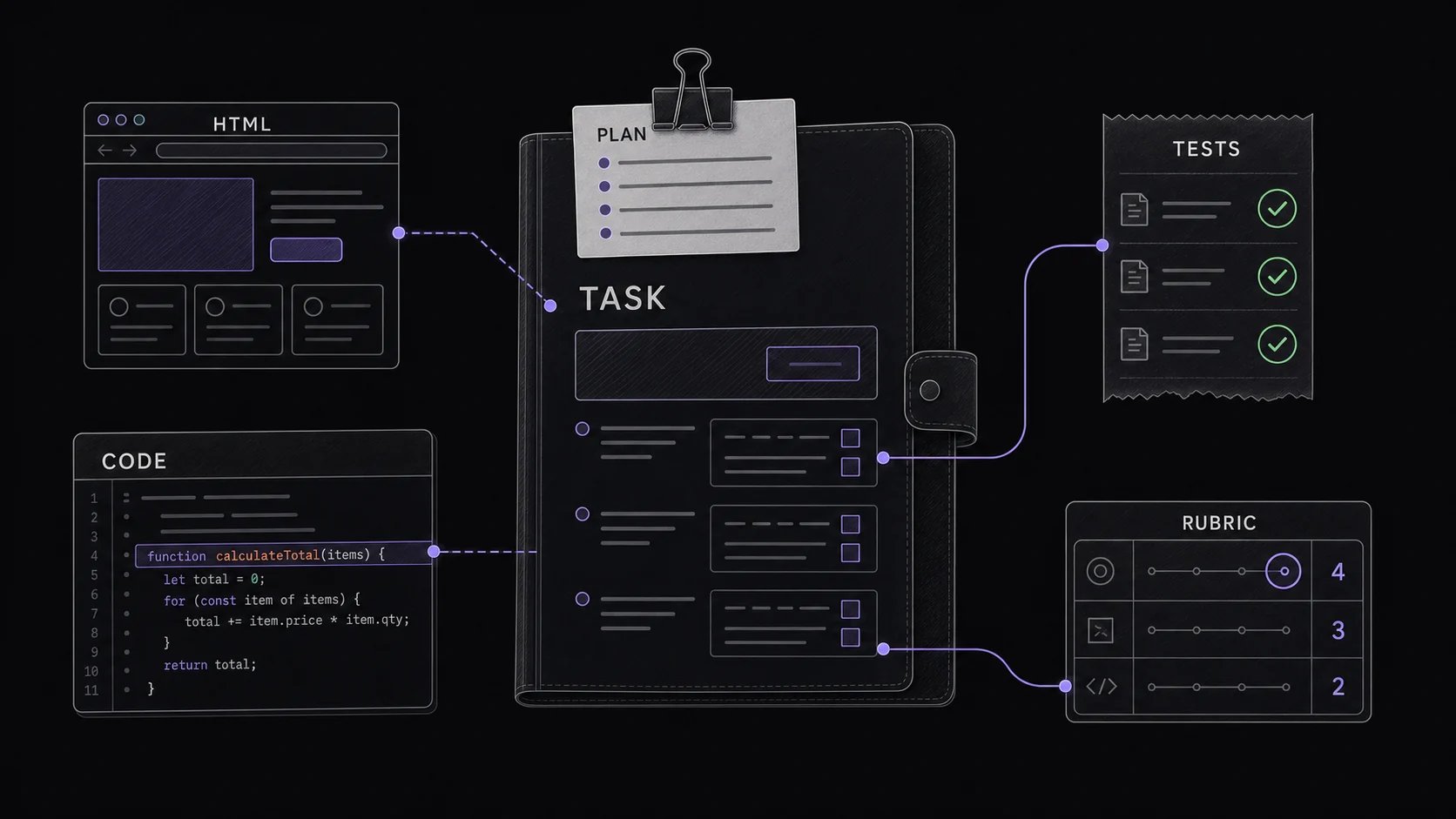
Suppose you want an agent to build a settings page. Give it concrete sources for the layout, repository conventions, required behavior, test cases, and quality bar:- an HTML wireframe showing the layout;
- an existing settings page that demonstrates the product’s conventions;
- the specification for the new behavior;
- tests for the important states; and
- a design rubric describing what your team accepts.
Examples of rich references
Building a user interface
Porting existing behavior
Designing an API
An API task might use a product specification, an existing API with similar behavior, a test suite, and a team rubric for API design. The specification states the outcome. The existing API demonstrates conventions. The tests define observable behavior. The rubric helps the agent evaluate naming, errors, pagination, and compatibility.How to give an agent rich references
- State the outcome. Tell the agent what it needs to build, change, or decide.
- Choose a small set of useful references. Include only the material that helps with this task.
- Explain each reference’s role when it is not obvious. Say whether it defines behavior, demonstrates style, provides an example, or sets the quality bar.
- Let the agent inspect the material. Do not rewrite the entire reference into the prompt.
- Verify the result against the references. Run the tests, compare the implementation with the prototype, and apply the rubric.
What to avoid
Rich references do not fix an unclear task. The agent still needs to know the intended outcome. Avoid:- attaching a whole repository when one package or implementation is the useful example;
- providing several references that disagree without saying which one controls;
- treating example code as a requirement when the agent is only meant to learn from it;
- writing a rubric with generic advice such as “make it high quality”;
- using references to hide a decision the team has not made; and
- removing safety rules or hard product constraints just because the model has better judgment.
Where Plannotator fits
Open-source Plannotator lets you review plans, Markdown, HTML, local code changes, pull requests, and merge requests with the coding agent that produced them. A team can review an HTML prototype or implementation plan before the agent builds from it, then review the resulting change against the same material. Plannotator Workspaces is the separate commercial product for sharing plans and technical documents across teammates and agents. A workspace can keep a main plan beside specifications, HTML prototypes, wireframes, and team guidance. Plannotator does not decide which context an agent needs. It gives people and agents a shared place to inspect and discuss the material they are using.Frequently asked questions
Is a rich reference just a link?
No. The useful part is the material the agent can inspect. A link may be how the agent reaches a repository, prototype, specification, test suite, or rubric.Do rich references replace prompts?
No. The prompt should still state the task, outcome, and important constraints. References carry the detailed context that is easier to show than describe.Do I need every type of reference?
No. Use the smallest useful set. A code change might need only the target file, a similar implementation, and its tests. A user-interface task may benefit from an HTML prototype and a design rubric.Are Markdown plans and specifications no longer useful?
They are still useful. Rich references expand the available formats. They do not require teams to stop writing plans or specifications.Is “rich references” an industry standard?
No. Anthropic used the phrase in its July 2026 article and the accompanying X article. It is a useful description, not a formal protocol or specification.Compare HTML and Markdown for agent work
See when a visual HTML artifact communicates more than a text-only document.